

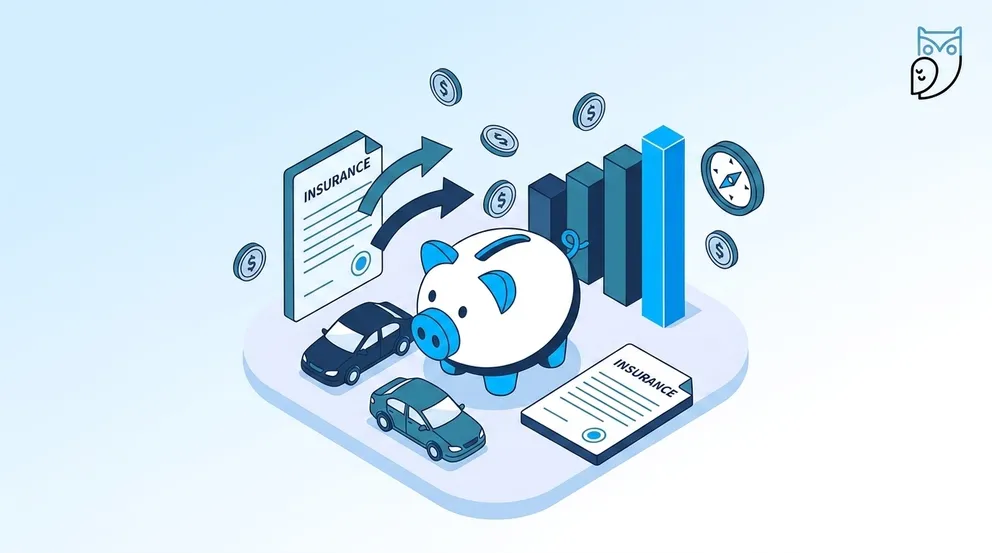
CivicScience reports that 33% of auto insurance holders plan to switch providers within 90 days, the highest switching intent since Q1 2018. LexisNexis confirms the trend: 47.1% of all policies in force were shopped at least once in the 12 months ending Q4 2025, an all-time record.
One in three U.S. auto insurance holders plans to switch carriers in the next 90 days, according to CivicScience survey data published February 19, 2026. That 33% switching intent represents an 7-point jump from Q1 2025 and the highest level CivicScience has recorded since it began tracking the metric in 2018. LexisNexis Risk Solutions' Q4 2025 Demand Meter report backs up the trend with hard policy data: 47.1% of all auto policies in force had been shopped at least once in the prior 12 months, up 5.9 percentage points from Q4 2023.
For drivers, the numbers validate what many already suspect: loyalty to a single carrier no longer pays. LendingTree found that 92% of Americans who switched auto insurers saved money, with typical annual savings of $400 to $900 depending on location and driving profile.
- 33% of auto insurance holders intend to switch providers in the next 90 days (CivicScience, Q1 2026)
- 47.1% of all auto policies were shopped at least once in 2025, an all-time high (LexisNexis)
- 56% of drivers ages 18-29 plan to switch; the 66+ cohort posted 11% year-over-year shopping growth
- 66% of consumers rank price as the #1 factor when choosing a carrier, 20+ points ahead of coverage options (45%)
- 50% of Q4 2025 rate filings were decreases, creating a buyer's market for switchers
Who Is Switching and Why
CivicScience's data breaks the 33% into two groups: 11% who are "very likely" to switch and 22% who are "somewhat likely." Age drives the largest variation in switching intent. A majority of 18-to-29-year-old policyholders (56%) report plans to switch, while the rate declines steadily with age. LexisNexis found that policyholders aged 66 and older posted 11% year-over-year shopping growth in Q4 2025, the highest of any age cohort for the 12th consecutive quarter.
Price dominates the decision. Two-thirds (66%) of auto insurance holders rank price or affordability as the most important factor when choosing a provider, according to CivicScience. Coverage options rank second at 45%, followed by customer experience at 38% and company reputation at 37%. Digital tools and mobile app quality ranked last at just 3%.
Dissatisfaction alone does not explain the surge. CivicScience found that 30% of policyholders who report being satisfied with their current carrier still intend to switch within 90 days. Among neutral policyholders, 24% plan to leave. The data suggests that even carriers with high customer satisfaction scores face churn pressure when competitors offer lower rates.
The Market Data Behind the Trend
| Metric | Q4 2025 | Change | Context |
|---|---|---|---|
| Shopping growth (YoY) | +6.9% | Up from +6.4% in Q3 | LexisNexis rates this "Hot" |
| New policy growth (YoY) | +7.1% | Up from +2.8% in Q3 | Rebounded to "Hot" territory |
| Annual shop rate | 47.1% | +1.9 pts from Q4 2024 | All-time high in LexisNexis data |
| 66+ cohort shopping growth | +11% | Highest age cohort | 12 consecutive quarters leading |
| Direct channel growth | +12.6% | Down from +14.1% in Q3 | Online and app-based shopping leads |
| Rate filings (industry) | 50% decreases | Net impact: -0.5% | More carriers cutting than raising |
Source: LexisNexis Risk Solutions, US Insurance Demand Meter, Q4 2025. Data reflects auto insurance policy shopping and new business activity across U.S. carriers.
Half of all Q4 2025 rate filings were decreases, with just 25% being increases and 25% neutral, according to LexisNexis. Among the top 25 carriers, the net rate impact was -0.7%. That pricing environment creates a buyer's market: carriers are competing for new customers with lower rates, which rewards drivers who shop around. March 2026 state-by-state rate data confirms that 39 states saw average premiums decline.
Jeff Batiste, senior vice president at LexisNexis, noted that the market is operating "outside of a traditional insurance cycle," with elevated shopping persisting even as rate increases give way to broader decreases. Previously inactive policyholders who began shopping were twice as likely to shop again within six months, according to the report. Long-tenured policyholders (10+ years with the same carrier) made up 29% of these reactivated shoppers, compared to 19% of the overall shopping population.
Which Carriers Are Gaining and Losing
State Farm remains the most commonly reported primary auto insurance provider in CivicScience's data. That lead has eroded modestly year over year, however, as Liberty Mutual, Nationwide, Farmers, and GEICO have made incremental gains. Among consumers who considered switching in the past year, GEICO is the most commonly cited primary provider, followed by Liberty Mutual and State Farm.
The direct-to-consumer channel grew 12.6% in Q4 2025, far outpacing the exclusive agent channel (+5.3%) and the independent agent channel (-0.1%), according to LexisNexis. Carriers investing in online quote tools and mobile apps are capturing the largest share of new shoppers. GEICO, Progressive, and Allstate's direct platforms have benefited the most from this shift. Florida saw rate cuts averaging 8% across five major carriers in 2026, illustrating the kind of competitive pressure that fuels switching.
How Much You Can Save by Switching
LendingTree surveyed insured Americans and found that 92% who switched saved money. Nearly two-thirds (63%) saved at least $100 annually, and 22% pocketed $200 or more per year. Savings scale with your current premium: drivers paying under $500 per year saved a median of $298 by switching, while those paying $5,000 or more saved a median of $922, according to LendingTree.
The gap between the cheapest and most expensive carrier in a single ZIP code can exceed $1,200 annually, according to Insurify's 2026 rate data. High-cost states like Florida, Michigan, and New York offer the largest absolute savings potential because premiums start higher. Drivers in those states who compare quotes from at least three carriers routinely find $500 to $900 in annual savings. Even in lower-cost states like Ohio, Idaho, and Maine, the cheapest-to-most-expensive carrier gap typically exceeds $600 per year.
Our analysis of 2025 shopping trends found that most drivers who shopped around still left savings on the table by comparing only two carriers instead of three or more. Adding a third quote to your comparison increases the odds of finding a significantly lower rate.
What You Should Do Now
Gather Your Current Policy Details
Pull up your declarations page (the summary that lists your coverages, limits, and deductibles). Note your current premium, renewal date, and exactly what coverage you carry. You need this to get apples-to-apples quotes.
Get Quotes from at Least 3 Carriers
Request quotes from a mix of direct carriers (GEICO, Progressive) and agent-based companies (State Farm, Allstate, Farmers). Use the same coverage levels across all quotes. LexisNexis data shows the direct channel grew 12.6% in Q4 2025, meaning online quotes are faster and more accurate than ever.
Ask About All Available Discounts
New-customer discounts, bundling with homeowners or renters coverage, telematics programs, paperless billing, and paid-in-full discounts can stack to 20% to 35% off your quoted rate. Progressive's Snapshot and Allstate's Drivewise both offer 10% to 30% for safe driving habits.
Time Your Switch to Avoid Gaps and Penalties
Start your new policy the same day your old one ends. Any gap in coverage can trigger higher rates from future carriers and may violate state law. Most states require continuous liability coverage, and a lapse of even one day can increase your next premium by 10% to 25%.
Cancel Your Old Policy After Activation
Call your previous insurer to confirm cancellation only after your new policy is active. Request written confirmation and ask about any prorated refund for prepaid premium. Never cancel before your new coverage starts.
Looking Ahead
LexisNexis flagged a key question for 2026: will declining rates reduce consumer shopping activity, or have more frequent switching patterns become permanently entrenched? The data so far suggests the latter. Shopping growth remained "Hot" at +6.9% in Q4 2025 even as 50% of rate filings were decreases. Consumers appear to have learned that comparing rates pays off regardless of the rate environment.
Carriers face a strategic dilemma. Cutting rates attracts new customers but accelerates churn from existing policyholders who see competitors offering even lower prices. State Farm's modest market share decline illustrates the risk: the nation's largest auto insurer is losing customers to competitors even while maintaining high satisfaction scores. Compare rates across all 50 states to see how your current premium stacks up against the latest 2026 averages.
Frequently Asked Questions
CivicScience reports that 33% of auto insurance holders plan to switch providers within the next 90 days as of Q1 2026. LexisNexis data shows 47.1% of all policies in force were shopped at least once in the 12 months ending Q4 2025, both record levels.
LendingTree found that 92% of drivers who switched saved money. Typical annual savings range from $400 to $900 depending on your state, driving record, and current premium. Drivers in high-cost states like Florida, Michigan, and New York often save $500 or more per year.
Loyalty discounts from your current carrier typically amount to 5% to 10% of your premium. New-customer discounts from a competing carrier often match or exceed that amount. CivicScience found that 30% of satisfied policyholders still plan to switch, which suggests the savings from switching outweigh loyalty benefits for many drivers.
You can switch auto insurance at any time without penalty in most states. Start your new policy the same day your old one ends to avoid a coverage gap. Most insurers will provide a prorated refund for any unused premium on your old policy.
CivicScience data shows Liberty Mutual, Nationwide, Farmers, and GEICO have made incremental market share gains at State Farm's expense. Among consumers who considered switching, GEICO is the most commonly cited primary provider. The direct-to-consumer channel grew 12.6% in Q4 2025, benefiting online-first carriers.
- CivicScience - Auto Insurance Switching Intent Reaches Record Levels in 2026 (February 19, 2026)
- Insurance Business Magazine - Auto Insurance Switching Hits All-Time High (February 20, 2026)
- LexisNexis Risk Solutions - US Insurance Demand Meter Q4 2025 (February 18, 2026)
- LendingTree - 92% of Insured Americans Who Switched Auto Insurance Companies Saved Money
- Insurify - 2026 Car Insurance Rate Forecast
- Agent Entrepreneur - Price Driving Insurance Churn