

Introduction
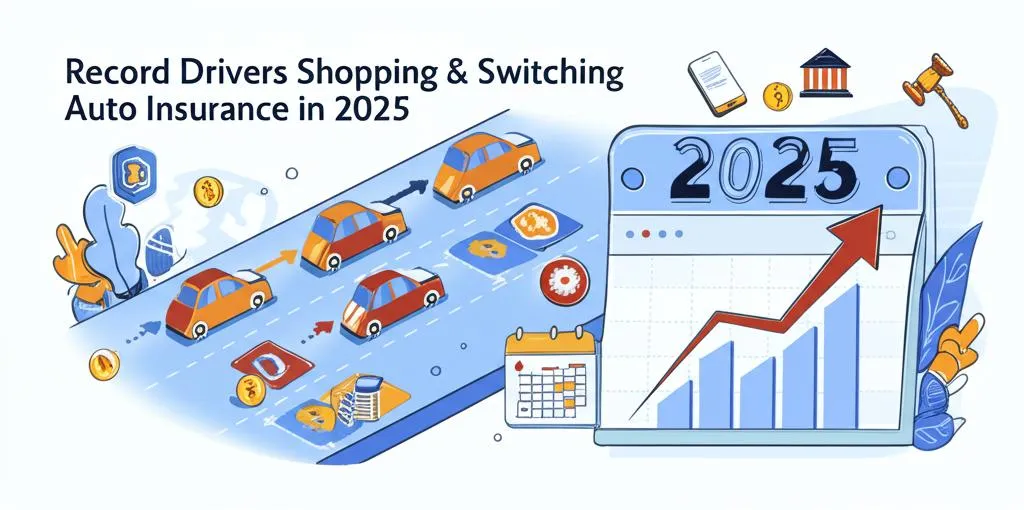
The American auto insurance landscape is undergoing a dramatic shift as drivers increasingly hunt for better rates and coverage options. Skyrocketing premiums, economic challenges, tech innovations, and sweeping regulatory reforms have all fueled unprecedented numbers of consumers comparing and changing their insurance providers. This article dives into fresh 2024 data that's shaping consumer behavior into 2025, examines how different age groups from retirees to Gen Z are responding, and explores what these shifts mean for both policyholders and insurance companies across America.
Statistical Analysis of Drivers Switching Insurers in 2025
Key Data Points
Recent industry studies reveal significant jumps in auto insurance shopping and switching:
- Shopping Activity Growth:
- 31.2% year-over-year increase in Q3 2024 (up from 16.1% in Q2 2024).
- Q4 2024 showed a 26% increase compared to Q4 2023.
- New Policy Volumes:
- Q3 2024 new auto policies grew by 25.9% year-over-year (versus 19.5% in Q2).
- Q4 2024 new policy growth hit 17.7%.
- Policy Re-Shopping:
- By December 2024, nearly half (45%) of active policies had been shopped at least once in the previous year.
- Switching Rates:
- About 29% of actively shopping customers switched carriers, with Gen Z leading the pack.
This table highlights the key trends from 2024 that are influencing 2025 patterns:
| Metric | Q2 2024 | Q3 2024 | Q4 2024 |
|---|---|---|---|
| Shopping Activity Growth (YoY) | 16.1% | 31.2% | 26% (vs. 2023) |
| New Auto Policy Volume Growth | 19.5% | 25.9% | 17.7% |
Demographic Insights
Even traditionally stable customer segments are now showing remarkable movement: - Senior Drivers: Consumers 66+ led policy switching with a 27% increase in Q1 2024, primarily pushed by rising costs. - Generation Z: These digital natives are switching at the highest rates of any group, adding new dynamics to the market.
Factors Contributing to Increased Insurance Shopping in 2025
Impact of Rising Premiums
Auto insurance premiums shot up 22.2% year-over-year (as of February 2024), prompting nearly half (49%) of customers to shop around. With 40% of these shoppers ultimately making the switch, premium increases have become the number one trigger for consumer movement.
Economic Influences
Several economic factors are putting extra pressure on consumers: - Inflation: Building material costs have jumped 39% since early 2020, driving up repair and claims costs that eventually hit consumers' wallets. - Tariffs: A 25% tariff on imported vehicles and parts (taking effect April 2025) is pushing production and repair expenses higher, which translates to costlier premiums. - Market Response: Despite a slight dip in consumer prices in March 2025, ongoing uncertainty about inflation keeps drivers vigilant about their insurance spending.
Role of Technological Advancements
Digital tools have made comparison shopping and switching easier than ever: - Enhanced Digital Platforms: Direct-to-consumer channels saw a 67% jump in shopping rates and 54% growth in new policy sign-ups. - Usage-Based Insurance (UBI): Telematics programs now allow insurers to offer personalized discounts based on actual driving behavior. - Marketing Strategies: Insurance companies have ramped up their online ad spending, making consumers more aware of competing offers.
Summary Takeaways
- Rising rates and economic pressures are pushing about half of auto insurance customers to explore alternatives.
- Tech advances are giving consumers powerful tools for real-time comparisons and customized pricing.
- Both established insurance companies and newer insurtech startups need to adjust their pricing and service approaches to keep customers loyal.
Consumer Sentiment and Behavior in 2025
Survey Data and Trust Metrics
Trust remains crucial for customer satisfaction in auto insurance: - High-Trust vs. Low-Trust: Customers who highly trust their insurer report satisfaction scores averaging 917 out of 1000—a whopping 426 points higher than those with low trust. - Prevalence: Despite its importance, only 15% of consumers report high trust, while 51% have low trust in their insurance providers.
Reasons Behind Switching
The main factors driving switches include: - Rising Premiums: Growing costs motivate nearly half of all consumers to reconsider their coverage. - Cost Savings: Research shows 59% of drivers would switch to save $250 or more annually. - Service Dissatisfaction: Poor customer experiences, confusing pricing, and difficult claims processes push many to look elsewhere.
Traditional Insurers vs. Insurtech
- Erosion of Trust: As established insurers face declining customer confidence, insurtech companies are gaining ground by offering simpler digital experiences and more transparent processes.
- Consumer Openness: With increasing frustration, more drivers are willing to try digital-first and alternative insurance solutions.
Impact of Autonomous and Electric Vehicles on Insurance Market Dynamics
Autonomous Vehicles (AVs)
The growing adoption of self-driving technology is reshaping risk profiles: - Liability Shift: As human error—which causes most accidents—decreases, liability may move from drivers to manufacturers. Some industry experts predict personal auto insurance could become largely unnecessary within two decades. - Accident Reduction: Research suggests markets with high AV adoption could see accident frequency drop by over 30%, with some European regions potentially experiencing a 40% shrinkage in the auto insurance market over ten years.
Electric Vehicles (EVs)
EV ownership brings new cost considerations: - Higher Premiums: In 2024, average annual full-coverage for EVs ran about $3,430 compared to $2,778 for gas vehicles—a 23% premium. - Repair and Claim Patterns: EVs face higher repair costs (averaging 29% more) and show increased claim frequency (up 17%) and severity (up 34%).
This table highlights a key comparison:
| Vehicle Type | Average Annual Premium | Key Differences |
|---|---|---|
| Gas-Powered Vehicles | $2,778 | Baseline cost |
| Electric Vehicles | $3,430 | 23% higher premium; costlier repairs |
Future Predictions & Emerging Risks
Looking ahead: - Total auto accident losses in the U.S. might drop by up to 63% by 2050. - New threats like cyber attacks and product liability issues will require fresh insurance approaches and updated underwriting models.
Regulatory Changes Affecting Auto Insurance in 2025
Overview of New State Regulations
States nationwide are rolling out important regulatory changes to boost consumer protection and transparency:
| State | Regulation Highlights | Effective Date |
|---|---|---|
| South Carolina | Bans use of credit-based scores in underwriting decisions (Senate Bill 215). | January 2025 |
| Washington | Makes insurers explain premium increases (with full disclosure for changes over 10% by June 2027). | Starting June 2024/2027 |
| New Jersey | Car Insurance Reduction Act prohibits non-driving factors and requires transparent premium calculations. | February 2025 |
| California | Senate Bill 1107 raises minimum liability limits from 15/30/5 to 30/60/15. | January 1, 2025 |
| North Carolina | Senate Bill 452 increases minimum limits from 30/60/25 to 50/100/50 and provides dual coverage for not-at-fault drivers. | July 1, 2025 |
| Utah | HB113 boosts minimum limits from 25/65/15 to 30/65/25. | January 1, 2025 |
| Virginia | SB112 raises minimum coverage from 30/60/20 to 50/100/25. | January 1, 2025 |
| New York | Senate Bill S1655 requires annual filing of detailed financial and claims data with public disclosure. | Beginning January 2025 |
Impact on Consumers and Insurers
- Consumer Benefits: Better non-discriminatory practices, clearer transparency on rate changes, and higher minimum coverage for improved financial protection.
- Insurer Obligations: Insurance companies must implement fair underwriting, maintain detailed data reporting, and better communicate with customers about rate adjustments.
Comparison Across States
While some states focus on transparency and non-discrimination, others emphasize higher minimum coverage requirements. These differences mean insurance companies must tailor their risk models and pricing strategies differently in each state.
Technological Innovations in the Auto Insurance Industry
Emerging Technologies
The auto insurance industry is experiencing a tech revolution with several breakthrough innovations: - Digital Insurance Wallets: Platforms that bring multiple policies together for easy management, helping boost customer loyalty. - Usage-Based Insurance (UBI): Telematics and IoT devices enable personalized pricing based on how people actually drive. - Blockchain Technology: Delivers secure, transparent contract handling and speeds up claims through smart contracts.
Role of Artificial Intelligence and Machine Learning
- Enhanced Risk Assessment: AI systems analyze vast datasets to improve underwriting accuracy and risk prediction.
- Automated Claims Processing: Machine learning and computer vision speed up claims intake, damage assessment, and fraud detection.
- Customer Support: AI-powered chatbots and virtual assistants provide round-the-clock service, helping customers navigate complex processes.
Enhancing Customer Experience Through Digital Platforms
- Mobile Applications: Same-day claim reporting, document uploads, and status tracking improve service responsiveness.
- Virtual Assistants: 24/7 support handles questions and offers tailored recommendations.
- Telematics Integration: Provides specific feedback and discounts based on driving habits, encouraging safer driving.
Conclusion
The American auto insurance market is seeing unprecedented levels of shopping and switching as consumers react to higher premiums, economic challenges, and evolving technology and regulations. From increased activity among traditionally stable older customers to the game-changing impact of self-driving and electric vehicles, these trends show that both insurance companies and drivers must adapt quickly. Insurers should improve their digital tools, update risk models, and enhance customer communications, while consumers should take advantage of the growing array of digital comparison options to find competitive, comprehensive coverage.
Staying informed and proactive is essential in navigating this changing marketplace—ensuring both policyholders and insurers are better prepared for whatever lies ahead.
References
- BusinessWire. (2024, April 30). Trust emerges as top driver of customer satisfaction with auto insurance as prices continue to surge. Retrieved from https://www.businesswire.com/news/home/20240611685450/en/Trust-Emerges-as-Top-Driver-of-Customer-Satisfaction-with-Auto-Insurance-as-Prices-Continue-to-Surge-J.D.-Power-Finds/?
- CarInsurance.com. (2023). LexisNexis Car Insurance Demand Meter. Retrieved from https://www.carinsurance.com/trends-and-insights/lexisnexis-car-insurance-demand-meter/?
- Insurance Business America. (2024, November 20). Auto insurance shopping hits record levels in Q3 2024. Retrieved from https://www.insurancebusinessmag.com/us/news/auto-motor/auto-insurance-shopping-hits-record-levels-in-q3-2024-514769.aspx?
- Insurance Journal. (2024, May 03). Rising premiums drive 49% of customers to shop for new auto insurance. Retrieved from https://www.insurancejournal.com/news/national/2024/05/03/772568.htm?
- J.D. Power. (2024). 2025 Insurance Outlook. Retrieved from https://www.jdpower.com/business/resources/2025-insurance-outlook?
- Reuters. (2025, April 10). U.S. consumer prices unexpectedly fall; outlook amid tariffs. Retrieved from https://www.reuters.com/markets/us/us-consumer-prices-unexpectedly-fall-march-2025-04-10/?
- StockTitan. (2025, February 18). LexisNexis U.S. Insurance Demand Meter reports continued hot streak. Retrieved from https://www.stocktitan.net/news/RELX/lexis-nexis-u-s-insurance-demand-meter-reports-continued-hot-streak-kmn1ar3wb20r.html?
Additional references for technological innovations, regulatory changes, and auto insurance trends are available within the linked sources above.