

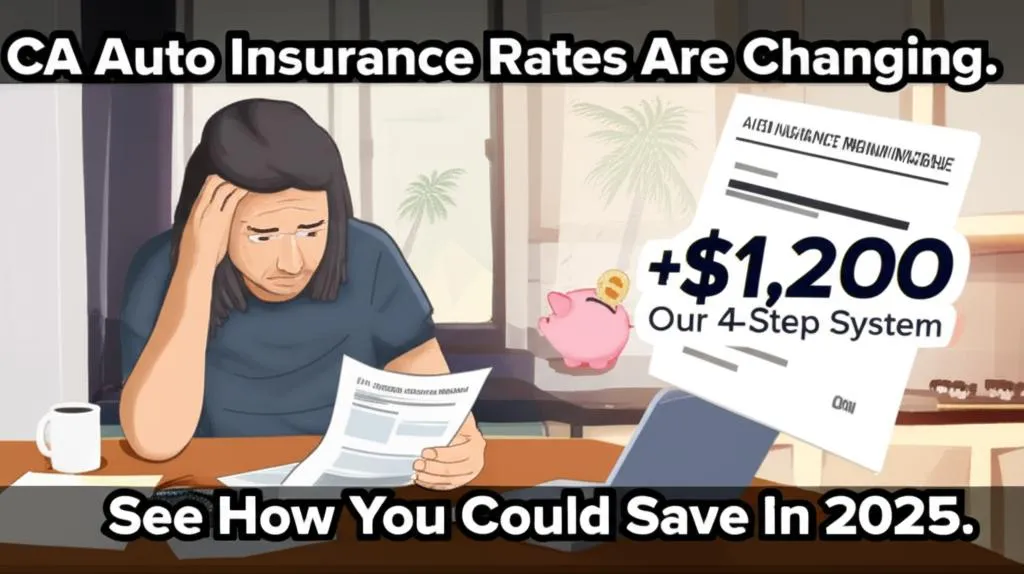
Maria Gonzalez opened her insurance renewal notice in San Jose last month and couldn't believe what she saw: her premium had jumped from $1,200 to $1,464 in a single year. She joins 4.7 million other California drivers facing the same sticker shock as 2025's regulatory changes reshape the insurance landscape.
If you're feeling overwhelmed by these changes, that's completely understandable. Insurance regulations weren't written with consumers in mind, and the financial pressure is real. This 22% average increase isn't just a statistic—it represents families choosing between adequate coverage and grocery money, young drivers priced out of legal driving, and seniors on fixed incomes facing impossible choices.
But here's what most drivers don't realize: these same regulatory changes that increased premiums also created unprecedented opportunities to slash your costs through strategic shopping and discount stacking.
Why Your Premiums Skyrocketed (And Why It Actually Creates Savings Opportunities)
California's 2025 Protect California Drivers Act didn't just increase minimum coverage requirements—it fundamentally restructured how insurers calculate and offer premiums. The new bodily injury minimums jumped from $15,000/$30,000 to $30,000/$60,000, while property damage coverage increased from $5,000 to $25,000.
Why this creates savings opportunities: When regulations force industry-wide changes, insurers compete aggressively for market share with new customers. David Chen from Oakland discovered this firsthand when he followed our systematic approach below—he reduced his premium from $2,800 to $1,650 by switching from State Farm to GEICO and strategically qualifying for good driver and multi-policy discounts.
The Real Cost Impact on Your Household Budget
Let's break down what these changes mean for your monthly budget:
| Coverage Level | 2024 Average | 2025 Average | Monthly Increase |
|---|---|---|---|
| State Minimum | $864 | $1,056 | $16 |
| Full Coverage | $2,148 | $2,616 | $39 |
| Premium Coverage | $3,240 | $3,948 | $59 |
Regional variations are significant: Los Angeles County drivers face increases 18% above state average, while Central Valley residents see increases 12% below average.
Your Strategic Response: The 4-Step Premium Reduction System
Step 1: Leverage New Market Competition (Save $300-800 Immediately)
The regulatory upheaval has insurers fighting for customers. Take action right now: Get quotes from at least three of these platforms that specialize in California's new requirements:
High-Volume Comparison Platforms: - NerdWallet Insurance: Compares 20+ CA insurers simultaneously - PolicyGenius: Specialized California regulatory compliance - The Zebra: Real-time rate updates for 2025 requirements
Direct Insurer Tools: - GEICO: Often 15-25% below competitors for clean records - Progressive Name Your Price: Set your budget, find coverage - State Farm Agent Match: Local expertise with competitive rates
Real example: Sarah Martinez from Fresno saved $734 annually by spending just 45 minutes comparing quotes through NerdWallet, discovering that Progressive beat her current Allstate rate by 31% for identical coverage.
Step 2: Master California-Specific Discount Stacking
The 2025 changes created new discount opportunities most drivers miss. Here's how to stack them strategically:
Immediate Action Discounts (Call your current insurer today): - Good Driver Discount: 15-25% (3+ years claim-free) - Multi-Policy Bundling: 20-30% (home + auto) - Low Mileage: 10-15% (under 7,500 miles annually)
California-Specific Programs: - GEICO Military/Federal Employee: Additional 8% for government workers - State Farm Drive Safe & Save: Up to 30% for safe driving monitoring - Allstate Drivewise: Immediate 10% just for enrollment
Step 3: Optimize Coverage Strategy for New Requirements
Don't just accept minimum increases—strategically adjust your entire coverage profile:
Smart Coverage Adjustments: - Increase deductibles from $500 to $1,000 (saves 15-20%) - Drop unnecessary add-ons like rental car coverage if you have backup transportation - Right-size comprehensive coverage based on vehicle value
California-Specific Considerations: - Wildfire coverage: Essential in high-risk ZIP codes (90210, 94301, 95070) - Uninsured motorist protection: Critical given California's 16.6% uninsured rate
Step 4: Position for Future Changes and Maximize Long-Term Savings
The regulatory environment will continue evolving through 2035. Position yourself strategically:
Technology Advantages: - ADAS-equipped vehicles: 5-15% discounts for automatic emergency braking, lane departure warnings - Usage-based insurance: Perfect for post-pandemic reduced commuting
Long-term Strategy: - Build loyalty discounts: 5% increases annually with same insurer (up to 20% max) - Maintain clean record: Single claim can increase premiums 40-60% for 3-5 years
When Standard Insurance Won't Cover You
If you've been denied coverage, don't panic. When standard insurers won't cover you, California's FAIR Plan—essentially the state's insurance safety net—provides basic coverage. While more expensive than standard market rates, it keeps you legal while you rebuild insurability.
FAIR Plan qualifications: - Rejected by at least one standard insurer - California resident with valid license - Vehicle registered in California
Your Next 30 Minutes: Maximum Impact Actions
Week 1 (15 minutes): 1. Get three quotes using comparison tools above 2. Call current insurer to verify all applicable discounts 3. Document current coverage levels for accurate comparisons
Week 2 (15 minutes): 1. Review usage-based options if you drive under 10,000 miles annually 2. Calculate deductible optimization based on your emergency fund 3. Schedule agent consultations for top two quote options
Week 3 (Implementation): - Make the switch if savings justify changing - Bundle policies for maximum discount - Set calendar reminder for next annual review
The Bottom Line: Turn Market Disruption Into Personal Savings
California's insurance market upheaval created short-term premium pain but unprecedented long-term savings opportunities for strategic drivers. While the average driver faces $468 additional annual costs, informed drivers like David Chen are actually reducing their premiums by $1,150+ through systematic shopping and discount optimization.
Your competitive advantage: Most drivers will passively accept increases. By actively leveraging market competition and regulatory changes, you position yourself in the top 20% who actually benefit from industry disruption.
The regulatory environment will stabilize by late 2025, and current competitive pricing will normalize. Your window for maximum savings is the next 6-9 months.
Don't let insurance companies turn regulatory compliance into windfall profits at your expense. Take control of your coverage strategy starting today.
Last updated: December 2024. Insurance regulations and rates change frequently. Always verify current requirements and rates with licensed insurance professionals.