

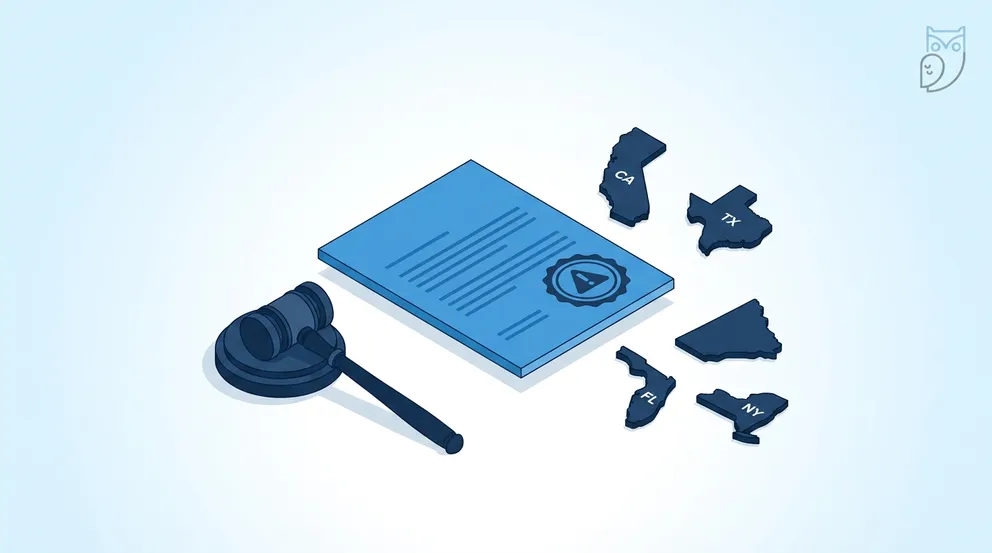
Under New York Insurance Law §3105, an insurer can void a policy only if the withheld fact would have changed its decision to write the policy at all. Every state applies a version of this "materiality" test, and insurers use it to deny claims, cancel policies, or bill you retroactively when you fail to report a DUI, an unlisted driver, or rideshare use.
Insurance runs on a legal doctrine most policyholders have never heard of: uberrimae fidei, Latin for "utmost good faith." Both you and your insurer are bound by it, and it's the reason a single unreported ticket or an unlisted teenager can unravel a claim years later. Courts have applied this standard to insurance contracts since the 18th century, and it still governs how U.S. auto insurers decide whether to pay, cancel, or rescind a policy.
- Insurers can only void a policy over facts that are "material," meaning they would have changed the underwriting decision, per New York Insurance Law §3105 and similar statutes nationwide.
- California allows rescission for unintentional concealment under Cal. Ins. Code §331, while Texas requires proof of intent to deceive, a far higher bar for insurers to clear.
- The Coalition Against Insurance Fraud puts the annual cost of U.S. insurance fraud, including nondisclosure, at $308.6 billion, adding roughly $900 to what every policyholder pays.
- Personal auto policies almost universally exclude rideshare and delivery driving, and Uber's contingent coverage during "app on, no ride accepted" periods caps at $50,000 per person and $25,000 in property damage.
Why Disclosure Rules Exist
An insurance application isn't a formality. The company prices your policy entirely on what you tell it, since it has no other way to know your driving history, your mileage, or who else drives your car. Cal. Ins. Code §332 puts the obligation in writing: "Each party to a contract of insurance shall communicate to the other, in good faith, all facts within his knowledge which are or which he believes to be material to the contract." That duty runs both ways, but insurers hold the leverage because they write the check.
Materiality is the legal hinge everything swings on. A fact counts as material only if, according to New York's Department of Financial Services, "knowledge by the insurer of the facts misrepresented would have led to a refusal by the insurer to make such contract." Forgetting to mention a fender bender from a decade ago rarely clears that bar. Hiding a DUI conviction almost always does.
What You Must Disclose Before You Buy a Policy
Underwriters build your premium from four data points, and each one carries its own disclosure risk. Get any of them wrong, intentionally or not, and you hand the insurer grounds to challenge a future claim.
Your driving record comes first. Accidents, moving violations, DUIs, and license suspensions all factor into the quote, and insurers typically pull your motor vehicle record independently. That doesn't excuse omissions on your end. A ticket issued three weeks ago may not have posted to the state database yet, so leaving it off your application can still count as misrepresentation even though the insurer's own records would eventually catch it.
Vehicle details come next: make, model, year, VIN, annual mileage, safety features, and whether the car is salvaged, leased, or financed outright. A salvaged title changes what coverage options are even available, so insurers require it upfront rather than discovering it during a claim.
Usage patterns matter almost as much as the vehicle itself. Reporting 3,000 annual miles when you actually log 15,000 lowers your quote today but can sink a claim tomorrow, since low-mileage discounts assume a driving pattern you never had. This isn't a rare slip either: Insurify data shows U.S. drivers underreport their annual mileage by an average of 44%, with Wyoming drivers underreporting by as much as 73%. Commuting versus pleasure use, and primary versus secondary vehicle status, both shift the risk calculation insurers rely on.
Every household driver has to be listed or formally excluded, spouses and roommates included. Skip a driver who ends up behind the wheel during an accident, and the insurer gains a documented reason to deny that specific claim, even if the accident itself had nothing to do with the omission.
Rideshare and delivery driving fall outside standard personal auto coverage. The moment you accept a fare or a delivery for pay, most personal policies treat the trip as commercial use, and a claim filed during that window gets denied on that basis alone.
What You Must Report After Your Policy Is Active
Coverage obligations don't end at signing. Four categories of change require notifying your insurer, usually within 30 days depending on the carrier and state.
A new driver in the household, whether a newly licensed teenager or an adult who moved in, needs to go on the policy before they get behind the wheel. Vehicle modifications count too: a lift kit, aftermarket rims, a turbocharger, or an upgraded sound system can all raise the car's value or theft risk enough to require an adjusted premium. A change in how you use the vehicle, say switching to remote work and cutting your commute, should also get reported, since it can lower your rate rather than raise it. Finally, report every accident, even one where you weren't at fault, because unreported damage that surfaces later complicates whatever claim you file next.
Rideshare and Delivery Driving
Gig work creates the single most common disclosure gap in modern auto insurance. NAIC's commercial ride-sharing guidance confirms that personal auto policies generally exclude any period where the app is on and the driver is working for compensation. Uber and Lyft fill part of that gap with contingent coverage once your personal insurer formally denies a claim, but the limits are thin: $50,000 per person, $100,000 per accident, and $25,000 in property damage during the window when the app is on but no ride has been accepted yet. Once a passenger or delivery is in the car, the platform's own commercial policy typically takes over with higher limits.
The gap has real financial consequences. Insurance attorneys at Phillips Law Group have documented cases where a personal insurer denied a claim outright because the driver was logged into a rideshare app at the time of the crash, leaving the driver to rely on the platform's contingent policy or absorb the loss directly. Telling your insurer you drive for Uber, DoorDash, or Instacart, and buying a rideshare endorsement, typically costs $10 to $30 a month and closes that exposure before it becomes a denied claim.
What Happens When You Don't Disclose
Nondisclosure carries four distinct consequences, and insurers don't have to pursue just one.
Claim denial hits first and most often. If an insurer discovers an undisclosed teen driver after that driver totals the car, the company can refuse to pay the claim entirely, regardless of who was at fault in the crash. Policy rescission goes further: in material misrepresentation cases, the insurer can cancel the policy retroactively and treat it as though coverage never existed, which is far more damaging than a standard cancellation. Higher premiums follow even when insurers don't rescind, since discovering an undisclosed risk factor often triggers a recalculated rate and, in some cases, back-billed premiums for the period you were underinsured. Legal exposure sits at the far end of the scale. The Coalition Against Insurance Fraud puts total U.S. insurance fraud losses at $308.6 billion a year, adding roughly $900 to what the average policyholder pays annually, and the National Insurance Crime Bureau reported a 49% jump in fraud tied to identity theft in 2025 alone, with about a quarter of those cases involving synthetically generated identities.
Not every omission qualifies as fraud. Soft fraud, the more common category, covers exaggerating a legitimate claim or leaving out an application detail to shave a few dollars off a premium. It still counts as fraud under state law even when the driver never intended serious deception, and insurers increasingly catch it: the Insurance Information Institute reports that 80% of insurers now use predictive modeling to flag fraud, up from 55% in 2018.
How State Law Decides Whether Your Insurer Can Void the Policy
States don't apply the same standard to rescission, and the gap between them is wide enough to change the outcome of an identical case.
| State | Governing Law | Standard for Voiding a Policy | Insurer's Burden |
|---|---|---|---|
| California | Cal. Ins. Code §331, §332 | Concealment, even unintentional, can support rescission | Low, no intent required |
| Florida | Fla. Stat. §627.409 | Misrepresentation or omission need not be intentional | Low, no intent required |
| Texas | Common law rescission standard | Insurer must prove intent to deceive | High, intent required |
| New York | N.Y. Ins. Law §3105, §3425 | Liability coverage can't be voided retroactively regardless of fraud | Highest, retroactive voiding barred outright |
Source: California Insurance Code sections 331 and 332, Florida Statutes section 627.409, and New York Department of Financial Services Office of General Counsel Opinion 06-12-11 interpreting Insurance Law sections 3105 and 3425. Standards summarized here reflect statutory and regulatory guidance current as of 2026 and can vary by case.
New York's rule stands out because it protects third parties over insurers. Even when a policyholder commits outright fraud on an application, the state's DFS has opined that an insurer cannot retroactively void the liability portion of a motor vehicle policy, since doing so would strip an innocent accident victim of coverage they were entitled to rely on. The insurer's only remedy is to cancel the policy going forward and, separately, sue the policyholder for damages.
Call Your Insurer Directly
Report the correction yourself rather than waiting for a claim to expose it. Insurers weigh voluntary corrections differently than facts they uncover during an investigation.
Get the Correction in Writing
Ask for an updated declarations page or email confirmation showing the corrected mileage, driver list, or vehicle use. Keep it for as long as the policy stays active.
Expect a Rate Adjustment, Not a Cancellation
A voluntary correction usually results in a revised premium rather than a rescinded policy, since it demonstrates good faith rather than concealment under Cal. Ins. Code §332's disclosure standard.
Insurers rarely rescind a policy over a single small error. They rescind over patterns, and the pattern that triggers scrutiny is almost always a claim that arrives right after a fact would have raised your premium.
For drivers managing a lapse after a canceled policy, our guide on what happens when coverage lapses covers how to rebuild continuous coverage without another rate hike. If your state requires a written denial explanation, note that Texas now mandates insurers explain policy denials in writing, a rule that gives Texas drivers more visibility into exactly which disclosure issue triggered the denial. And if repeated claims are pushing your premium up independent of any disclosure issue, see how multiple claims affect your rate over a policy term.
Frequently Asked Questions
Consequences range from a denied claim to full policy rescission, where the insurer treats the policy as though it never existed. The severity depends on whether the fact was "material," meaning it would have changed the insurer's decision to write the policy, per New York Insurance Law §3105 and similar statutes in other states.
Yes. If an insurer discovers an undisclosed material fact, such as an unlisted teen driver or unreported rideshare use, it can deny a related claim even if that fact didn't directly cause the loss. Some states, like New York, limit this power when it comes to liability coverage protecting third-party accident victims.
Material misrepresentation is a false statement on an application that, had the insurer known the truth, would have changed its decision to issue the policy or the premium it charged. California and Florida allow insurers to void a policy over unintentional misrepresentation, while Texas requires the insurer to prove intent to deceive.
Yes. Unreported accidents, even no-fault ones, can complicate a future claim if related damage surfaces later. Insurers also expect to hear about claims you've filed against someone else's liability coverage, since it affects how they assess your overall risk.
Generally no. Personal auto policies exclude commercial use, including rideshare and delivery driving, the moment you're logged into the app and working for pay. Uber's contingent coverage during that window caps at $50,000 per person and $25,000 in property damage, well below what a full personal or commercial policy provides.
- New York Department of Financial Services - OGC Opinion 06-12-11 on Material Misrepresentation and Motor Vehicle Policy Rescission
- California Insurance Code Section 331 - Concealment
- Coalition Against Insurance Fraud - The Impact of Insurance Fraud on the U.S. Economy
- National Insurance Crime Bureau - Insurance Fraud Is Coming for Your Pocketbook
- Insurance Information Institute - Facts + Statistics: Fraud
- NAIC - Commercial Ride-Sharing Insurance Topics
- FindLaw - The Doctrine of Utmost Good Faith