

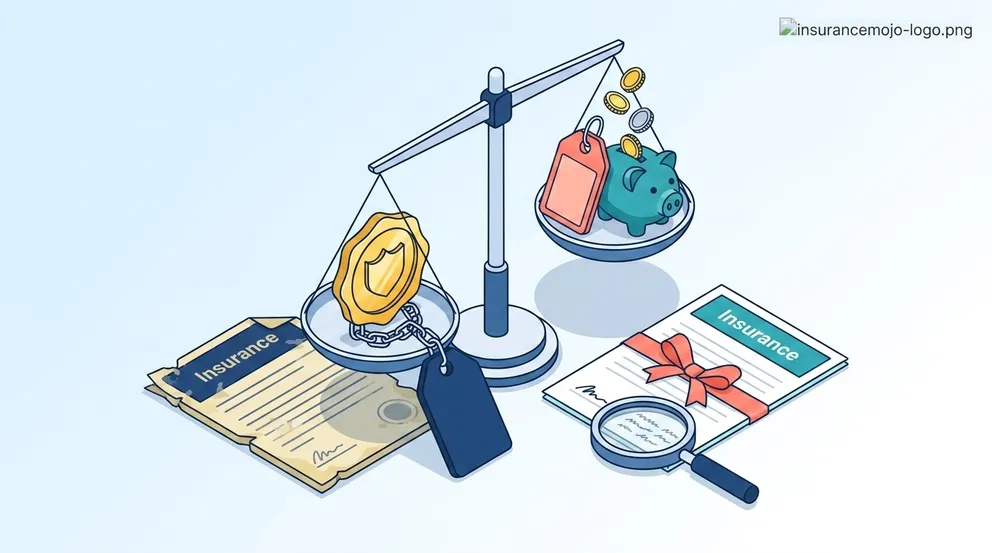
Drivers who switch car insurance save a median of $461/year, according to LendingTree's 2025 survey. Loyalty discounts (4-18%) rarely offset "price optimization," a practice where insurers raise rates on customers unlikely to shop around. Compare quotes at every renewal; 92% of switchers report saving money.
Staying with the same car insurance company for years feels responsible, but the data tells a different story. A LendingTree survey found that 92% of Americans who switched carriers saved money, with 41% saving $500 or more annually. If you're exploring all available car insurance discounts, the loyalty discount may actually be the one costing you the most.
What Price Optimization Really Means for Your Premium
Price optimization is the practice that makes loyalty discounts misleading. According to the Consumer Federation of America (CFA), insurers purchase software that compiles data on policyholders and uses algorithms to calculate how sensitive each customer is to price increases. The output tells the carrier the maximum premium a customer will accept before switching.
NPR reported on CFA Director J. Robert Hunter's findings from an Allstate filing in Wisconsin, which revealed the company used non-risk factors to set premiums. A carrier might raise your rate 25% at renewal, then apply a 10% loyalty discount so you feel good about "only" paying 15% more, per CarInsurance.com's analysis. Your premium climbed $345 on a $2,300 policy, but the "discount" framing makes it feel like a deal.
Price optimization uses your personal data, including shopping habits and brand loyalty, to predict whether you'll leave. According to CFA, this means customers who rarely compare quotes subsidize lower rates for customers who shop aggressively. The less you shop, the more you pay.
Twenty states have formally banned price optimization as "unfair discrimination," including California, Florida, Ohio, Maryland, Virginia, and Washington, per CFA's tracking. If you live outside those 20 states, your insurer may legally charge you more for staying loyal. Insure.com's investigation confirmed that price optimization is "designed to optimize policy pricing for the insurer, not for the customer."
Which Carriers Offer Real Loyalty Rewards
Not every loyalty program is smoke and mirrors. Some carriers offer tangible benefits that accumulate over time and provide genuine value beyond a percentage off your premium. The distinction matters when deciding whether to stay or switch.
| Carrier | Loyalty Discount | Additional Loyalty Perks | Worth Staying? |
|---|---|---|---|
| American Family | Up to 18% | Discount increases with tenure | Strong |
| State Farm | Up to 20% | Drive Safe & Save, claims-free rewards | Strong |
| Nationwide | Up to 10% | Vanishing deductible ($100/year reduction) | Moderate |
| Allstate | Up to 10% | Deductible Rewards, claims-free bonus | Moderate |
| GEICO | Up to 15% | Multi-policy discount, no added perks | Moderate |
| Progressive | 5-10% | Loyalty-only rate adjustments | Weak |
Source: Carrier websites, Clearsurance, and AutoInsurance.org loyalty discount data, compiled April 2026. "Worth Staying" reflects discount value relative to typical price optimization impact.
Nationwide's vanishing deductible reduces your collision deductible by $100 for every claims-free year, per their website. After five years without a claim, a $500 deductible drops to $0. That benefit disappears if you switch. Allstate's Deductible Rewards works similarly, cutting $100/year from your deductible for safe driving. These perks create real switching costs that a loyalty discount percentage alone doesn't capture.
When Staying Actually Saves You Money
Loyalty makes financial sense in specific situations where accumulated benefits outweigh the switching discount. Claims forgiveness is the most valuable: if you've built up a claims-free record with your carrier and they offer accident forgiveness, switching resets that protection. One at-fault accident raises premiums 43% on average, according to post-accident rate data from The Zebra.
- Claims forgiveness built over 3+ years (saves $700-1,000 after an at-fault accident)
- Vanishing deductible at $0 after 5 claims-free years with Nationwide or Allstate
- Agent relationship that expedites complex claims (homeowner + auto bundles)
- Active bundle discount of 8-15% that would be lost or reduced by splitting carriers
- Premium increased 10%+ at renewal with no new claims or tickets
- Competitor quotes $400+ lower for identical coverage levels
- No claims forgiveness, vanishing deductible, or bundle tied to current carrier
- Your state hasn't banned price optimization (30 states still allow it)
How Often You Should Compare Quotes
At minimum, compare quotes from 3-5 carriers every renewal period (every 6 or 12 months, depending on your policy term). According to Bankrate's 2026 guide, drivers who compare at every renewal save an average of $400-600/year compared to those who auto-renew without shopping.
AgencyHeight's 2026 switching guide notes that the current market strongly favors consumers. After limiting new policies during 2023-2024's hard market, insurers are now competing aggressively for new customers, creating a buyer's market in 2025-2026. Insurify's rate report confirms auto premiums fell 6% in 2025 nationally, meaning your renewal quote may already reflect outdated (higher) pricing. For step-by-step instructions on making the switch without a coverage gap, see our guide on how to compare car insurance quotes.
When you get a renewal notice, call your current carrier and mention the lower quote you received. According to Clearsurance's 2026 data, 37% of customers who asked for a rate match or additional discount received one, saving an average of $150-200 without switching.
Pull your current declarations page
Note your exact coverage limits, deductibles, and total premium. You need identical coverages to make apples-to-apples comparisons across carriers.
Get 3-5 quotes with matching coverage
Use comparison tools like The Zebra, Insurify, or Policygenius. Enter the same coverage limits and deductibles from your current policy for each quote.
Calculate your total switching cost
Factor in lost benefits: vanishing deductible progress ($100/year), claims forgiveness value (up to $1,000 after an accident), and any bundle discounts you'd lose by splitting carriers.
Negotiate or switch
Call your current carrier with the lowest competitor quote. If they can't match within $100/year, switch. Start the new policy before canceling the old one to avoid a coverage lapse, which can raise future rates 15-20%.
Frequently Asked Questions
New customers typically pay 15-20% less than long-term policyholders at the same company, according to CFA research. On the 2026 national average premium of $2,314/year (Insurify), that gap translates to $347-463/year in higher costs for staying. Price optimization algorithms widen this gap for customers who rarely shop around.
Twenty states and Washington, D.C. have banned price optimization as unfair discrimination, including California, Florida, Ohio, Maryland, Virginia, Colorado, Connecticut, and Pennsylvania, per CFA tracking. In the remaining 30 states, insurers can legally use non-risk data like shopping behavior and brand loyalty to set your premium.
Safe driver and claims-free discounts transfer to new carriers because they're based on your driving record, which follows you via CLUE and MVR reports. Carrier-specific perks like Nationwide's vanishing deductible or Allstate's Deductible Rewards do not transfer. Factor in the dollar value of these accumulated benefits before switching.
- Consumer Federation of America — Opposition to Price Optimization in Insurance
- NPR — Being a Loyal Auto Insurance Customer Can Cost You
- Insure.com — Price Optimization Puts the Screws to Loyal Customers
- CarInsurance.com — Car Insurance Loyalty Discounts: Should I Stay or Go?
- Clearsurance — Best Customer Loyalty Insurance Discounts in 2026
- Insurify — Car Insurance Prices Report: 2025-2026 Trends
- AutoInsurance.org — Best Customer Loyalty Auto Insurance Discounts 2026