

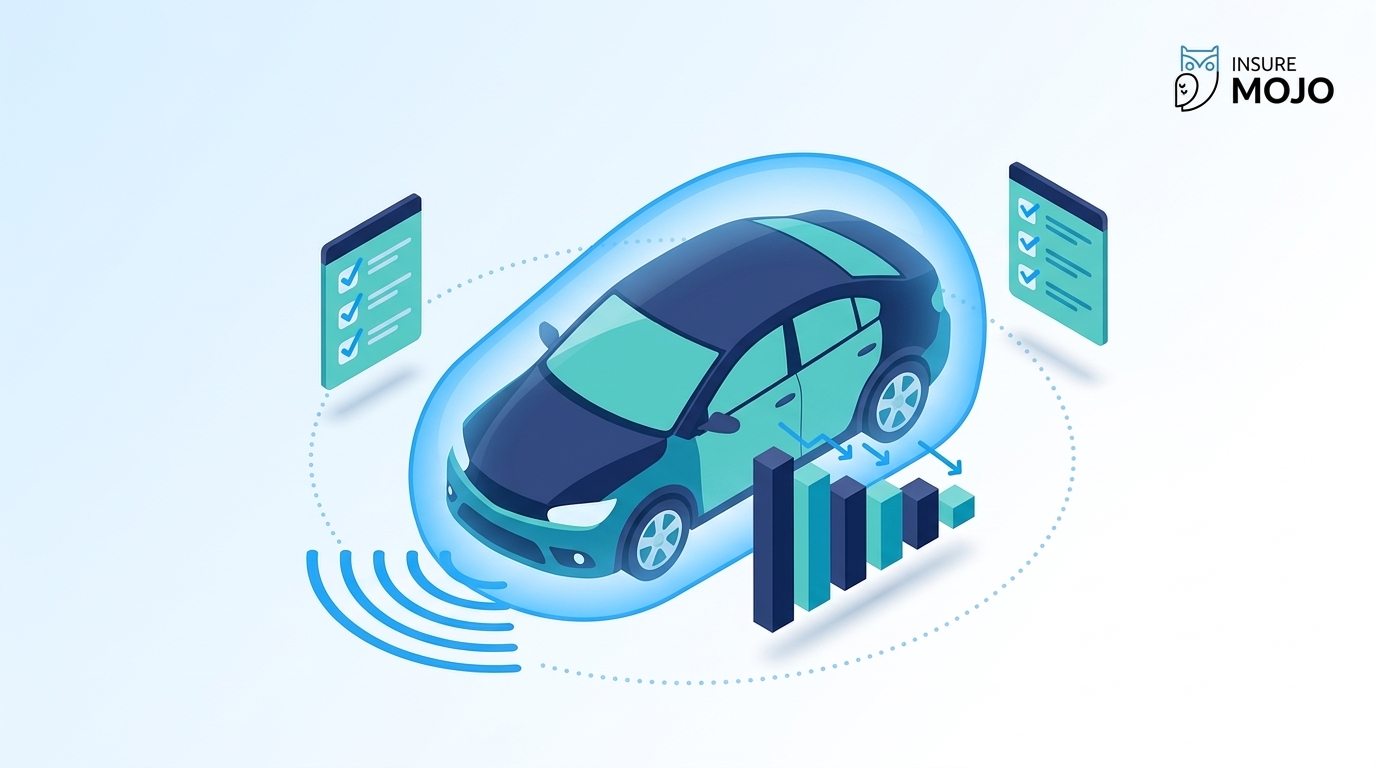
A new HLDI study published March 26, 2026 found that bundled driver assistance systems can reduce property damage liability insurance claims by up to 39%. Rear automatic emergency braking is the single most impactful feature — eliminating the low-speed parking lot crashes that drive the bulk of claims.
The more driver safety technology your car has, the less likely it is to generate an insurance claim — and new federal data now proves exactly how much each system matters. Research published March 26, 2026 by the Highway Loss Data Institute (HLDI) shows that bundled advanced driver assistance systems (ADAS) cut property damage liability insurance claims by up to 39%, with rear automatic emergency braking (rear AEB) delivering the single biggest boost of any individual feature.
For anyone shopping for a car — or wondering whether their current vehicle's safety tech is actually doing anything — the data sends a clear signal: these systems compound their benefits as more are added, and they're increasingly reflected in how insurers set rates.
- Full ADAS bundle: 39% reduction in property damage liability claims, 21% in bodily injury liability
- Even basic front AEB alone cuts PDL claims by 13% and bodily injury claims by 9%
- Rear AEB is the highest-impact single feature — it eliminates parking lot backing crashes
- Blind spot detection + rear cross traffic alert: ~10% fewer PDL claims, 13% fewer BIL claims
- Traffic Sign Recognition showed no clear benefit in the study
What the HLDI Study Found
HLDI's latest research analyzed 2015–2023 Mazda vehicles equipped with six different ADAS bundles and four standalone systems. Researchers compared insurance claim rates across three coverage types: property damage liability (PDL), which pays for damage you cause to other people's vehicles or property; bodily injury liability (BIL), which pays for injuries you cause to others; and collision, which covers damage to your own vehicle.
The study examined how claim rates changed as Mazda progressively bundled more technology into each model year — not only adding new features but also refining the older ones. That means the biggest bundles had both more features and better versions of earlier tech.
| Bundle | Key Features Added | PDL Reduction | BIL Reduction |
|---|---|---|---|
| Bundle 1 | Front AEB + forward collision warning | -13% | -9% |
| Bundle 2 | + High-beam assist, lane departure warning, adaptive cruise | -16% | -18% |
| Bundle 3 | + Lane departure prevention | -19% | -21% |
| Bundle 4 | + Pedestrian AEB | -30% | -18% |
| Bundle 5 | + Driver Attention Alert | -23% | N/A* |
| Bundle 6 | + Rear AEB | -39% | -21% |
*Bundle 5 showed no additional BIL benefit from Driver Attention Alert — the system only activates after 20+ minutes of highway driving and doesn't help in the urban/suburban scenarios where most claims occur.
"If you're worried about rising repair costs, the smartest thing you can do is get a vehicle with rear AEB and make sure it is turned on." — Matt Moore, Chief Insurance Operations Officer, HLDI/IIHS
Why Rear AEB Is the Game-Changer
The jump from Bundle 4 to Bundle 6 — with rear AEB as the key addition — accounts for the most dramatic reduction in the entire study: from 30% to 39% in property damage claims. The reason comes down to where most insurance claims actually happen: parking lots.
Low-speed backing incidents — hitting a post, another car, or a pedestrian while reversing — make up a large share of PDL claims. Rear AEB specifically targets these scenarios. Unlike front AEB, which handles highway-speed and intersection crashes, rear AEB is doing its job every time you back out of a parking space.
Standalone Systems That Work
Beyond the bundles, HLDI evaluated four standalone features. Blind spot detection combined with rear cross traffic alert — which warns you of vehicles approaching from the side while you're reversing — was associated with a nearly 10% drop in PDL claims and a 13% reduction in BIL claims. In Mazda vehicles, both features share the same rear-bumper radar sensors and can't be purchased separately.
Curve-adaptive headlights (which pivot to illuminate your turning path) and heads-up displays (which project speed and navigation onto the windshield) each delivered smaller but meaningful claim reductions across PDL, BIL, and collision coverage.
The exception was Traffic Sign Recognition — a feature that uses a camera or navigation system to display speed limits and stop signs on your dashboard. It showed no clear reduction in claims, and may have been associated with a slight increase in some categories. HLDI noted the sample size was limited, and the technology's limitations in detecting all sign types may play a role.
The Catch: Safety Tech Raises Per-Crash Repair Costs
There's an important nuance buried in this data. While safety features dramatically reduce how often crashes happen, they increase the average cost of each crash that does occur. Radar sensors, forward cameras, and parking sensors are expensive to repair or replace when they're damaged — even in a minor fender-bender.
But the overall math still works in drivers' favor. HLDI found that nearly all bundles and standalone features were associated with lower overall losses under PDL coverage when both frequency and severity are combined. Crashes happening less often outweighs the higher per-incident repair bill. The one exception: collision coverage showed slight increases in overall losses for some bundles, driven by the higher cost of repairing ADAS-equipped vehicles when collisions do happen.
What This Means for Your Insurance Rate
Insurers don't yet pass the full 39% claim reduction directly to individual drivers — rate-setting considers your driving history, location, and many other factors. But HLDI data directly informs how carriers set rates for specific vehicle makes and models over time. Vehicles with comprehensive ADAS packages have historically ended up in lower rate tiers as the claims evidence accumulates.
Some carriers already offer explicit discounts for specific safety technologies. If your car has rear AEB, blind spot monitoring, or an automatic emergency braking package, it's worth calling your insurer and asking whether those features qualify for a discount on your policy.
Find out which ADAS features your vehicle has
Look up your trim level and options in your owner's manual or on the manufacturer's website. Many drivers don't know whether their car has rear AEB or blind spot monitoring — especially if it came on a used vehicle.
Confirm your safety systems are actually turned on
ADAS features can be disabled in vehicle settings — and they sometimes reset after a battery replacement or software update. Check your car's infotainment or driver assistance menu to confirm rear AEB and other active systems are enabled.
Ask your insurer about safety technology discounts
Call your carrier or check your policy's declarations page. Ask specifically about discounts for automatic emergency braking, rear AEB, or advanced safety packages — many insurers offer 3–7% discounts for qualifying features.
Prioritize rear AEB when buying a new or used vehicle
The HLDI data is clear: rear AEB delivers the largest real-world claim reduction of any single feature. When comparing trims, treat it as a must-have — not a nice-to-have. Blind spot detection with rear cross traffic alert is the next most impactful.
Looking Ahead
This study covered Mazda's ADAS evolution from 2015 to 2023, but the technology has continued advancing. HLDI plans to evaluate newer model years and additional manufacturers as insurance claims data accumulates. As these systems become standard equipment across more vehicles, their impact should become more directly visible in insurance premiums — eventually rewarding buyers who prioritize safety tech with meaningfully lower rates.
IIHS's 2026 Top Safety Pick program already reflects the growing importance of ADAS — and as more vehicles earn top ratings with comprehensive driver assistance packages, consumers should expect safety tech to become an increasingly central factor in how their insurance is priced.
Frequently Asked Questions
It depends on your insurer and vehicle. Some carriers offer discounts of 3–7% for features like automatic emergency braking or blind spot monitoring. More broadly, vehicles with strong ADAS packages tend to have lower insurance loss rates over time, which shows up in model-level rate tiers. Ask your insurer directly what safety feature discounts are available on your policy.
Front AEB is now standard or near-standard on most new vehicles, but rear AEB is less universal. It's more common on newer model years and higher trim levels. When shopping, specifically check the trim-level specs for "rear automatic emergency braking" — don't assume it's included just because the vehicle has a backup camera. A backup camera and rear AEB are different features.
Yes — radar sensors, cameras, and parking sensors cost significantly more to repair or replace than older bumper components. The HLDI study confirmed higher average claim costs for ADAS-equipped vehicles. However, crashes happen less frequently, and overall insurance losses are still lower for most ADAS bundles. The tradeoff favors safety tech buyers.
HLDI found that Driver Attention Alert only activates after 20+ minutes of continuous driving between 41 and 86 mph on roads with clear lane markings. Most property damage claims happen at low speeds in parking lots and urban intersections — scenarios where this feature never triggers. It's designed for highway fatigue, not the everyday situations where claims most often occur.
This study specifically analyzed 2015–2023 Mazda vehicles, but HLDI has conducted similar analyses for other manufacturers. The general pattern — more bundled safety tech equals fewer claims — has been consistent across brands. The specific percentage reductions will vary by manufacturer and model year, but the directional findings apply broadly.
- IIHS — Safety Benefits Stack Up From Driver Assistance Features (March 26, 2026)
- HLDI Bulletin Vol. 42, No. 30 — 2015-23 Mazda Advanced Driver Assistance Systems (December 2025)
- Mazda USA Newsroom — New Study Shows Strong, Compounding Safety Benefits of Mazda's ADAS (March 26, 2026)
- Claims Journal — HLDI: Safety Benefits Stack Up From Driver Assistance Features (March 30, 2026)
- The Brake Report — Mazda ADAS Bundles Cut Crash Claims Up to 39%, HLDI Finds