

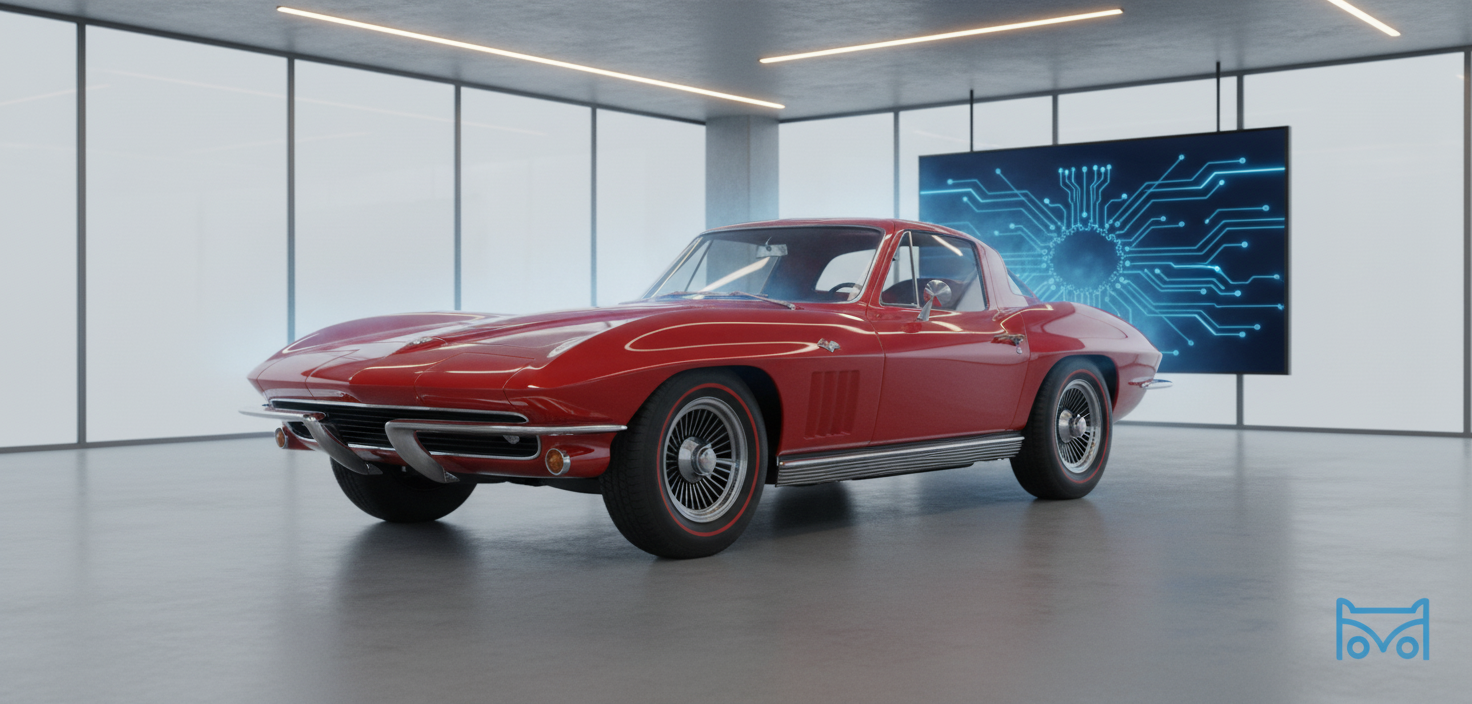
Classic car insurance typically costs between $200 and $600 per year — roughly 40-50% less than standard auto insurance. The biggest perk? Agreed value coverage, which means you and your insurer lock in your car's worth upfront. No depreciation surprises if something goes wrong.
You've spent years hunting down that perfect '67 Mustang or meticulously restoring a '57 Chevy Bel Air. The last thing you want is a cookie-cutter insurance policy that treats your pride and joy like a 10-year-old Honda Civic. Here's the thing — regular car insurance just doesn't cut it for classic and collector vehicles. It uses depreciation-based payouts that can leave you thousands of dollars short if your car is totaled or stolen.
Classic car insurance exists specifically for vehicles like yours. It's designed around how collectors actually use their cars — sparingly, carefully, and with a whole lot of love. And surprisingly, it's often cheaper than what you're paying for your daily driver.
Let's break down everything you need to know about insuring your classic ride, from costs and coverage to which companies deserve your business.
- Classic car insurance costs $200-$600/year on average — up to 50% less than standard auto policies
- Agreed value coverage guarantees your full payout with no depreciation deductions
- Your vehicle typically needs to be at least 25 years old and stored in a locked garage
- Top specialist insurers include Hagerty, Grundy, American Collectors, and Chubb
- You'll need a separate daily driver and a clean driving record to qualify
What Is Classic Car Insurance?
Classic car insurance is a specialized type of auto coverage built for collector vehicles, antiques, hot rods, and vintage rides that appreciate in value rather than depreciate. Unlike your standard auto policy — which assumes your car loses value every year — classic car insurance recognizes that your 1970 Plymouth Barracuda is worth more today than it was five years ago.
The cornerstone of most classic car policies is agreed value coverage. When you sign up, you and your insurer agree on exactly what your vehicle is worth. If it's totaled or stolen, you get that full amount. No arguments, no depreciation calculations, no lowball offers. That's a massive difference from regular insurance, and it's the number one reason classic car owners need a specialized policy.
Most policies also include perks you won't find on a standard plan — things like spare parts coverage, flatbed-only towing (because nobody's dragging your restored classic behind a standard tow truck), and the ability to choose your own repair specialist.
How Much Does Classic Car Insurance Cost?
Here's some good news for your wallet. Classic car insurance is significantly cheaper than insuring your everyday vehicle. According to industry data, the average policy runs between $200 and $600 per year — and some drivers pay even less.
Why so affordable? It boils down to risk. Classic cars spend most of their time parked safely in garages. They're driven fewer miles, taken out in good weather, and handled with extreme care. Fewer miles on the road means fewer accidents, fewer injury claims, and fewer payouts for insurers. That translates directly to lower premiums for you.
To put this in perspective, the average standard auto insurance policy in the U.S. costs around $1,674 per year. A classic car policy at $400 annually saves you over $1,200 compared to insuring the same vehicle on a regular plan.
What Affects Your Classic Car Insurance Rates
Your actual premium depends on several factors:
- Agreed value of the vehicle — A $20,000 classic costs less to insure than a $150,000 show car
- Your driving record — Clean records get the best rates
- Annual mileage — Lower mileage limits usually mean lower premiums
- Storage situation — A climate-controlled garage beats a carport
- Your location — Rates vary by state and zip code
- Number of vehicles — Multi-car discounts are common with classic car insurers
If you own multiple classics, bundling them on a single policy can dramatically reduce your per-vehicle cost. One Grundy customer insures three classic cars with agreed values of $20K, $30K, and $40K for just $476 total per year — that's about $159 per car.
Agreed Value vs. Stated Value vs. Actual Cash Value
This is where classic car insurance gets really interesting — and where choosing the wrong option can cost you tens of thousands of dollars. There are three valuation methods used in auto insurance, and understanding the differences is critical for any collector.
You and your insurer agree on your car's worth upfront. If it's totaled, you get that exact amount minus your deductible. No depreciation, no haggling. This is the gold standard for classic cars.
You declare a value when you buy the policy, but the insurer pays the lesser of the stated amount or actual cash value. This can leave you severely undercompensated.
The insurer determines what your car is worth at the time of loss, factoring in depreciation. For appreciating classics, ACV can drastically undervalue your vehicle.
Let's say you own a restored 1969 Camaro Z/28 that you've put $85,000 into. With agreed value, your insurer pays $85,000 (minus deductible) if it's totaled. With stated value, you might declare $85,000 but only receive $55,000 because the insurer determines that's the ACV. With actual cash value, you could get even less — maybe $45,000 — because the insurer applies depreciation formulas designed for everyday cars.
Stated value policies are sometimes marketed as similar to agreed value, but they're not. The insurer can pay the lesser of the stated amount or actual cash value. Always confirm in writing that your policy is true agreed value before signing.
What Does Classic Car Insurance Cover?
Classic car insurance includes the standard coverages you'd expect — liability, collision, and comprehensive — but adds specialized protections designed specifically for collector vehicles.
Standard Coverages
- Liability coverage — Pays for injuries or property damage you cause to others
- Collision coverage — Covers damage to your vehicle from an accident, regardless of fault
- Comprehensive coverage — Protects against theft, vandalism, hail, flooding, and animal strikes
Classic Car-Specific Coverages
This is where specialized policies really shine. Depending on your insurer, you might get:
- Spare parts coverage — Protects those hard-to-find original parts you've been stockpiling (coverage ranges from $500 to $2,000 depending on the insurer)
- Flatbed-only towing — Guarantees your car gets transported properly, not dragged on a hook
- Restoration coverage — Protects vehicles actively being rebuilt, with some insurers increasing agreed value by 10% per quarter during restoration
- Trip interruption — Reimburses lodging and travel costs if your classic breaks down far from home (up to $600 with Grundy)
- Automotive tools coverage — Hagerty includes $750 in coverage for your specialized tools
- Auto show medical reimbursement — Covers injuries at car exhibitions
- Cherished salvage — Lets you keep the vehicle and still receive the agreed value payout if it's declared a total loss
- Disaster relocation — American Collectors reimburses up to $250 to move your car during a natural disaster
Unlike standard auto insurance, most classic car policies let you choose your own repair shop. That means your trusted specialist — the one who actually understands matching factory paint on a '65 Corvette — handles the work, not some random body shop.
Does Your Car Qualify for Classic Car Insurance?
Not every old car qualifies as a "classic" in the eyes of insurers. There are specific criteria your vehicle — and you as a driver — need to meet.
Vehicle Requirements
- Age — Generally at least 25 years old, though some insurers like J.C. Taylor accept vehicles as young as 19 years old
- Condition — Must be in restored or well-maintained condition with documented service history
- Value — According to the Insurance Information Institute, a vehicle worth more than its original selling price may qualify
- Storage — Must be kept in a locked, enclosed garage (no street parking, no open carports)
- Usage — Limited to shows, parades, club events, and pleasure drives — not daily commuting
What Types of Vehicles Qualify?
It's not just sedans from the '50s. Classic car insurance can cover a surprisingly wide range of vehicles:
- Cars that are more than 25 years old
- Hot rods, muscle cars, and modified vehicles
- Exotic and luxury cars
- Vintage military vehicles and antique trucks
- Classic motorcycles
- Some classic car replicas
- Vehicles under active restoration
Driver Requirements
- Age — Primary policyholder must be at least 25 years old
- Driving record — Clean record for the past 5 years with no at-fault accidents or serious violations
- Alternate vehicle — You must own a separate daily driver insured under a standard auto policy
The requirement for a separate daily driver is non-negotiable with most classic car insurers. If your classic is your only vehicle, you'll typically need to insure it under a standard auto policy instead, which means higher premiums and no agreed value coverage.
Best Classic Car Insurance Companies
Not all insurers understand classic cars. The companies below specialize in collector vehicle coverage and have earned strong reputations among enthusiasts.
- Increases agreed value 10% per quarter during restoration (up to $25,000)
- $750 coverage for automotive tools
- Flexible use for club events, tours, and pleasure driving
- 7,500-mile annual limit
- Excellent valuation tools for determining your car's worth
- No annual mileage caps — drive as much as you want
- Up to $600 in trip interruption coverage
- $250 roadside assistance included
- Highly competitive multi-car pricing
- Also offers classic boat and homeowners coverage
- Freedom Tier allows 7,500 miles plus occasional general use
- $0 deductible glass coverage included
- $250 disaster relocation reimbursement
- Choose your own repair mechanic
- OEM and custom-fabricated parts coverage
- Unlimited mileage for hobby use
- $1,000 spare parts coverage
- 90-day automatic coverage for new purchases
- No authorization needed for non-competitive rallies
Mileage Limits by Company
One of the biggest differences between classic car insurers is how many miles they let you drive. Here's how the major players compare:
| Company | Mileage Limit | Spare Parts Coverage | Best For |
|---|---|---|---|
| Grundy | Unlimited | $500 | Drivers who want no restrictions |
| Chubb | Unlimited (hobby use) | $1,000 | High-value collector cars |
| American Modern | 1K / 3K / 6K / Unlimited | $2,000 | Customizable policies |
| Hagerty | 7,500 miles | $750 | Restored vehicles |
| American Collectors | 7,500 miles + general use | $500 | Broad availability |
| Safeco | 5K (limited) / 10K (regular) | Not included | Regular driving with classic |
Classic Car Insurance vs. Regular Auto Insurance
Still wondering if you actually need a specialized policy? Here's a side-by-side comparison that makes the differences crystal clear.
| Feature | Classic Car Insurance | Regular Auto Insurance |
|---|---|---|
| Valuation method | Agreed value (set upfront) | Actual cash value (depreciates) |
| Average annual cost | $200-$600 | $1,400-$2,500+ |
| Total loss payout | Full agreed amount | Depreciated market value |
| Usage restrictions | Shows, leisure, events | Unlimited daily use |
| Choose your repair shop | Yes (most policies) | Usually insurer's network |
| Spare parts coverage | Yes ($500-$2,000) | No |
| Flatbed towing | Guaranteed | Not guaranteed |
| Restoration coverage | Available | Not available |
- 40-50% cheaper premiums than standard policies
- Agreed value eliminates depreciation disputes
- Specialized coverage for parts, tools, and restoration
- Choose your own trusted repair specialist
- Flatbed-only towing protects your vehicle in transit
- Strict mileage limits with most insurers
- Can't use covered vehicle as your daily driver
- Drivers under 25 or with violations may not qualify
- Enclosed garage storage required
- Periodic appraisals or inspections may be needed
How to Save on Classic Car Insurance
Classic car insurance is already cheaper than standard coverage, but there are still ways to trim your premium even further.
Bundle Your Policies
Insure your classic and your daily driver with the same company. Chubb, Safeco, and American Modern all offer multi-policy discounts that can save you 10-25%.
Choose a Lower Mileage Tier
If you only take your classic out a handful of times per year, opt for a lower mileage limit. American Modern offers tiers starting at just 1,000 miles, and less driving means lower premiums.
Insure Multiple Classics Together
Multi-vehicle discounts from specialist insurers can be substantial. One Grundy customer pays just $476 per year for three cars with a combined agreed value of $90,000.
Join a Car Club
Some insurers offer rate reductions for members of recognized car clubs and collector associations. It's worth asking when you request a quote.
Raise Your Deductible
If your car mostly sits in the garage, a higher deductible can lower your annual premium by 10-15%. Just make sure you can comfortably afford the out-of-pocket cost if you need to file a claim.
Get quotes from at least three specialist insurers before committing. Rates can vary dramatically — one driver found that Grundy quoted $388 per year for a $52,000 vehicle while Hagerty quoted $404 for the same car. Small differences add up over years of ownership.
How to Get Classic Car Insurance
Ready to protect your classic? The process is straightforward, but you'll need a few things ready before you start requesting quotes.
What You'll Need
- Vehicle documentation — Title, registration, and VIN number
- Photos — Detailed photos of the exterior, interior, engine bay, and undercarriage
- Appraisal — A professional appraisal or documented restoration costs to establish agreed value
- Proof of storage — Photos or description of your enclosed garage
- Driving record — Your insurer will pull this, but having it handy speeds up the process
- Daily driver info — Proof of a separate vehicle insured under a standard policy
Most specialist insurers offer online quote tools that make the process quick. Hagerty's website, for example, includes detailed valuation tools that can help you determine the right agreed value before you even request a quote.
Common Mistakes to Avoid
Insuring a classic seems simple enough, but these common pitfalls trip up a lot of collectors:
- Using standard auto insurance — This is the biggest mistake. Regular policies use actual cash value, which can undervalue your classic by 50% or more
- Confusing stated value with agreed value — Stated value sounds good on paper, but the insurer can pay the lesser of stated or actual cash value. Always insist on true agreed value
- Setting agreed value too low — Classic car values have surged in recent years. Get a current appraisal and update your agreed value annually to keep pace with the market
- Ignoring the fine print on mileage — Exceeding your annual mileage limit can void your coverage. Track your odometer and choose a realistic tier
- Skipping documentation — Keep detailed records of all restoration work, receipts, and photos. This documentation is essential for establishing and defending your agreed value
Never misrepresent how you use your classic car. If you tell your insurer it's a show-only vehicle but actually drive it to work three days a week, your claim could be denied entirely. Be honest about usage — Safeco and Grundy offer higher-mileage options if you need more flexibility.
Frequently Asked Questions
Classic car insurance typically costs between $200 and $600 per year, with many policies starting around $40-$60 per month. That's roughly 40-50% less than standard auto insurance. Your exact rate depends on your vehicle's agreed value, your driving record, storage situation, and annual mileage.
Agreed value means you and your insurer lock in your vehicle's worth when the policy begins. If your car is totaled or stolen, you receive that agreed-upon amount minus your deductible. This is crucial for classic cars because standard policies use actual cash value, which applies depreciation — potentially paying you far less than your vehicle is actually worth.
Generally, no. Classic car insurance requires that the vehicle not be your primary mode of transportation. You'll need a separate daily driver insured under a standard auto policy. However, Safeco's regular-use option allows up to 10,000 miles per year, and Grundy offers unlimited mileage — giving you more flexibility than most.
Most insurers require vehicles to be at least 25 years old, though some like J.C. Taylor accept vehicles as young as 19 years old. Exotic cars, limited-production models, and muscle cars may qualify at younger ages depending on the insurer. The key factor is usually that the vehicle is appreciating in value and used as a collector's item.
With agreed value, you receive the full amount you and your insurer agreed upon at policy inception. With stated value, you declare a number, but the insurer pays the lesser of the stated amount or actual cash value at the time of loss. Agreed value is significantly better for classic cars and eliminates the risk of a reduced payout based on depreciation.
Yes. Nearly all classic car insurers require that your vehicle be stored in a locked, enclosed garage when not in use. Street parking and open carports typically don't qualify. This requirement protects the vehicle from theft, weather damage, and vandalism — which is why insurers insist on it.
- Insurance Information Institute - Insuring Your Classic Car
- CNBC Select - Best Classic Car Insurance Companies of 2026
- American Collectors Insurance - Classic vs. Regular Auto Insurance
- Velocity Restorations - Agreed vs. Stated vs. Actual Cash Value Explained
- Car and Driver - Classic Car Insurance Guide