
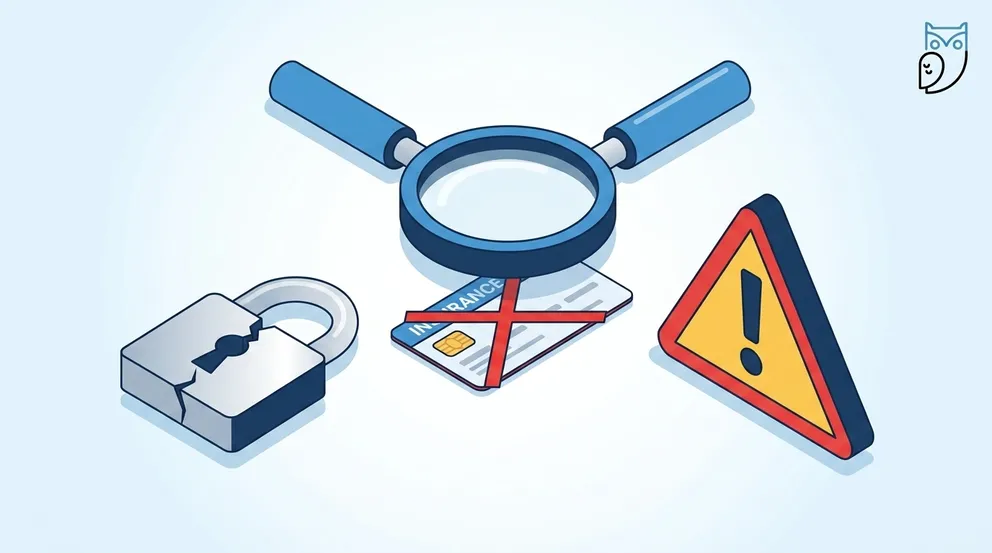
Auto insurance fraud drains more than $40 billion from the U.S. economy every year, according to the FBI, and honest drivers cover the shortfall through $400 to $700 in extra premiums annually. Staged crashes, ghost brokers, and phishing texts have all climbed since 2024. The National Insurance Crime Bureau estimates that close to 10% of property-casualty claims carry some element of fraud, and auto insurers alone lose roughly $29 billion a year to these schemes.
The most common car insurance scams are staged accidents (swoop-and-squat and panic stops), fake injury claims, ghost broker fraud, tow truck schemes, and phishing texts. The FBI values non-health insurance fraud at over $40 billion a year, and one staged crash can push a victim's full-coverage premium from $1,623 to $2,363, a 45% increase according to MoneyGeek.
- Auto insurers lose about $29 billion a year to scams, and staged accidents rank as the costliest single category, per NICB data.
- A dual front-and-rear dash cam runs $50 to $260 and defeats most swoop-and-squat setups by recording who braked first.
- Ghost brokers sell counterfeit policies that leave you uninsured; verifying an agent through your state insurance department takes under five minutes.
- Never click a payment link in a text claiming to be your insurer, since phishing and smishing complaints jumped sharply after 2024.
- Listing yourself as a low-mileage driver in a cheaper ZIP code is rate evasion, a form of fraud that can void your coverage and trigger denied claims.
What Counts as Car Insurance Fraud
Investigators split auto fraud into two buckets. Hard fraud describes a deliberately manufactured loss, such as a criminal ring staging a three-car pileup to file $36,000 in bogus injury claims. Soft fraud, sometimes called opportunistic fraud, happens when an otherwise honest driver pads a real claim or shaves the truth on an application, like adding $2,000 of old damage to a fresh fender-bender.
Both categories are felonies in most states, and both push premiums higher for the roughly 90% of drivers who file honest claims. The schemes below run from organized criminal operations down to the tow truck driver who appears within 90 seconds of a crash you never reported.
Staged Accident Scams: The $29 Billion Threat
Staged accidents are the backbone of organized auto fraud, and 2026 enforcement shows the scale. Four people in San Bernardino, California were charged over a staged-crash operation tied to $36,000 in claims, a Louisiana ring collected $4 million before four arrests, and a San Francisco operator was convicted in a federal $1.5 million scheme. The choreography rarely changes: rings recruit drivers, fake a collision that looks like your fault, then bill clinics and law firms for treatment nobody received.
Swoop and Squat
Two cars work together in a swoop-and-squat. The "squat" vehicle slides in front of you, the "swoop" car cuts sharply ahead of the squat and forces it to brake hard, and you rear-end the squat with three or four "injured" passengers inside. Rear-end collisions almost always pin fault on the trailing driver, which is exactly why the scheme pays.
Panic Stop (Brake Slam)
The panic stop needs only one scammer and a moment of your distraction. A driver watches your mirror or waits until you glance at your phone, then slams the brakes with no warning so you plow into the back. Keeping three seconds of following distance and mounting a dash cam turns this scam from a payout into evidence.
Drive Down and False Wave
Courtesy becomes a trap in the drive-down. A scammer waves you into merging or pulling out, then deliberately accelerates into your car and denies ever signaling you. Because a friendly hand gesture leaves no proof, prosecutors struggle to charge these cases without dash cam footage of the wave.
Wide-Turn Sideswipe
Dual left-turn lanes set up the sideswipe. Drift even slightly while turning and a scammer waiting in the adjacent lane steers into your car, then blames you for leaving your lane. Hugging your own lane markings through the entire turn removes the opening.
If a car full of passengers cuts in front of you and brakes for no reason, or a "witness" you never saw offers to back the other driver's story, treat it as a possible setup. Photograph every passenger, call 911 for an official report, and never negotiate cash at the scene.
Fake and Exaggerated Injury Claims
Soft-tissue injuries like whiplash drive the injury-claim scam because no X-ray can disprove them. A scammer who walked away smiling at the scene shows up three days later with a neck brace, a lawyer, and a $15,000 medical bill from a clinic that is part of the ring. The "jump-in" variant adds passengers who were never in the car, each one filing a separate injury claim.
Documenting the scene protects you here. Count the occupants in the other vehicle, photograph each person, and write down exactly who claimed no injuries before any lawyers arrived.
Ghost Brokers and Fake Insurance Agents
Ghost brokers sell insurance that does not exist, and their victims usually learn the truth at the worst possible moment. A fraudster poses as a licensed agent, collects your premium, hands you a forged insurance card, and pockets the cash while you drive around legally uninsured. You find out only when you file a claim and the "insurer" has never heard of you. Question any rate far below market, since genuinely cheap coverage still has to pay real claims.
- Premium skimming: a real agent quotes you $1,400, reports a cheaper policy to the carrier, and keeps the $300 difference.
- Unauthorized coverage drops happen when the "agent" cancels your collision to lower your bill without telling you, leaving a gap you discover after a crash.
- Fake discounts get promised (military, student, bundling) that never appear on the policy you actually paid for.
- Sliding buries add-ons you never requested in the paperwork, such as $9 a month for roadside service you already carry.
Verify any agent's license through your state insurance department's free online lookup, which takes under five minutes. Pay the carrier directly by card or check, never hand cash to an individual, and confirm your policy appears in the insurer's own app or website within 48 hours.
Bad Samaritan and Tow Truck Scams
Some scams begin the second your car stops moving. A tow truck rolls up within 90 seconds of a crash you never reported, the driver insists your car must go to one specific body shop, and that shop later bills your insurer for $8,000 of phantom repairs. This "bandit tow" often ends with your car held hostage behind inflated storage fees of $200 or more per day.
The bad Samaritan works the same territory. A helpful stranger recommends a lawyer, a doctor, or a repair shop, and each referral funnels kickbacks from your claim into a fraud ring. Decline unsolicited help, call your own insurer's roadside number, and pick the repair shop yourself.
Repair Shop and Windshield Fraud
Body shops commit fraud through invoices, not collisions. A dishonest shop bills your insurer for original-equipment parts but installs junkyard replacements, charges eight hours of labor for a two-hour job, or "finds" damage that predates your accident. Counterfeit airbags are the deadliest version, because a fake unit bought for $50 online may not deploy when you crash.
Windshield replacement scams surged alongside modern glass technology. A door-to-door pitch or parking-lot flyer dangles a "free" windshield, then the installer files a comprehensive claim, drops in cheap aftermarket glass, and skips recalibrating the $1,500 driver-assist camera mounted behind it. Insist on a written estimate, confirm the shop recalibrates cameras, and match every part on the invoice to what was installed.
Digital, Phishing, and AI Scams in 2026
The fastest-growing category never touches your bumper. Phishing emails and smishing texts now impersonate GEICO, Progressive, and State Farm with logos and links that look authentic, then harvest your login or push a fake "overdue premium" payment. The Coalition Against Insurance Fraud, which puts total U.S. insurance fraud at $308.6 billion a year, flags digital deception as the segment rising fastest since 2024.
- Fake comparison sites: lookalike domains dangle $29-a-month quotes, then vanish with your Social Security number and card details.
- AI-generated damage photos let scammers submit doctored images of dents and floods that never happened, a tactic insurers reported climbing through 2025.
- Social media "accident attorney" ads recruit real drivers into staged-crash rings, promising fast cash for a minor collision they help arrange.
Your insurer will never text a payment link that threatens to cancel your policy within hours. When a message demands urgent action, close it and open your insurer's official app, or call the number printed on your physical insurance card instead of any number in the message.
Scams That Can Turn You Into the Fraudster
Not every scam targets you; some are pitched as clever ways to save that quietly make you the criminal. Rate evasion, using a friend's suburban address to dodge a city ZIP code, can cut a Detroit premium from $4,356 to around $2,700, yet it is fraud that voids your policy the instant you file a claim from your real address. Fronting, where a parent lists themselves as the main driver of a car their teenager actually drives, is the most common version and a leading cause of denied claims.
Padding a legitimate claim counts too. Slipping a pre-existing dent into a fresh claim, or reporting a $400 phone that was never in the car, is soft fraud that carriers increasingly catch through photo forensics and your CLUE claims history, and it can be prosecuted as a felony.
What Fraud Costs Honest Drivers
Fraud is not a victimless crime against faceless insurers, because every stolen dollar returns as a higher premium. The table below shows how the major fraud categories translate into real money for ordinary policyholders.
| Fraud Type | Estimated Annual Cost | Impact on Your Premium | Source |
|---|---|---|---|
| All non-health insurance fraud | $40+ billion | $400-$700 per family | FBI |
| Total insurance fraud (all lines) | $308.6 billion | Second-costliest white-collar crime | Coalition Against Insurance Fraud |
| Auto insurance scams | $29 billion | Largest property-casualty category | NICB |
| One staged crash (full coverage) | +$740/year | $1,623 to $2,363 (+45%) | MoneyGeek |
Sources: FBI insurance fraud estimates, the National Insurance Crime Bureau, the Coalition Against Insurance Fraud's 2022 economic-impact study, and MoneyGeek's 2026 premium analysis based on full-coverage quotes for a driver with a clean record. Full coverage assumes 100/300/100 liability with collision and comprehensive.
How to Protect Yourself From Car Insurance Scams
Mount a Front-and-Rear Dash Cam
A dual-camera setup costing $50 to $260 records who braked first and how many people were actually in the other car, which defeats swoop-and-squat and panic-stop setups.
Verify Agents and Policies Directly
Check any agent's license on your state insurance department site, pay the carrier by card or check, and confirm the policy shows up in the insurer's official app within 48 hours.
Keep Three Seconds of Following Distance
Trailing at three seconds or more buys room to stop when a scammer brake-slams, and it strips away the automatic rear-end fault that most staged crashes depend on.
Take Control of the Accident Scene
Call 911 for an official report, photograph every occupant and all damage, and refuse any tow truck or lawyer referral you did not request.
Protect Your Personal Data
Ignore text and email payment links, log in only through your insurer's verified app, and shred any document showing your policy number before tossing it.
What to Do If You Suspect a Scam
Acting fast protects both your record and your wallet. Report suspected fraud to the National Insurance Crime Bureau at 1-800-TEL-NICB or through its anonymous online form, and notify your insurer's special investigations unit the same day. Filing a police report creates the paper trail that keeps a staged-crash claim from sticking to you, and 46 states plus D.C. run fraud bureaus that investigate these cases, with states like Florida cracking down hard in 2026.
Save everything. Keep the dash cam file, every photo, the police report number, and any texts or emails from the suspected scammer, because insurers and prosecutors need that evidence to deny the fraudulent claim and press charges.
The strongest anti-fraud tool costs less than $260 and fits on your windshield. A dash cam turns a scammer's word-against-yours setup into recorded evidence that ends the claim before it starts.
Frequently Asked Questions
Staged accidents are the most common organized car insurance scam, led by the swoop-and-squat, where two cars box you into a rear-end collision so passengers can file fake injury claims. The NICB estimates auto insurers lose about $29 billion a year to these schemes, and a single staged crash can raise a victim's full-coverage premium 45%, from $1,623 to $2,363 according to MoneyGeek.
Check the agent's license through your state insurance department's free online lookup, which takes under five minutes. Pay the carrier directly by card or check rather than handing cash to an individual, and confirm your policy appears in the insurer's official app within 48 hours. Ghost brokers sell forged policies that leave you uninsured, so a rate far below market is a warning sign.
Yes. A dual front-and-rear dash cam costing $50 to $260 records who braked first and how many people were really in the other car, which dismantles swoop-and-squat, panic-stop, and false-wave setups. Because staged accidents rely on your word against a car full of "witnesses," recorded footage often ends the claim before it starts.
Call 911 for an official police report, photograph every passenger and all damage, and never admit fault or negotiate cash at the scene. Report the incident to the National Insurance Crime Bureau at 1-800-TEL-NICB and your insurer's special investigations unit the same day. Keep your dash cam file and police report number, since prosecutors need that evidence to press charges.
Yes, listing an address where you do not actually live is rate evasion, a form of insurance fraud. It can cut a premium significantly, for example from $4,356 to around $2,700 in Detroit, but it voids your policy and triggers a denied claim the moment the insurer confirms your real address. Fronting, or naming a low-risk driver as the main operator, is the same violation.
- FBI - Insurance Fraud
- National Insurance Crime Bureau - Staged Auto Accident Fraud
- Coalition Against Insurance Fraud - The Impact of Insurance Fraud on the U.S. Economy
- Insurance Information Institute - Facts + Statistics: Fraud
- MoneyGeek - Common Car Insurance Scams and How to Avoid Them
- NAIC - Insurance Fraud