

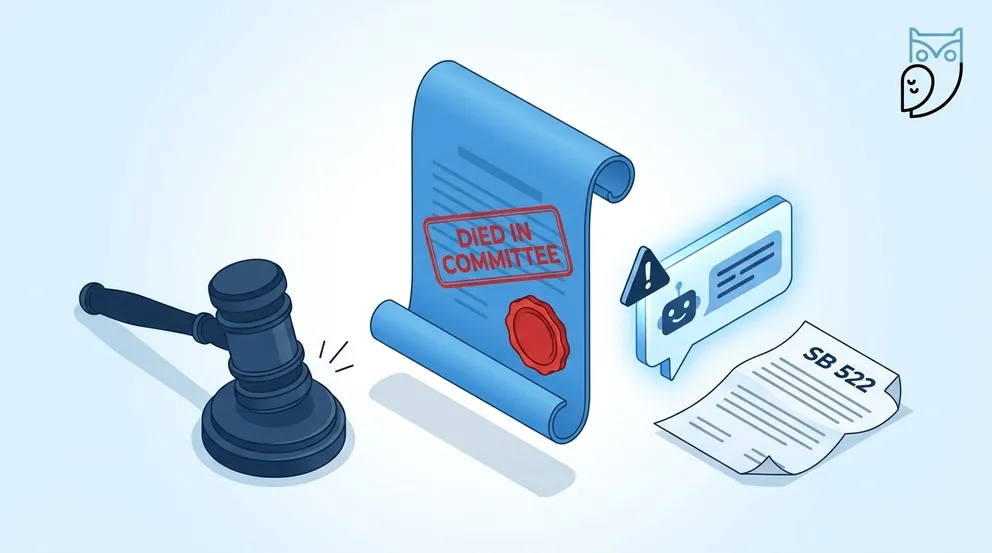
Florida did not repeal its Personal Injury Protection law in 2025 or 2026. Senate Bill 522 died in the Senate Banking and Insurance committee on March 13, 2026, leaving the $10,000 PIP and $10,000 Property Damage Liability requirements in place for every registered Florida vehicle. The repeal claim now spreading on law firm blogs and Google AI Overview answers wrongly cites a July 1, 2026 effective date that appears in no enacted statute.
Florida's 55-year-old no-fault auto insurance law has not been repealed. Senate Bill 522, the 2026 measure that would have ended Personal Injury Protection, died in the Senate Banking and Insurance committee on March 13, 2026, according to the official Florida Senate bill history.
Yet several law firm posts, an insurance agency blog, and Google's AI Overview have told Florida drivers the opposite. Insurance Journal Southeast Editor William Rabb reported May 5, 2026 that an AI-generated search result flatly stated a "2025 law" repealed the statute "effective July 1, 2026," a date that does not appear in any filed bill text.
- SB 522 died March 13, 2026 in the Senate Banking and Insurance committee
- Florida still requires $10,000 PIP and $10,000 PDL on every registered vehicle
- The bill's actual proposed effective date was January 1, 2027, not the July 1, 2026 date being cited
- Sen. Erin Grall (R-Fort Pierce) has now filed PIP repeal bills in three consecutive sessions
- Drivers can verify any Florida bill's status at flsenate.gov or legiscan.com
What SB 522 Actually Said
Sen. Erin Grall filed SB 522 on November 17, 2025. The bill would have repealed the Florida Motor Vehicle No-Fault Law and replaced the $10,000 PIP requirement with mandatory bodily injury liability coverage of $25,000 per person and $50,000 per accident. Bill text set January 1, 2027 as the effective date, with an $83,651 appropriation attached.
The Senate referred SB 522 to three committees on December 1, 2025: Banking and Insurance, the Appropriations Committee on Agriculture, Environment, and General Government, and Rules. Sen. Grall's bill received its formal introduction on January 13, 2026, then sat unheard for two months. It died on March 13, 2026 when the committee window closed without action.
| Date | Action | Status |
|---|---|---|
| 11/17/2025 | Filed by Sen. Grall | Pending |
| 12/1/2025 | Referred to 3 committees | Active |
| 1/13/2026 | Introduced | Active |
| 3/13/2026 | Died in Banking and Insurance | Dead |
Source: Florida Senate Bill 522 (2026) official bill history page, retrieved May 6, 2026.
Where the Misinformation Came From
Multiple commercial websites have published posts treating the failed bill as enacted law. Aronberg & Aronberg, a Boynton Beach plaintiffs' firm, ran a search-optimized post titled "Florida No Fault Insurance Repeal 2026." Brooks Law Group published a headline reading "Florida Senate Votes to End No-Fault Insurance," even though no Senate floor vote on SB 522 ever occurred. Jessica Lyng Insurance, a Florida Panhandle agency, told website visitors that PIP coverage was "undergoing a seismic shift" in 2026.
Google's generative search amplified those posts. A search for "Florida PIP law" produced an AI Overview answer asserting that a 2025 statute repealed PIP effective July 1, 2026, Insurance Journal reported.
"Nothing happened with PIP this year," said Lisa Miller, former Florida deputy insurance commissioner.
Miller said the false posts are misleading drivers into changing policies or pursuing litigation under a regime that does not exist. Aronberg has since updated its page; the Lyng agency and Brooks Law Group did not respond to Insurance Journal's request for comment by Monday, May 5, 2026.
What Florida Drivers Must Carry Right Now
Every Florida-registered vehicle must carry $10,000 in Personal Injury Protection and $10,000 in Property Damage Liability under Florida Statute 627.736. PIP pays 80% of medical bills and 60% of lost wages up to the $10,000 cap, regardless of which driver caused the crash. The Florida Department of Highway Safety and Motor Vehicles can suspend the registration of any owner who lets that coverage lapse, with reinstatement fees ranging from $150 for a first offense to $500 for repeat lapses.
Florida drivers already pay the third-highest auto insurance premiums in the country. Bankrate's 2026 data shows the average Florida driver spends $324 per month for full coverage, behind only Michigan and Louisiana. About 20% of Florida drivers carry no insurance at all, and PIP-related fraud costs the state more than $1 billion each year, according to industry estimates cited by Florida Phoenix. Cancelling PIP based on the false repeal claim layers reinstatement fees and a registration suspension on top of an already costly market.
Any agent quoting a Florida policy without PIP for a registered vehicle is selling something that fails the state minimum. Florida law has not changed since 1971. Compare quotes for the current $10,000 PIP and $10,000 PDL minimums on our Florida car insurance page and add bodily injury liability if you want broader protection.
Why the AI Got It Wrong
Two failures combined to produce the false answer. Several Florida law firm blogs published repeal posts during the 2025 and early 2026 sessions describing pending bills in present tense, then never updated the pages when those bills died. AI Overviews and similar generative search products synthesized those stale pages into confident, declarative summaries about a "new law."
A second check by Insurance Journal later that day produced a softer answer suggesting lawmakers were "actively pushing" repeal. The original confident misstatement had already entered consumer search results.
"AI is a tool for business that can bring a lot of innovation and efficiencies, but it's just that, a tool, not a sentient human being. The people responsible for publishing information have to use it responsibly," said Adam Basford, head of government affairs and AI matters at Associated Industries of Florida.
Anthony Habayeb, CEO of AI-governance platform Monitaur, addressed the Florida Office of Insurance Regulation Summit in April 2026 on the same problem. Habayeb said the largest insurers running successful AI deployments have built structured checks that vet data and scrutinize outputs before publication.
Steps to Verify Before You Act
Look up the cited bill number at flsenate.gov
Type "SB 522" or any other bill number into the Florida Senate's bill search. Each bill page lists the last action, which committees received it, and the proposed effective date in the bill text itself.
Cross-check on legiscan.com for any state
LegiScan tracks active legislation across all 50 states and labels bills as "Engrossed," "Enrolled," "Vetoed," or "Died." Any bill labeled "Died" or "Failed" did not become law.
Call your insurance agent or the FLDFS helpline
The Florida Department of Financial Services consumer helpline at 1-877-693-5236 confirms current insurance requirements. Your agent must follow state law, so any quote without PIP for a registered Florida vehicle is the strongest signal something is wrong.
Florida's PIP Repeal History
Florida adopted PIP in 1971 as one of the first no-fault auto insurance systems in the United States. Today only 12 jurisdictions still mandate some form of no-fault coverage: Florida, Michigan, New Jersey, New York, Kentucky, Massachusetts, Minnesota, North Dakota, Pennsylvania, Utah, Hawaii, and the District of Columbia, plus Puerto Rico.
Repeal attempts have been a near-annual ritual in Tallahassee. Only one repeal bill has reached the governor's desk: in 2021, Gov. Ron DeSantis vetoed SB 54, citing concerns about an explosion of uninsured drivers and a rate spike for Floridians who could not afford bodily injury liability. The 2025 and 2026 attempts followed similar paths and died in committee. Florida Phoenix reported in October 2025 that DeSantis warned legislators against making major changes to auto and homeowners insurance markets while rates were stabilizing.
Looking Ahead
Sen. Grall has now filed PIP repeal bills in three consecutive sessions. The 2027 Florida legislative session begins January 12, 2027, and any new repeal version would need to clear the same three-committee path that stopped SB 522. None of those steps occurred in 2026, so the rules that have governed Florida driving since 1971 remain in force.
Drivers tracking how rates are shifting in 2026 can read our coverage of Florida's 8% rate cuts taking effect this year, or compare requirements across all states through our car insurance hub. For a contrast on the only state with higher average premiums than Florida, our Michigan no-fault reform analysis shows what an 18% rate cut from a successful PIP overhaul looks like in practice.
Frequently Asked Questions
No. SB 522 died in the Senate Banking and Insurance committee on March 13, 2026, and no other repeal bill cleared the legislature. The 1971 Personal Injury Protection statute remains the law of the state.
Every registered Florida vehicle must carry $10,000 in Personal Injury Protection and $10,000 in Property Damage Liability. PIP pays 80% of medical bills and 60% of lost wages up to the $10,000 cap, regardless of fault.
The bill text proposed January 1, 2027, not the July 1, 2026 date circulating in AI search results and law firm blog posts.
AI Overviews and similar tools summarized law firm blog posts that described pending repeal efforts in present tense. When those bills died, the blog pages stayed indexed, so AI tools repeated the outdated claims as fact.
Search the bill number at flsenate.gov or check legiscan.com, which labels bills as introduced, engrossed, enrolled, vetoed, or died. Any bill marked "Died" did not become law.
- Insurance Journal: No, Florida Lawmakers Did Not Repeal the No-Fault Auto Insurance Law (May 5, 2026)
- Florida Senate: SB 522 (2026) Bill History and Text
- Bankrate: Average Cost of Car Insurance in Florida (2026)
- Florida Phoenix: Governor warns against changing auto, homeowners insurance laws in 2026
- LegiScan: Bill tracking for all 50 states
- NAIIA: Where Florida Stands - PIP / No Fault Proposed Changes