

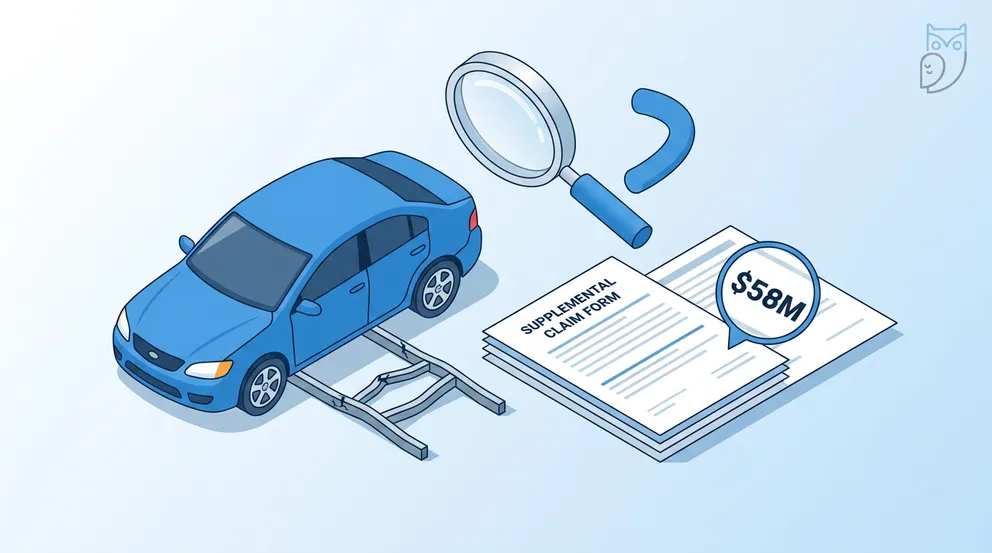
Hidden car accident damage, such as frame misalignment, cracked ADAS sensors, and suspension damage, can add $1,000 to $10,000 or more to a repair bill after the visible dents are already fixed, according to Dietrich's Collision Center. Nearly 28.3% of repair estimates in Q4 2025 required a sensor recalibration, per CCC Intelligent Solutions' 2026 Crash Course report.
A fender bender that looks minor in the parking lot can hide thousands of dollars in damage under the bumper. Frame rails bend without cracking paint. Airbag sensors lose calibration without tripping a warning light for weeks. According to Dietrich's Collision Center, a bent frame or main structure typically runs $3,000 to $10,000 or more to repair, while moderate hits that crumple a fender or bumper cost $1,000 to $3,500.
Insurance adjusters write initial estimates from what they can see during a walkaround inspection. They don't tear panels off the car or run diagnostic scans on every trip. That gap between what's visible and what's actually broken is where hidden damage claims come from, and it's a gap that's widening as vehicles pack in more sensors, cameras, and computers.
- A bent frame can cost $3,000 to $10,000+ to repair, per Dietrich's Collision Center, and often pushes an older car past the total loss threshold.
- CCC Intelligent Solutions found that 28.3% of repairable estimates in Q4 2025 needed at least one sensor calibration, up from 21.8% a year earlier.
- Florida caps supplemental claims at 18 months from the date of loss, while most other states allow 1 to 6 years depending on policy language.
- Nevada totals a car once repair costs hit just 50% of its value, so hidden frame damage discovered later can flip a "repairable" car into a total loss fast.
What Counts as Hidden Car Accident Damage
Most modern vehicles use unibody construction, meaning the frame is welded into the body rather than bolted on as a separate piece, according to Kelley Blue Book. Any impact that reaches the vehicle's core skeleton counts as frame damage, and it can bend the structure without leaving a visible crack in the paint.
Electronics compound the problem. A typical car now carries roughly 80 sensors and 100 electronic control units, and automotive electronics are projected to make up half of a vehicle's total cost by 2030, according to market research covered by Electronic Design. A jolt that seems too small to matter can knock a radar sensor out of alignment or loosen a wiring harness connector, and the dashboard often won't flag it for days.
Frame and Structural Damage
Check for a car that pulls to one side, tires that wear unevenly, or doors that no longer close flush. These are the classic signs of a frame that's out of alignment, even after body panels have been replaced and painted to match.
Repair costs scale sharply with severity. Moderate damage, like a crumpled fender or broken headlight housing, generally runs $1,000 to $3,500 once parts and paint are factored in, per Dietrich's Collision Center. A bent main structure jumps that estimate to $3,000 to $10,000 or more, and that range is exactly what pushes a lot of older vehicles into total loss territory, especially with the average collision repair bill already at $4,818 in 2025.
Ask specifically whether the shop uses a computerized frame measuring system. A visual check alone can miss misalignment that only shows up under load, and that's the kind of damage that resurfaces as a steering pull months later.
Suspension, Steering, and Alignment Damage
Suspension components can shift out of position from a hard hit or even from running over debris kicked loose during a crash. Nothing looks wrong from outside the car, yet the alignment is off by enough to wear tires unevenly within a few thousand miles.
Watch for a steering wheel that vibrates at highway speed, tires that scallop or feather on one edge, or a car that sways more than it used to through turns. Ask your shop to check toe, camber, and caster angles as part of any post-accident inspection, not just after you notice a symptom.
Electrical and ADAS Sensor Damage
Advanced driver assistance systems (ADAS), including forward cameras, radar units, and blind-spot sensors, need recalibration any time a bumper, windshield, or mirror housing is disturbed. AAA's research on ADAS repairs found these calibrations can add up to 37% to the total cost of a collision repair.
Recalibration pricing varies by system. A forward-facing camera recalibration, the most common one after a windshield swap, runs $250 to $500, according to Relux Collision's 2026 pricing breakdown. Front radar calibration costs $250 to $450, blind-spot monitoring runs $200 to $350, and jobs requiring multiple systems can reach $400 to $800. If your windshield needed replacement, ask your shop to confirm the camera behind it was recalibrated and documented, not just reinstalled.
| Hidden Damage Type | Typical Repair Cost | Share of $4,818 Avg. Repair Bill |
|---|---|---|
| Bent frame or main structure | $3,000 - $10,000+ | 62% - 208%+ |
| Moderate bumper/fender damage | $1,000 - $3,500 | 21% - 73% |
| Multi-system ADAS calibration | $400 - $800 | 8% - 17% |
| Single-sensor calibration | $200 - $500 | 4% - 10% |
Source: Repair cost ranges compiled from Dietrich's Collision Center and Relux Collision, 2026. Percentage column calculated against CCC Intelligent Solutions' reported average collision repair cost of $4,818 in 2025.
Why Adjusters Miss It the First Time
Initial estimates get written during a brief walkaround, sometimes before a single panel comes off the car. CCC Intelligent Solutions' 2026 Crash Course report noted a growing industry push to shift diagnostic scans out of the supplement process and onto the initial estimate, precisely because so many repairs still require add-on work once the shop opens things up.
That's a direct result of complexity. Sensor calibrations alone jumped from 21.8% of repairable estimates in Q4 2024 to 28.3% in Q4 2025, a 6.5 percentage point swing in a single year, according to CCC. Every one of those late-discovered calibrations turns into either a supplemental claim or an unpleasant surprise on your own bill.
Filing a Supplemental Claim After the Fact
Say your claim already closed and the check already cleared, but now your trunk won't latch flush or the transmission shifts oddly. You still have options, though the clock is running.
Get a Second Inspection
Bring the car to a trusted body shop and request a written estimate with photos documenting the newly found damage.
Notify Your Adjuster in Writing
Submit your supplemental request in writing. Under NAIC model regulations, insurers generally must acknowledge a written claim notice within 10 to 15 days, according to National Public Adjuster Authority.
Check Your State's Deadline
Florida limits supplemental claims to 18 months from the date of loss. Most other states allow anywhere from 1 to 6 years depending on the policy and jurisdiction, so confirm your specific window before you wait too long.
Escalate If the Insurer Refuses
File a complaint with your state's Department of Insurance, or walk through the standard claims process again if the adjuster disputes that the new damage relates to the original accident.
When Hidden Damage Pushes Your Car Into Total Loss
Total loss frequency hit a record 23.1% of all claims in 2025, according to CCC Intelligent Solutions, and hidden damage is a big part of why. A car that looked repairable at first glance can cross the threshold once a shop discovers a bent frame rail underneath a fender that seemed fine.
Thresholds vary sharply by state. Nevada totals a vehicle once repair costs reach just 50% of its value, while Texas and Colorado require costs to exceed 100% of the car's full value before declaring a total loss. If you're financing or leasing, that gap matters: gap insurance covers the difference between your loan balance and a total loss payout, and it typically costs $5 to $15 per month through most carriers.
Diminished Value After the Repair
Even a flawless repair rarely restores full resale value. Buyers and appraisers both discount a car with a documented accident history, frame repair included, compared to an identical car with a clean title. For a full breakdown of how to calculate and file this claim, see our guide on diminished value claims.
Hidden damage doesn't just cost money to fix. It quietly follows the car through every future sale via its vehicle history report.
Steps to Protect Yourself After Any Collision
- Request a post-repair inspection using computerized frame measurement, not just a visual check.
- Ask for written ADAS calibration documentation whenever a bumper, windshield, or mirror gets replaced.
- Track how the car handles for 30 to 60 days after any collision, even a minor one.
- Photograph everything with timestamps before repairs begin and again once they're finished.
- File any supplemental claim as soon as new damage surfaces rather than waiting until your state's deadline approaches.
Frequently Asked Questions
Hidden damage refers to problems that aren't visible during a standard walkaround inspection, including bent frame rails, misaligned suspension, cracked ADAS sensors, and loosened wiring harnesses. These issues can cost $1,000 to $10,000 or more to repair and often surface days or weeks after the accident.
Costs depend on severity. Moderate bumper or fender damage runs $1,000 to $3,500, while a bent frame or main structure can cost $3,000 to $10,000 or more, according to Dietrich's Collision Center. ADAS sensor recalibrations add another $200 to $800 depending on how many systems need it.
Yes, through a supplemental claim. Most states allow 1 to 6 years to file, though Florida caps supplemental claims at 18 months from the date of loss. Get a written estimate documenting the new damage and notify your adjuster in writing as soon as you find it.
It can. Total loss frequency reached a record 23.1% of all claims in 2025, according to CCC Intelligent Solutions. Newly discovered frame or structural damage can push repair costs past your state's total loss threshold, which ranges from 50% of the car's value in Nevada to 100% in Texas and Colorado.
Any repair touching the windshield, front or rear bumper, or side mirrors likely requires recalibration of the cameras or radar mounted there. Ask your shop for written proof of calibration. CCC Intelligent Solutions found 28.3% of repairable estimates in Q4 2025 included at least one sensor calibration.
- CCC Intelligent Solutions - Crash Course 2026 Report Press Release
- Kelley Blue Book - What Is Frame Damage?
- Dietrich's Collision Center - Frame Damage: When Is Your Car Totaled?
- Relux Collision - How Much Do ADAS Calibration Services Typically Cost?
- AAA Automotive - ADAS Sensor Calibration Increases Repair Costs
- National Public Adjuster Authority - Supplemental Insurance Claims
- Payne Law, PLLC - Florida Insurance Claim Settlement Time Limits
- WalletHub - Total Loss Thresholds by State: 2026 Guide