

Introduction
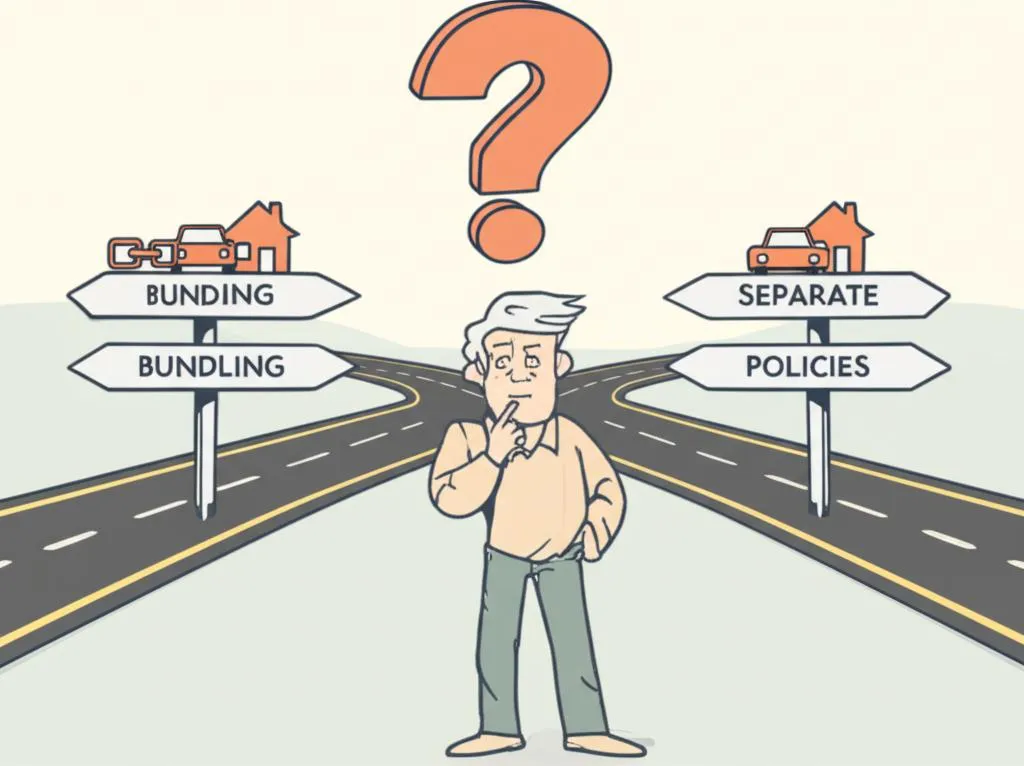
Bundling refers to purchasing multiple insurance policies (e.g., auto and home) from a single carrier, while separate policies involve buying each policy individually from different insurers. For homeowners and drivers, the choice between bundling and separate policies can impact premiums, customization, service experience, loyalty rewards and compliance risks. This post examines cost savings, coverage flexibility, claims convenience, loyalty incentives and consumer sentiment to help U.S. policyholders make informed decisions.
1. Cost Savings: Bundling vs. Separate Policies
1.1 Bundling Discount Trends
- Insurers typically offer 5–10% off auto premiums when bundled with home, condo or apartment coverage[2].
- Some carriers advertise up to 30% combined savings on home & auto packages[3].
- Discount levels vary by insurer and geography.
1.2 Major Carriers’ Discounts (2025)
| Carrier | Bundling Discount |
|---|---|
| Nationwide | Up to 20% |
| State Farm | Up to \$1,273 annual savings |
Source: BundleBee Agency (2024)[4]
1.3 Adoption Rates & Market Context
- 33% of auto shoppers seek to bundle with homeowners insurance[1].
- 57% of drivers shopped for new auto policies in the past year amid record rates—highest in 19 years[1].
1.4 Long-term Customer Value
- Bundled customers remain with insurers 7.0 years on average vs. 5.5 years for separate-policy holders[1].
1.5 Demographic Variations
- Renters pay up to 7.3% more for auto coverage than homeowners, regardless of bundling status[2].
1.6 Additional Benefits & Emerging Trends
- Bundling simplifies billing and maintains coverage after claims or tickets[3].
- 37% of auto customers express interest in embedded insurance sold through vehicle dealers[1].
- 17% of insurers offered usage-based insurance (UBI) programs in 2025, up from 15% in 2024[1].
2. Coverage Customization & Flexibility
2.1 Customizability: Bundled vs. Separate
Bundles streamline management but often rely on standardized packages. Niche endorsements (classic car, flood, high-value art) may be unavailable in bundled offerings[1][3][5].
2.2 Specialty & Niche Coverage
Standalone policies let you:
- Cherry-pick deductibles, limits and add-ons[4][1].
- Access specialty providers for unique risks (aviation, logging, collectibles)[4][5].
2.3 Limitations of Bundles
- Some add-ons aren’t offered in bundle catalogs[1][3].
- Adjusting one element (e.g., auto liability) without touching the home policy can be restricted[3].
2.4 Summary Table: Customization Comparison
| Factor | Bundled Policies | Separate Policies |
|---|---|---|
| Customization | Limited, one-size-fits-all | Highly flexible, endorsement-driven |
| Access to Niche Products | Often unavailable | Full access to specialty carriers |
| Add-on Options | Restricted | Broad, specialized options |
| Vendor Choice | Large/national firms | Includes regional & niche providers |
3. Convenience & Claims Experience
3.1 Streamlined Customer Service
- Single point of contact for policy changes and billing[3][5].
- Consolidated renewals and reduced paperwork[1][2].
3.2 Enhanced Claims Processing
- Unified claims handling for incidents affecting multiple assets[3][5].
- Less stress—no juggling calls with different insurers[5].
3.3 Long-term Relationship Benefits
- Deeper insurer relationships yield personalized support and advice[4].
- Lower cancellation risk for multi-policy customers[5].
3.4 Coverage Consistency & Flexibility
- Bundles are designed to complement each other, reducing coverage gaps or overlaps[4].
- Many carriers still allow some customization within bundled packages[4].
3.5 Potential Trade-offs
- Switching providers often means moving all policies at once.
- Difficult to benchmark individual policy rates against competitors when bundled.
4. Loyalty Benefits, Underwriting & Risk of Switching
4.1 Loyalty & Ecosystem Services
- Insurers offering ≥3 ecosystem services see +40 NPS points vs. those offering none[1].
- Forgiveness benefits (no rate increase after minor claims) and tenure rewards boost retention[5].
4.2 Retention & Switching Risks
- Customers will switch if their carrier lacks desired ecosystem services[1].
- Strong loyalty programs reduce shopping incentives[5].
4.3 Premium & Underwriting Considerations
- Policyholders pay higher premiums for valued add-ons[1].
- Many carriers under-price ecosystem services, leaving revenue on the table[1].
4.4 Digital Engagement & Communication
- Self-service portals and proactive outreach enhance loyalty and engagement[3][5].
4.5 Ecosystem & Partnership Development
- Partnerships with non-insurance services (home maintenance, roadside assistance) strengthen value propositions[5].
5. Consumer Sentiment & Complaint Trends
5.1 Bundling Behavior & Demand
- 47% of homeowners’ quote initiations and 54% of submissions were bundled in late 2023[5].
- Major insurers (Progressive, Liberty Mutual) heavily market bundle deals[5].
5.2 Consumer Concerns & Alternatives
- Rising premiums have pushed 57% of drivers to shop—highest since 2005[4].
- Some consumers forgo homeowners insurance or underinsure to save costs[5].
5.3 Emerging Preferences
- 37% prefer embedded auto insurance via dealers or manufacturers[4].
- UBI program offerings rose from 15% (2024) to 17% (2025)[1].
5.4 Regulatory & Compliance Considerations
- Bundling must navigate state anti-rebating laws, unfair competition and unauthorized sales regulations[3].
- IoT and telematics products bundled with coverage require careful compliance[3].
Conclusion & Recommendations
Bundling offers clear cost savings, streamlined service and loyalty incentives, while separate policies provide superior customization and specialty access.
Decision factors:
- Your risk profile and need for niche endorsements
- Budget constraints vs. desire for tailored coverage
- Preference for a single point of contact vs. vendor flexibility
- Value placed on long-term loyalty rewards and digital tools
Next steps:
1. Audit existing policies for coverage gaps or overlaps.
2. Request quotes for both bundled and separate options.
3. Evaluate specialty insurers for high-risk or unique exposures.
4. Factor in loyalty programs, ecosystem services and digital engagement.
References
- Foursquare Insurance Blog. (n.d.). The pros and cons of bundling your auto insurance policies. https://foursquareinsurance.com/blog/the-pros-and-cons-of-bundling-your-auto-insurance-policies
- Ochs, Inc. (2021, April 6). One for all: Pros and cons of bundling your voluntary insurance products. https://ochsinc.com/one-for-all-pros-and-cons-of-bundling-your-voluntary-insurance-products/
- SimplyIOA Stories. (2025, March 3). Bundling insurance: Does it actually lower my rate? https://stories.simplyioa.com/bundling-insurance-does-it-actually-lower-my-rate
- BundleBee Agency. (2024, February 19). Is it better to bundle home and auto insurance? https://bundlebeeagency.com/is-it-better-to-bundle-home-and-auto-insurance/
- Industry Reports and Carrier Data (2024–2025). Additional insurer data and market studies.