

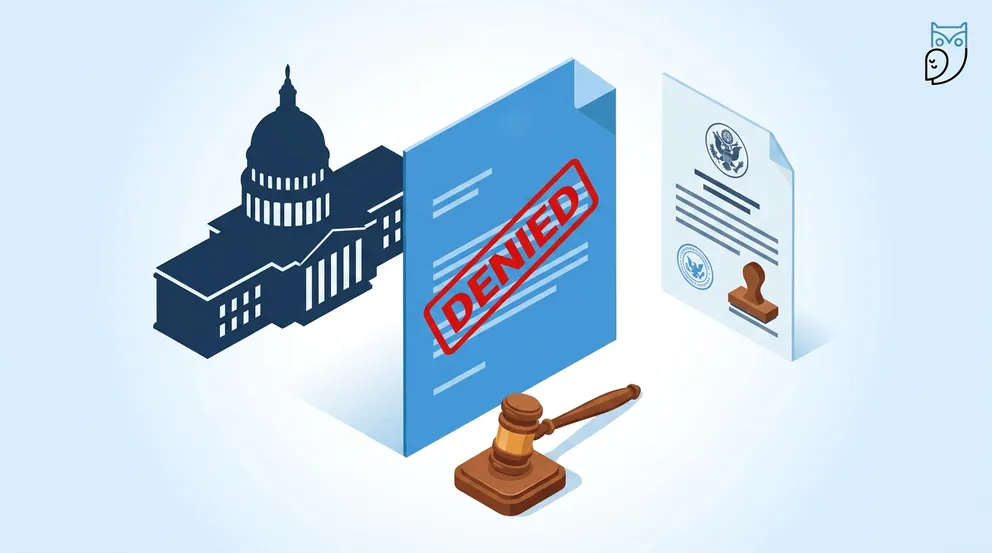
About 5 to 15 percent of auto insurance claims are denied at some stage, according to industry research. To dispute a denial, request a written explanation from your insurer, file a formal written appeal within 30 days with supporting evidence, and if the appeal fails, file a complaint with your state insurance department. Bad-faith denials may also be grounds for a lawsuit.
- Insurers must put the specific reason for denial in writing, citing the policy section they relied on
- Most states require carriers to accept or deny a claim within 15 to 40 days of receiving proof of loss
- State insurance departments investigate claim-handling complaints for free, and 35,063 auto complaints were filed in 2025 per NAIC data
- A wrongful denial can become a bad-faith case worth more than the original claim, with punitive damages available in most states
Why Auto Insurance Claims Get Denied
Denials are not random. Carriers reject claims for a handful of specific reasons, and the reason your insurer cites determines your strongest counter-argument. According to industry research, the most frequent denial drivers are coverage exclusions, late filing, lapsed policies, and disputed liability.
Common denial reasons include:
- Lapsed policy. Even one missed premium can leave the policy inactive on the date of loss. Reinstating after the fact does not retroactively cover the incident.
- Excluded damage. A collision-only policy will not pay for hail damage, and a liability-only policy will not pay for damage to your own car.
- Late notice. Most policies require prompt notification, typically within 24 to 72 hours, and many insurers will deny if you wait longer than 30 days.
- Disputed fault. If the insurer believes you caused the accident or contributed to it, your claim under another driver's policy can be reduced or rejected.
- Insufficient evidence. Missing police reports, photos, witness statements, or repair estimates can trigger a denial even on a legitimate claim.
- Suspected fraud or misrepresentation. A wrong garaging address on the application or a previous claim history mismatch can void coverage entirely.
- Business use. Personal auto policies exclude rideshare and delivery, so an accident while logged into DoorDash or Uber Eats will be denied.
Partial denials are common. The carrier may pay for some repairs and reject others, or accept the claim but offer a settlement well below the actual cash value. Either situation gives you grounds for a dispute.
Your insurer is legally required to state the specific reason for denial in writing and cite the policy section it relied on, per state unfair claims practice acts modeled on the NAIC Unfair Claims Settlement Practices Model Act. If the letter is vague or omits a policy reference, that alone is grounds to demand a more detailed explanation.
The Step-by-Step Process to Dispute Your Denial
The window to act is short. Most insurers cap internal appeals at 30 to 60 days from the denial date, and state regulator filings have statutes of limitation that vary from 1 to 6 years. Start the dispute the same week the denial arrives.
Read the Denial Letter and Pull Your Policy
Find the exact reason cited and the policy section referenced. Then open your declarations page and policy contract and read the cited language yourself. About a quarter of denials hinge on policy interpretation, where two readings of the same clause produce different outcomes.
Request a Detailed Written Explanation
Call the claims adjuster and ask three questions: what evidence was used, what additional documentation could change the outcome, and what the formal appeal deadline is. Follow the call with an email summarizing the conversation, which creates a paper trail.
Gather Supporting Evidence
Collect photos of the scene and damage, the police report, repair estimates from at least two body shops, witness contact info, medical records if applicable, dashcam or traffic-camera footage, and your full communication log with the carrier. Organize everything into a single PDF or shared folder before drafting the appeal.
File a Formal Written Appeal
Send a written appeal letter that cites the denial reason, explains why it is incorrect or incomplete, references the specific policy sections that support coverage, and attaches every piece of supporting evidence. Send by certified mail or trackable email. Most carriers must respond within 30 to 60 days.
File a Complaint With Your State Insurance Department
If the appeal fails or the insurer misses its response deadline, file a complaint with your state DOI through its consumer services portal. The DOI will require the carrier to respond in writing within 21 days in most states, and the carrier knows the regulator is watching.
Consider Mediation, Arbitration, or a Lawsuit
About half of states offer free mediation through the DOI. If the denial was unreasonable or based on misrepresentation by the insurer, a bad-faith lawsuit can recover the original claim amount plus emotional distress damages, attorney fees, and in many states punitive damages.
Insurer Response Deadlines by State
State law sets the clock on how fast your insurer must respond to a claim and to your appeal. Missing a deadline gives you grounds for a regulator complaint and can support a bad-faith argument.
| State | Acknowledge Claim | Accept or Deny Decision | Pay After Acceptance |
|---|---|---|---|
| California | 15 calendar days | 40 calendar days from proof | 30 calendar days |
| Texas | 15 calendar days | 15 business days from proof | 5 business days |
| Florida | 14 calendar days | 90 days from notice | 20 days after agreement |
| New York | 15 business days | 15 business days from proof | 5 business days |
| Illinois | 21 calendar days | 30 days from proof | 30 days after agreement |
| Most other states | 10 to 30 days | 30 to 60 days from proof | 15 to 30 days |
Source: State insurance codes including California Fair Claims Settlement Practices Regulations, Texas Insurance Code §542.056, Florida Statute §627.4265, New York Insurance Law §3411. Deadlines apply to first-party claims; third-party deadlines may differ.
Mark the deadline on your calendar the day you submit your appeal. If the carrier blows past the statutory window, file a DOI complaint immediately, since unreasonable delay is one of the most reliably actionable bad-faith claims under state unfair claims practice statutes.
Escalating to Your State Insurance Department
This is the step most consumers skip and most lawyers recommend first. State insurance departments investigate complaints at no cost, and the National Association of Insurance Commissioners logged 35,063 auto insurance complaints in 2025, up 7.5% from 32,578 in 2024. Auto insurance accounts for roughly 35% of all complaints filed.
Complaint volume varies sharply by state. California consumers file about 4,800 auto complaints a year, Florida about 3,800, and Texas roughly the same. High volumes mean DOI staff are familiar with the most common insurer tactics and can move quickly on legitimate grievances.
To file, gather these items:
- A copy of your policy and declarations page
- The denial letter and any appeal correspondence
- A timeline of communications with dates and representative names
- Photos, repair estimates, the police report, and witness statements
- A one-page summary of the dispute and the resolution you want
File online through your state's DOI portal, which most states host at a URL like insurance.[state].gov or doi.[state].gov. The carrier is typically required to respond to the DOI within 21 days. About 50% of auto insurance complaints are resolved in the consumer's favor through DOI mediation, per ValuePenguin's analysis of NAIC data.
When a Denial Becomes a Bad-Faith Claim
Insurance bad faith is a legal claim that exists separately from the underlying coverage dispute. Every policy contains an implied covenant of good faith and fair dealing, and an insurer that violates that covenant can owe you more than the original claim amount.
Two categories matter for auto claims:
- First-party bad faith applies when your own insurer unreasonably denies or delays a claim under your own coverage, including uninsured or underinsured motorist coverage.
- Third-party bad faith applies when the at-fault driver's insurer refuses a reasonable settlement within policy limits, leaving their insured exposed to a larger judgment.
Common bad-faith conduct includes failing to investigate, denying without citing policy language, misrepresenting policy terms, refusing to communicate, lowballing settlement offers compared to documented damages, and intentionally delaying payment past statutory deadlines. Florida's recent push against staged-accident fraud has not changed these consumer protections for legitimate first-party claims.
| Damage Type | What It Covers | Typical Range |
|---|---|---|
| Contract damages | Original claim amount the insurer should have paid | Up to policy limits |
| Consequential damages | Financial losses caused by the denial (lost wages, towing fees, rental costs) | Documented out-of-pocket |
| Emotional distress | Stress and anxiety from the wrongful denial | $5,000 to $100,000+ |
| Attorney fees | Cost of pursuing the bad-faith case | Awarded in most states |
| Punitive damages | Punishment for egregious insurer conduct | Uncapped in NV; capped at 3x or $50,000 in IN |
Source: State bad-faith statutes and case law including California Insurance Code §790.03, Indiana Code §34-51-3-4, Nevada Revised Statutes §42.005. Damage availability and caps vary by state.
Statutes of limitation for bad-faith claims run from 1 year (California) to 6 years (Colorado), with most states at 3 to 4 years. A claim that looks marginal at year one can be barred by year three, so document everything from day one and consult a policyholder attorney within 90 days of a denial you think is unreasonable.
Mistakes That Sink Appeals
Four mistakes account for most failed disputes, according to consumer attorneys who specialize in insurance cases.
- Missing the appeal deadline. Most carriers cap internal appeals at 30 to 60 days, and missing the deadline forfeits your right to internal review.
- Calling instead of writing. Verbal exchanges with adjusters are not enforceable evidence. Every dispute step needs a written record.
- Submitting evidence piecemeal. Adjusters review the file at one sitting, so trickling in documents weakens the impression of a coherent case.
- Accepting the first counter-offer. Carriers often reverse partial denials when consumers push back with documentation, so a "final offer" frequently is not final.
Knowing how to file a claim correctly the first time reduces the risk of denial. Knowing what to do in the first 24 hours after an accident protects the evidence you will need if the carrier later disputes coverage. Even small claims like a cracked windshield repair can be partially denied, so the same playbook applies regardless of claim size.
Frequently Asked Questions
Most insurers cap internal appeals at 30 to 60 days from the denial date. State DOI complaints typically have no fixed deadline but should be filed promptly. Bad-faith lawsuits have statutes of limitation ranging from 1 to 6 years depending on the state, with most around 3 to 4 years.
No. Appealing a denial is not a separate claim and does not generate a new entry on your CLUE report. The original claim, if reopened and paid, is treated the same as any approved claim. Carriers rate based on losses paid, not on whether you challenged a denial.
Not for the internal appeal or the state DOI complaint, both of which are free and consumer-friendly. Consider hiring a policyholder attorney when the denied claim exceeds $10,000, when bad-faith conduct is involved, or when the carrier has missed statutory response deadlines. Most policyholder attorneys work on contingency and cost nothing upfront.
Ignoring a written appeal past the state-mandated response window (typically 30 to 60 days) is itself a violation of unfair claims practice statutes. File a DOI complaint immediately and document the timeline. The carrier's silence becomes evidence supporting a bad-faith claim.
Carriers cannot retaliate against policyholders for filing DOI complaints, and state insurance laws make non-renewal based on a regulator complaint actionable. Carriers can non-renew for legitimate reasons such as loss history, but a complaint by itself is protected activity.
Industry data shows about 50% of auto insurance complaints filed with state DOIs are resolved in the consumer's favor, per ValuePenguin's analysis of NAIC data. Internal appeals succeed less often (roughly 20 to 30%), but most successful disputes happen at the DOI level, not the internal-appeal level.
- National Association of Insurance Commissioners: Consumer Information Source
- NAIC: Closed Confirmed Consumer Complaints by Reason
- Bankrate: What to Do if a Car Insurance Company Denies Your Claim
- The Zebra: What to Do If Your Auto Insurance Claim Is Denied
- ValuePenguin: Majority of Insurance Complaints Resolved in Consumers' Favor
- California Department of Insurance: File a Complaint
- Insurify: Consumer Complaints About Insurers Rose 7% in 2025
- Insurance Information Institute: Understanding the Claims Process