

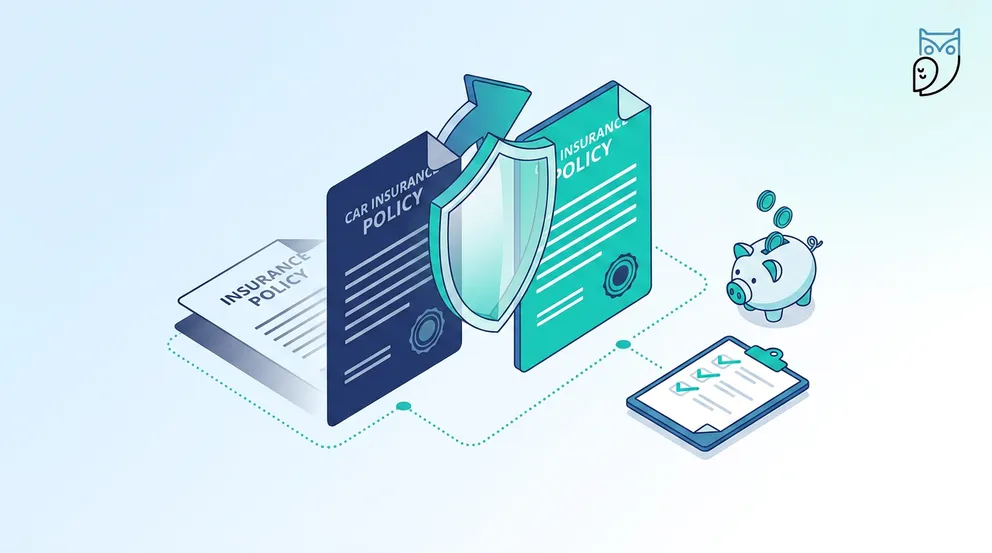
Switching car insurance takes about 30 minutes and can save you $694 per year, according to CarInsurance.com's 2026 driver survey. Buy your new policy first, confirm the effective date, then cancel the old one to avoid a coverage gap that could raise future premiums by 10% to 25%.
Nearly half of all U.S. drivers shopped for a new car insurer in 2025, and 29% of those who switched saved 15% or more on their premium, per CarInsurance.com's nationwide survey. Rates vary dramatically between carriers for the same driver profile; our complete car insurance buying guide breaks down how insurers price risk differently. Below, you will find the exact steps to switch without losing a single day of coverage, plus how to collect a prorated refund on premiums you already paid.
6 Steps to Switch Car Insurance Companies
Review Your Current Coverage
Pull your declarations page and note your liability limits, deductibles, and any endorsements like roadside assistance or rental reimbursement. Knowing your current types of car insurance coverage prevents you from accidentally downgrading when you switch.
Compare Quotes from 3 to 5 Insurers
Request quotes with identical coverage limits and deductibles from at least three carriers. CarInsurance.com data shows the gap between the cheapest and most expensive insurer for the same driver averages $1,388 per year. Use our guide to comparing car insurance quotes for a side-by-side checklist.
Check for Cancellation Fees
Call your current insurer or read the policy's terms and conditions. Most companies charge $0, but some levy a $25 to $50 administrative fee for mid-term cancellations, according to AutoInsurance.org. Compare that fee against the savings from the new policy before deciding.
Purchase the New Policy
Pay your first month's premium or the full amount. Most national carriers activate coverage at 12:01 a.m. the day after purchase. Set the new policy's effective date to overlap with your old policy by at least one day so there is zero gap in protection.
Cancel Your Old Policy
Contact your previous insurer by phone or written request only after the new policy is active. Ask for written confirmation of the cancellation date and request your prorated refund (details below). Most insurers cannot process cancellations online.
Swap ID Cards and Notify Your Lender
Replace the insurance cards in each vehicle and send your new policy's declarations page to any lienholder. Failing to notify a lender can trigger force-placed insurance, which typically costs 2x to 3x a standard policy, according to the National Association of Insurance Commissioners (NAIC).
Ask the new insurer about switch-specific car insurance discounts. Progressive, for example, offers a "Sign Online" discount of about 7%, and many carriers discount the first term for new customers. Those perks can offset any cancellation fee from your old policy.
When Is the Best Time to Switch Car Insurance?
Renewal day is the simplest time because your old policy ends naturally, eliminating cancellation fees entirely. Your insurer must send a renewal notice 30 to 60 days before the term expires (exact window varies by state), giving you a clear shopping deadline.
Life changes also warrant an immediate quote check. Adding a teen driver raises the average cost of car insurance by roughly 130%, per Insurance.com data. Moving from a rural ZIP code to a city center can increase your rate by 20% to 40%. Getting married, on the other hand, typically triggers a 5% to 10% discount. Each of those events reshuffles how carriers rank your risk, so the cheapest company last year may not be the cheapest today.
Drivers whose credit score improved since their last quote stand to save the most. CarInsurance.com's rate analysis found drivers with bad credit pay 115% more than those with good credit, a difference of $2,886 per year on average. Even a modest credit-score jump from "poor" to "fair" can trim hundreds off your premium when you re-shop.
Switching mid-term is perfectly legal in all 50 states. You do not have to wait for renewal. Most state insurance codes require your insurer to issue a prorated refund for unused premiums, regardless of when you cancel.
How to Get a Prorated Refund on Prepaid Premiums
Most drivers who pay six months or a year upfront do not realize they can recover the unused portion when they leave. State insurance regulations in nearly every jurisdiction require insurers to refund premiums on a pro-rata basis, according to the Insurance Information Institute (III). A small number of carriers use "short-rate" cancellation, which keeps 5% to 10% of the remaining premium as a penalty, but this practice is banned or restricted in several states including California, New York, and Florida.
Request the refund explicitly during the cancellation call. Some insurers issue a check within 5 to 10 business days; others credit the original payment method. If your refund does not arrive within 30 days, file a complaint with your state's Department of Insurance. Progressive notes on its website that most refunds process automatically, but verifying in writing protects you if the system delays.
Drivers who bundle home and auto insurance should check whether canceling the auto portion breaks the bundle discount on the remaining homeowners policy. That lost discount can range from 5% to 25%, depending on the carrier.
Coverage Lapse Penalties: What Happens If You Gap
Cancel your old policy before your new one is active and you create a coverage lapse. Even a single day without insurance can raise your next premium by 8% to 23%, according to Insurance.com and MoneyGeek's 2025 rate analyses.
The financial damage from a lapse compounds with its length. MoneyGeek's analysis found that a gap longer than 30 days adds an average of $315 per year (22.4% increase) to your premium. A 45-day gap raises rates by roughly 40%. Insurers check your coverage history going back three to five years, so a lapse from 2024 can still affect the quotes you receive in 2026.
| Lapse Duration | Average Rate Increase | Estimated Extra Cost/Year |
|---|---|---|
| 1 to 7 days | 8% - 23% | $115 - $330 |
| 30 days | 22% - 25% | $315 - $360 |
| 45+ days | 35% - 40% | $500 - $575 |
Sources: MoneyGeek 2025 lapse study; Insurance.com rate analysis; CarInsurance.com lapse-by-state data. Based on national average full-coverage premium of $2,329/year (Insurify, 2026).
Beyond higher premiums, a lapse can trigger state penalties. Driving uninsured in Florida carries a $150 reinstatement fee plus license suspension. Texas adds a $250 surcharge per 30-day lapse. If your car insurance recently went up after a lapse, those penalties are likely still baked into your rate.
Frequently Asked Questions
Yes. Every state allows you to cancel and switch at any time, not just at renewal. Most insurers charge no early-termination fee, and you are entitled to a prorated refund on prepaid premiums. CarInsurance.com reports that 49% of drivers who switched did so mid-term in 2025.
No. Comparing car insurance quotes triggers a soft credit inquiry, not a hard pull, so your credit score is unaffected. Insurers in 46 states do use credit-based insurance scores to set premiums, but the act of shopping around carries no penalty, according to the Consumer Financial Protection Bureau.
The entire process typically takes 30 to 60 minutes. Purchasing a new policy online takes about 15 minutes with most national carriers like GEICO, Progressive, or State Farm. Canceling the old policy usually requires a phone call of 10 to 15 minutes. New coverage activates at 12:01 a.m. the following day.
- CarInsurance.com — How to Switch Car Insurance in 6 Easy Steps (2026)
- Insurance.com — How to Switch Car Insurance: 5 Easy Steps to Save (2026)
- MoneyGeek — How Much Does a Lapse in Coverage Affect Insurance Rates?
- AutoInsurance.org — Can I Get a Refund If I Switch Auto Insurance?
- Insure.com — Car Insurance Refunds Explained: How They Are Calculated
- CarInsurance.com — Lapse in Car Insurance Coverage: Penalties by State
- Insurify — Lapse in Car Insurance Coverage: How Are Rates Impacted? (2026)