

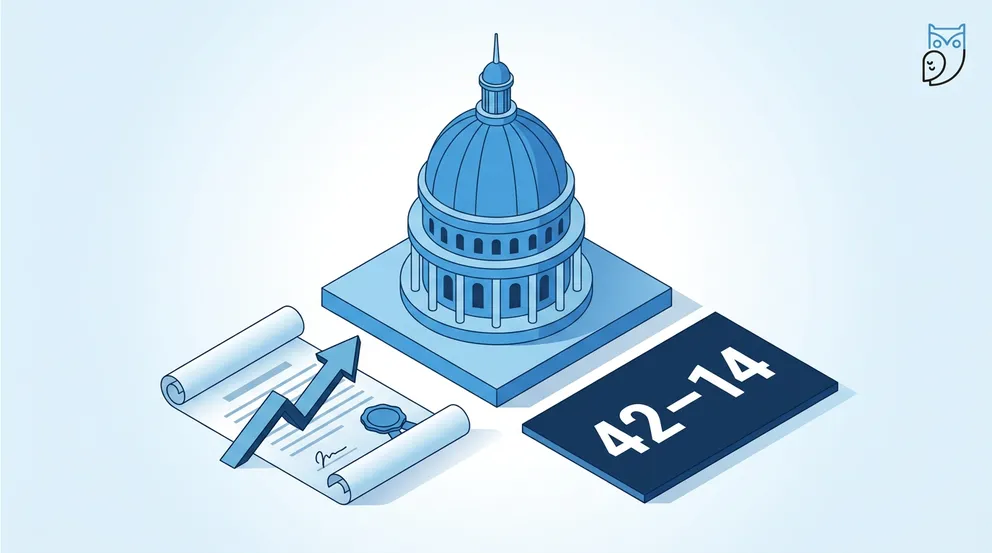
The Illinois Senate passed SB 714 on May 13, 2026 by a 42-14 vote, sending the auto insurance rate-regulation bill to the House. The legislation forces insurers to give 30 days written notice before any rate increase of 10% or more and grants the Illinois Department of Insurance new authority to block excessive filings starting July 1, 2027.
Illinois moved one step closer to ending its status as one of only two states without formal auto insurance rate review. State Sen. Ram Villivalam (D-Chicago) saw his Senate Bill 714 clear the chamber 42-14, three votes more than the 39 needed to override a gubernatorial veto.
The measure now heads to the Illinois House, where industry trade groups have already begun lobbying for amendments. Gov. JB Pritzker publicly urged the legislature to act on auto rates after an earlier reform package stalled, and Illinois drivers saw an 18% spike in full-coverage premiums during 2024, almost 7 percentage points above the 11.3% national average.
- SB 714 cleared the Illinois Senate 42-14, with one senator voting present
- Insurers must give 30 days written notice for any rate hike of 10% or more
- The Illinois Department of Insurance must rule on a rate filing's completeness within 15 days
- Provisions take effect July 1, 2027, applying to new filings after that date
- Illinois is one of two states without a formal auto rate review process
What SB 714 Would Change for Illinois Drivers
The bill rewrites three pieces of Illinois insurance law. First, carriers must deliver a 30-day written notice before any premium hike of 10% or more, cutting the original 60-day proposal in half after industry negotiation. Second, the Illinois Department of Insurance (IDOI) must determine within 15 days whether a rate filing is complete, closing what consumer advocates called a procedural loophole. Third, IDOI gains authority to challenge any rate considered "excessive, inadequate, or unfairly discriminatory."
Villivalam pointed to the compromises baked into the final language. "Instead of having to inform the consumer of a 10% fee increase 60 days prior to the renewal or anniversary date, it is now 30 days in this legislation," the senator said on the floor. "The process for what is a complete filing came from the insurance industry and requires the Department of Insurance to determine whether a filing is complete within 15 days."
A separate provision blocks insurers from shifting out-of-state risk costs, such as hurricane or wildfire losses elsewhere in the country, onto Illinois policyholders. Regulators could order rebates if a filing is later found unfair.
Why Illinois Drivers Are Frustrated With Rate Hikes
Average full-coverage premiums in Illinois climbed 18% during 2024, according to Insurify data cited by the Secretary of State's office. Projected costs for 2025 reached roughly $2,050 per year before another estimated 4% bump pushed prices upward. Bankrate's 2026 figure for Illinois full coverage now sits at $2,376 annually.
| Metric | Illinois | National Average | Gap |
|---|---|---|---|
| 2024 rate change | +18% | +11.3% | +6.7 pts |
| Projected 2025 full coverage | $2,050 | $2,313 | 11% lower |
| Prior rate review process | None | 48 states | Illinois lags |
Source: Insurify rate data through Q4 2024; Bankrate 2026 full coverage average; Illinois Secretary of State's office. Rates reflect averages for drivers with clean records and average or better credit.
Nearly 2,000 Illinoisans submitted complaints during Driving Change town halls held statewide between July 2025 and April 2026. One frequently cited example from the testimony: a driver with a clean record but poor credit pays $862 more annually than a driver with excellent credit and a DUI conviction.
Secretary of State Alexi Giannoulias framed the issue in personal terms. "Car insurance rates are crushing Illinois families," Giannoulias said. "Even worse, auto insurance companies aren't basing these premiums on your driving records."
Industry Pushback: Insurers Predict Higher Costs, Fewer Choices
The Illinois Insurance Association and the American Property Casualty Insurance Association (APCIA) issued a joint statement minutes after the Senate vote. Both groups argue Illinois has long benefited from one of the most competitive auto markets in the country, where carriers like State Farm, Allstate, and GEICO compete aggressively for policyholders.
"SB 714 threatens to upend this successful system by imposing a form of prior-approval rate regulation that has failed consumers in other states like California. SB 714 injects politics into rate decisions and slows insurers' ability to adjust prices, up or down, based on actual claims experience." (Illinois Insurance Association and APCIA joint statement, May 13, 2026)
The industry's California reference points to Proposition 103, the 1988 ballot measure that put California rates under prior-approval review. State Farm and Allstate paused new homeowner business in California during 2023 and 2024, citing regulatory lag in approving rate increases. Carriers warn Illinois could face similar exits if SB 714 tightens timelines without flexibility.
Prior-approval is the strictest of three rate-regulation models. Regulators must approve every rate filing before insurers can charge new prices. Illinois currently uses "open competition," letting carriers set rates with no prior review. SB 714 sits between the two: regulators gain veto power, but the bill stops short of California-style approval-before-effective.
What Illinois Drivers Should Do Before the Bill Takes Effect
Even if SB 714 becomes law this summer, its core provisions do not apply until July 1, 2027. Illinois drivers paying inflated premiums can act now without waiting on Springfield. Compare local rates first on our Illinois car insurance page to see how your current premium stacks against the state and city averages.
Request your credit-based insurance score
Major carriers including State Farm, Allstate, and Progressive use CBIS scores from LexisNexis to set rates. Get a free copy at consumerdisclosure.com and dispute errors before your next renewal.
Compare quotes from three carriers within 30 days of renewal
SB 714's 30-day notice rule mirrors what informed shoppers already do. Pull quotes from a national, a regional, and a usage-based carrier (Root or Metromile) to test the spread before your renewal date hits.
Ask carriers to itemize ZIP code and credit surcharges
Illinois law allows itemized rate breakdowns on request. Knowing what portion of your $2,376 premium is driving-related vs. demographic helps you target the cheapest carrier for your profile.
What Happens Next in the Illinois House
The House is expected to refer SB 714 to the Insurance Committee within 7 to 14 days. A companion homeowner-and-auto reform bill passed the House in March 2026, and SB 714 incorporates much of that earlier work, which gives sponsors a procedural shortcut. With a 42-14 Senate margin, the bill cleared the threshold needed to override a veto, though Pritzker's office has signaled support and no veto is expected.
Illinois follows similar reform pushes happening across the country. New York pursued a parallel rate-regulation overhaul that ultimately failed in budget negotiations, and Florida's 2023 tort reforms already saved drivers $4.2 billion. The Illinois Insurance Association will push for an exemption letting insurers offset claims volatility in years following catastrophic loss events. APCIA wants carve-outs for telematics and usage-based rating programs, which could fall inside the prior-approval debate depending on final language.
Final passage in the House is realistic by end-of-session in late May 2026, with rules taking effect for filings made after July 1, 2027.
Frequently Asked Questions
If the Illinois House passes SB 714 and Gov. Pritzker signs it, most provisions take effect July 1, 2027 and apply to new rate filings made after that date. Renewals using filings approved before that date will not be affected immediately.
No, the bill does not outright ban specific rating factors. It does require rates to be tied to actual differences in expected losses and expenses rather than unrelated personal factors, giving the Department of Insurance grounds to challenge filings that lean too heavily on credit or geography.
Illinois full-coverage premiums climbed 18% during 2024, compared to the national average of 11.3%. Only a handful of states posted higher percentage gains, putting Illinois roughly 6.7 percentage points above the national rate trajectory.
Industry groups warn it could, citing California's Proposition 103 as evidence. But SB 714 stops short of California's full prior-approval system, only requiring filings to be reviewed for completeness within 15 days and allowing rates to take effect while regulators evaluate them.
Pull your credit-based insurance score from LexisNexis, compare quotes from at least three carriers within 30 days of your renewal date, and ask your current insurer to itemize how much of your premium is driving-related vs. credit or ZIP-code based.
- WAND TV - IL Senate passes auto insurance reform bill, sends plan to House
- Yahoo News / WTVO - Illinois Senate passes bill targeting auto insurance rate hikes
- Illinois General Assembly - Senate Bill 714 Engrossed Text
- Illinois Secretary of State - Driving Change Initiative
- Bankrate - Average Cost of Car Insurance in Illinois 2026
- Insurify - Average Cost of Car Insurance in Illinois 2026
- Illinois PIRG - Senate Passes Consumer Protections for Home and Auto Insurance