

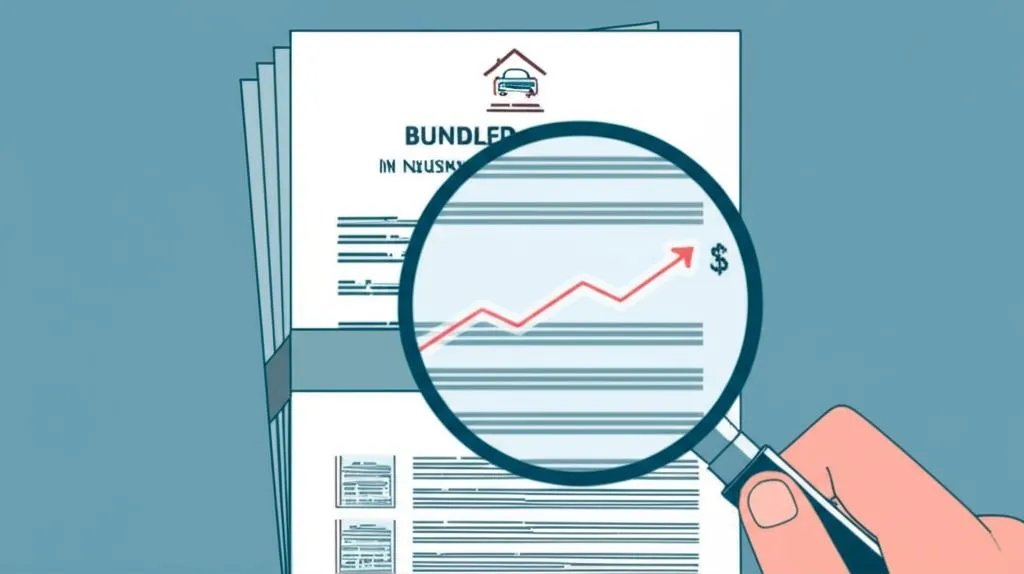
Rising insurance premiums have many Americans taking a closer look at their policies, and what they're finding isn't always pretty. The insurance industry's so-called "loyalty tax"—where long-time customers end up paying more than new customers for the same coverage—has become a hot topic among consumer advocates and regulators. While bundling your home and auto insurance might seem like a smart way to save money and simplify your life, the reality is that staying loyal to your insurer could be costing you more than you think.
Let's dive into how this loyalty tax works, whether bundled policies are really worth it, and what you can do to protect your wallet.
What Exactly Is the Loyalty Tax?
Think of the loyalty tax as the price you pay for being a good customer. It's what happens when insurance companies gradually raise your premiums each year while offering sweet deals to attract new customers. You might not even notice it at first—maybe your premium goes up by $50 or $100 at renewal, which doesn't seem like much. But over several years, these increases can really add up.
How It Works
Insurance companies use what's called "price walking"—they hook you with a competitive rate, then slowly increase your premiums at each renewal. Meanwhile, they're offering those same low rates to new customers. It's like watching your favorite restaurant raise prices for regular customers while offering first-time visitors a discount.
The Numbers Don't Lie
This isn't just a minor inconvenience—it's a massive issue affecting millions of people. In Australia, over 10 million households are paying a loyalty tax, with long-term customers (who've been with their insurer for about 8 years on average) expressing much higher dissatisfaction than newcomers. The UK's Financial Conduct Authority found that in 2018, about 6 million home and auto insurance customers paid a combined £1.2 billion more than they should have due to this practice.
Here's what we're seeing across different markets:
| Country | Households Affected | Estimated Annual Cost | How Much More Loyal Customers Pay |
|---|---|---|---|
| Australia | 10+ million | ~$2.4 billion USD | 34% more than new customers |
| UK | 6 million (2018 data) | $1.5 billion USD | Significant penalty (now banned) |
| U.S. | Tens of millions | Varies by state | Often more than new customer rates |
Bundled Policies: The Good, the Bad, and the Confusing
Bundling your insurance policies—like combining home and auto coverage with one company—has become incredibly popular. Insurance companies love to promote these packages, and on the surface, they seem like a no-brainer.
The Potential Savings
When bundling works, it can deliver real savings. Most insurers offer discounts ranging from 15% to 30% when you combine policies, with the average discount sitting around 20-25%. For specialized coverage like long-term care insurance, couples can save an average of 25%, sometimes up to 35%.
Beyond the money, bundling offers convenience: - One company to deal with - Fewer bills to track - Sometimes shared deductibles when one event affects multiple policies
| Bundle Type | Typical Discount Range | Average Savings |
|---|---|---|
| Home + Auto | 15%–30% | 20–25% |
| Long-term Care (couples) | 19.7%–35% | 25% |
The Hidden Catches
But here's where it gets tricky: bundling doesn't always mean you're getting the best deal. Sometimes you might save money by keeping your policies separate, especially if you can find a better rate with a different company for one of your policies.
Common pitfalls include: - Bundling can make it harder to compare prices because you're looking at package deals instead of individual policies - You might still have to pay separate deductibles for different types of claims - The convenience factor can make you less likely to shop around regularly - Initial bundle discounts might not protect you from steeper price increases down the road
What the Research Shows
Interestingly, studies suggest that if bundling were banned entirely, competition could drive down prices for individual insurance products by about 10%—which would nearly offset the typical bundling discount. This tells us that bundling might be suppressing competition rather than creating genuine value.
The Real Cost of Staying Loyal
Your Wallet Takes the Hit
The financial impact of the loyalty tax is significant. In Australia, customers collectively lose about $3.6 billion each year to loyalty pricing. For individual policyholders, this can mean hundreds or even thousands of dollars in extra costs annually.
Here's how it breaks down for different types of coverage:
| Insurance Type | Example Extra Cost per Year |
|---|---|
| Life Insurance ($1M coverage) | $153 (42% more than cheapest) |
| Life + Disability ($1M) | $217 (32% more) |
| Trauma Coverage (Standard) | $421 (73% more) |
| Trauma Coverage (Plus) | $536 (89% more) |
It's Not Just About Money
Beyond the financial hit, there's an emotional cost too. Many long-term customers feel betrayed when they discover they're paying more than new customers for the same coverage. This sense of unfairness has become one of the most common complaints in customer reviews, appearing in more than one-third of all feedback.
What Regulators Are Doing About It
Different Approaches Around the World
United Kingdom: The UK took the strongest stance, banning price walking entirely in January 2022. Now, insurers can't charge existing customers more than new ones for comparable coverage. While this has led to some increase in new customer rates, long-term customers are no longer penalized for their loyalty.
Australia: Australia has focused on transparency, requiring insurers to show last year's premium alongside the new price on renewal notices since July 2021. They've also pushed for clearer explanations of how and why premiums might change.
United States: There's no federal ban on loyalty-based pricing. Some states have privacy laws that touch on loyalty programs, and a few require advance notice of premium increases, but the practice remains largely unregulated.
| Region | What They're Doing | Banned Loyalty Tax? |
|---|---|---|
| Australia | Transparency requirements | No |
| UK | Complete ban on price walking | Yes (since 2022) |
| U.S. | Mostly state-level privacy rules | No |
| EU | Increased oversight and fairness rules | No |
How to Protect Yourself
Shop Around Every Year
The most effective way to avoid the loyalty tax is to compare rates annually. Use comparison websites like NerdWallet, Bankrate, or state-specific resources to see what's available. Don't assume your current insurer is still giving you the best deal.
Top comparison platforms in the U.S.: - NerdWallet - Bankrate - The Zebra - Insurify - Compare.com
Master the Art of Negotiation
If you find a better rate elsewhere, don't just switch—negotiate. Call your current insurer and ask them to match or beat the competitor's quote. Many companies have retention departments specifically designed to keep good customers from leaving.
Things to ask about: - All available discounts (bundling, safe driver, good student, military, etc.) - Loyalty programs or long-term customer benefits - Payment discounts for annual payments instead of monthly - Rate matching for competitor quotes
Know When to Walk Away
Sometimes, despite your best negotiation efforts, you'll find a genuinely better deal elsewhere. Don't let inertia keep you overpaying. Just make sure you: - Don't cancel your old policy until the new one is active - Check that your new coverage matches your old coverage - Consider any cancellation fees - Update your mortgage company or loan holder if required
The Bottom Line
The loyalty tax is real, and it's costing Americans billions of dollars every year. While bundled policies can offer genuine savings and convenience, they're not automatically the best deal—especially if you haven't shopped around recently.
The insurance industry markets heavily to new customers while gradually increasing prices for existing ones. As a consumer, your best defense is to stay informed, compare rates regularly, and be willing to negotiate or switch when it makes financial sense.
Remember: insurance companies are businesses, and they're counting on customer inertia to maintain their profits. Don't let loyalty cost you money—your insurance company should earn your business every year, not just the first year.
The key takeaway? Shop around annually, negotiate assertively, and never assume your current insurer is still giving you the best deal. Your wallet will thank you.
References
- Arendt. (2023, May 15). Differential pricing practices in the non-life insurance sector: EIOPA supervisory expectations. Link
- Australian Bureau of Statistics figures via Insurance Business Mag. (2024). Premiums grew 11% year-on-year to November 2024, with cumulative multi-year increases noted. Link
- Bankrate. (n.d.). When to shop for car insurance. Link
- Central Bank of Ireland. (2021). Review of differential pricing regulations in the private car and home insurance market. Link
- Compare The Market. (2025). About us. Link
- Insurance Watch. (2024). Customer feedback, loyalty tax and premium differentials data. Link
- NatLawReview. (2024, May 16). Emerging legal and regulatory risks for loyalty programs. Link
- NatLawReview. (2024, Oct. 3). When loyalty programs breed discontent: Will your insurance respond? Link
- NerdWallet. (2025). Best home and auto insurance bundles. Link
- Simon Kucher & Partners. (2021, Oct. 10). Differential pricing: What it is and how to use pricing strategy effectively. Link
- UK Financial Conduct Authority. (2022). General insurance pricing practices – final rules. Link
- WTW. (2024). Supervisory statement on differential pricing practices. Link
- All other referenced sources available upon request or in original research dossier.