

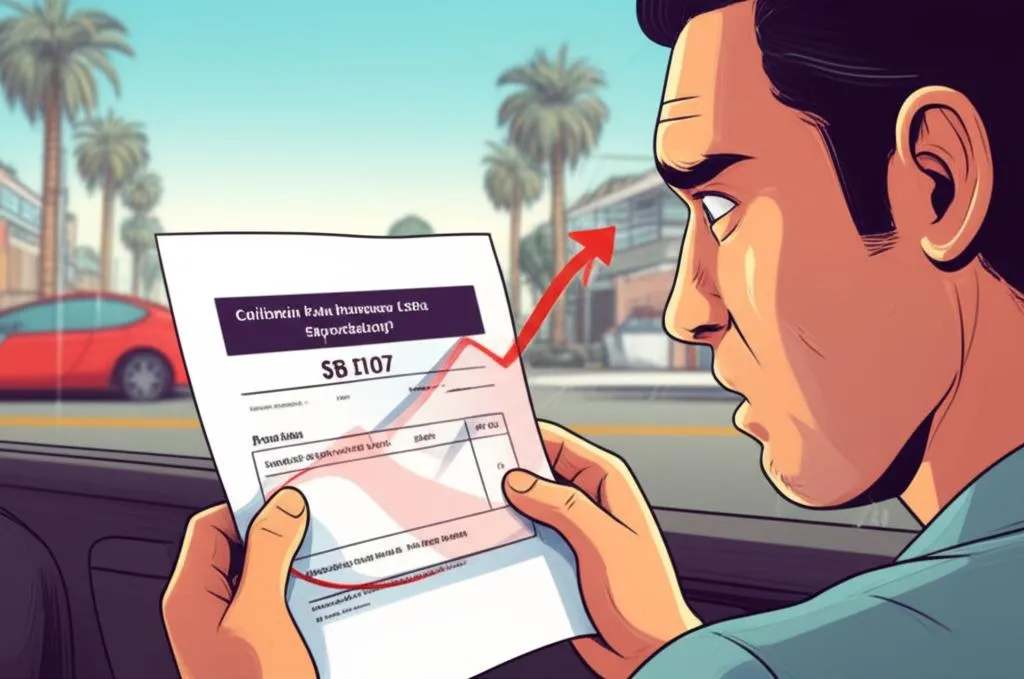
Sarah Martinez stared at her insurance renewal notice in disbelief. Her monthly premium had jumped from $89 to $127—a 43% increase that would strain her already tight budget as a San Jose elementary school teacher. Like millions of California drivers, Sarah was experiencing the reality of SB 1107, the state's first auto insurance minimum increase since 1967.
If you're feeling that same shock when you opened your renewal notice, you're not alone. Starting January 1, 2025, every California driver faces mandatory coverage increases that have pushed statewide premiums up 15-30%. But here's something that might surprise you: with the right approach, you can often offset these increases entirely and sometimes even reduce your total costs below previous levels.
What SB 1107 Actually Means for Your Monthly Budget
Let's talk numbers first, because understanding exactly what changed helps you make better decisions about your coverage.
California's Senate Bill 1107 didn't just tweak insurance requirements—it fundamentally restructured what every driver must carry. These new mandatory minimums represent dramatic increases from limits that hadn't changed since the Johnson administration:
Your new required coverage jumps to $30,000 per person (up from $15,000), $60,000 per accident (up from $30,000), and $15,000 for property damage (up from $5,000). If you previously carried minimum coverage, your insurer now must provide double or triple the protection for every policy, which translates directly to higher premiums because insurance companies suddenly face much greater financial exposure on every claim.
The increase hits differently depending on where you live and what you previously carried. Maria Rodriguez in Los Angeles saw her minimum coverage premium rise 38%, while Tom Chen in Sacramento experienced a 22% increase for the same policy type. This disparity reflects how insurers calculate risk differently across California's diverse regions.
Urban drivers face particularly steep increases because higher accident rates and repair costs in cities like San Francisco, Los Angeles, and San Diego amplify the impact of increased coverage limits. When property damage minimums triple, the cost difference between repairing a Tesla versus a Honda becomes much more significant to your insurer's bottom line. Rural drivers aren't immune either—while accident frequency may be lower, the increased coverage requirements still drive up premiums, often with fewer insurer options to choose from.
There's another detail worth knowing: SB 1107 includes a second increase scheduled for 2035, raising minimums to $50,000/$100,000/$25,000. This timeline signals California's commitment to keeping pace with modern accident costs, meaning we'll likely see continued premium pressure ahead.
Five Ways to Cut Your Premium Starting This Month
Transform Your Discount Strategy
Most drivers leave significant money on the table because they don't understand how to maximize discounts strategically. Insurance discounts can slash 20-40% off your premium, but it requires a thoughtful approach.
When it comes to bundling, combining auto with renters or homeowners insurance typically saves 10-25%, but you need to look at the details carefully. Some companies offer deeper discounts for specific combinations—State Farm's bundling discounts, for instance, increase significantly when you add a third policy type. Always get quotes both bundled and separate to ensure you're actually saving money.
Modern technology offers real opportunities for careful drivers. Programs like Progressive's Snapshot or State Farm's Drive Safe & Save can reduce premiums by 10-30% for drivers willing to have their habits monitored. These aren't gimmicks—they measure actual driving behavior including speed, braking patterns, and time of day you drive. If you're naturally cautious behind the wheel, these programs essentially let you prove your lower risk for substantial savings.
Don't overlook professional connections either. Your employer, credit union, or professional associations likely have group insurance arrangements that you might not know about. Teachers' unions, police organizations, and even some large employers negotiate rates that can beat standard pricing by significant margins.
Make Smart Coverage Adjustments
The goal here is balancing cost savings with adequate protection, which is especially important in California's lawsuit-heavy environment and high vehicle values.
Raising your deductibles wisely can provide immediate relief. Increasing your collision and comprehensive deductibles from $500 to $1,000 typically reduces premiums by 15-20%. But honestly consider your financial reality first—can you handle a $1,000 expense if needed? Some drivers benefit from raising deductibles to $2,500 or even $5,000, saving 25-40% annually while keeping emergency funds specifically earmarked for potential claims.
Take a hard look at older vehicle coverage too. If you're driving a 2015 Honda Civic worth $8,000, paying $1,200 annually for comprehensive and collision coverage rarely makes financial sense. Many California drivers discover they can drop these coverages on older vehicles and save substantial money while maintaining all legally required protection.
Also review your underinsured and uninsured motorist coverage carefully. While SB 1107 requires specific minimums, you might be carrying more than necessary. These limits have likely increased automatically with the new law, potentially beyond what you actually need.
Shop the Market Like a Pro
California's competitive insurance market means dramatic price variations between carriers, but effective shopping requires more strategy than just getting quotes online.
Timing your shopping matters more than most people realize. Insurance rates fluctuate based on market conditions and individual company performance. Shopping 30-45 days before your current policy expires gives you leverage and time to properly evaluate options without feeling pressured.
When comparing quotes, make sure you're looking at identical coverage limits, deductibles, and additional features. A quote that's $200 lower might include higher deductibles or fewer benefits, making it false savings that could cost you later.
Consider regional specialists that many drivers overlook. Companies like Mercury Insurance and 21st Century often offer competitive rates for California-specific risks. These insurers understand local conditions like earthquake risk, wildfire exposure, and urban theft patterns better than national carriers focused on other regions.
Optimize Your Personal Risk Profile
Insurance companies assess risk based on factors beyond just your driving record, and you have more control over these factors than most people realize.
Your credit score directly impacts your premiums in California, unlike some states that prohibit this practice. Even modest credit improvements can yield savings that justify the effort to clean up your credit report and pay down debt.
If you're considering a new vehicle, research insurance costs before purchasing. A Honda Accord typically costs less to insure than a BMW with similar value due to theft rates, repair costs, and safety ratings. This research can save hundreds annually and should definitely factor into your vehicle selection process.
For violations on your record, remember that different insurers weigh them differently. Traffic violations stay on your record for 3-7 years depending on severity, but some insurers focus more heavily on recent violations while others take a longer view. If you have violations, specifically get quotes from insurers known for competitive rates despite imperfect records.
Use California's Special Programs and Resources
California provides specific programs and protections that many drivers don't know exist, which can be particularly valuable given the SB 1107 increases.
The California Low-Cost Auto Insurance (CLCA) program offers significantly reduced rates if your household income falls below 250% of federal poverty guidelines (about $31,200 for an individual in 2025). This state program provides coverage that meets all new legal requirements while delivering substantial savings.
California maintains online rate comparison tools through the Department of Insurance that let you compare rates across multiple insurers simultaneously. These tools factor in your specific location, age, and vehicle type for personalized comparisons that can save you significant research time.
Before switching insurers, research their complaint ratios through the California Department of Insurance consumer database. A company might offer lower rates but provide poor claims service, creating problems that far outweigh any savings.
Finding the Right Coverage Balance
Understanding minimum requirements versus optimal coverage becomes crucial after SB 1107. Meeting the new requirements doesn't necessarily mean you should carry only minimums. In California's high-cost environment, $30,000 in bodily injury coverage could prove woefully inadequate for serious accidents involving expensive vehicles or significant injuries.
However, you don't need to buy the most expensive coverage available either. Most financial advisors recommend liability limits roughly equal to your net worth. If you have limited assets, carrying slightly above minimums (like $50,000/$100,000/$25,000) provides solid protection without excessive cost.
California's enforcement of insurance requirements has intensified recently, with automatic license readers detecting uninsured vehicles and sophisticated verification systems at traffic stops. The penalties for non-compliance include fines starting at $100-$200 for first offenses, vehicle impoundment requiring costly retrieval, license suspension affecting employment and daily life, and personal liability for damages in accidents. The cost of compliance, even with higher premiums, remains far less than these penalties plus the risk of complete financial exposure.
If your policy renewed shortly before January 1, 2025, contact your insurer immediately to verify compliance. Some companies automatically upgraded policies, while others require customer requests for mid-term adjustments. Don't assume you're covered just because you haven't heard from your insurer.
Regional Strategies That Actually Work
Urban Area Tactics
Los Angeles and San Francisco drivers face unique challenges with higher base rates, more traffic, and increased theft risk. However, urban areas also offer more insurer options and competitive pressure. Urban drivers should particularly focus on low-mileage discounts if using public transportation, secure parking discounts for garage storage, and defensive driving course discounts to offset accident-prone area rates.
Rural and Suburban Approaches
Central Valley, coastal, and mountain region drivers often have fewer insurer choices but different risk profiles. Effective strategies include higher deductibles due to lower theft and vandalism risks, focusing on liability coverage adequate for highway driving speeds, and considering specialized rural insurers familiar with local conditions.
Disaster-Prone Area Planning
California's wildfire, earthquake, and flood risks create unique considerations. Comprehensive coverage becomes more valuable in high-risk areas, but you can manage costs through higher deductibles balanced against disaster loan availability, bundling with homeowners coverage for maximum discounts, and reviewing coverage annually as risk patterns change.
Planning for What's Coming Next
The scheduled 2035 increase to $50,000/$100,000/$25,000 minimums means further premium pressure ahead. You can start planning now by gradually increasing coverage limits to spread cost increases over time, building emergency funds to handle higher deductibles, and monitoring insurance market trends and new company entries.
California's insurance market is rapidly adopting new technologies that could benefit cost-conscious drivers, including pay-per-mile policies for low-mileage drivers, AI-based risk assessment reducing reliance on demographics, and enhanced telematics programs offering greater savings opportunities.
Expect continued market evolution with consolidation and new entrants as California's large market attracts national attention. This competition should eventually moderate premium increases, but adjustment periods may create both opportunities and challenges for consumers.
Your Next Steps
Start with the highest-impact strategies first. Call your current insurer today to verify SB 1107 compliance and ask about available discounts you might not be receiving. This single call often identifies immediate savings opportunities that can offset much of your increase.
Next, get comparative quotes from at least three different insurers, ensuring identical coverage specifications. The time investment typically pays for itself many times over through better rates or discovering coverage gaps you didn't know you had.
Finally, review your actual coverage needs based on your current financial situation, vehicle values, and risk tolerance. The combination of mandatory increases and strategic optimization often results in better protection at comparable or lower costs than your previous inadequate coverage.
California's insurance landscape has fundamentally changed, but informed drivers who take proactive steps can navigate these changes successfully while maintaining both legal compliance and financial health. The key lies in understanding your options and acting strategically rather than simply accepting whatever increases come your way.
Remember, you're not powerless in this situation. While SB 1107's requirements are mandatory, how much you pay for coverage beyond those minimums remains entirely within your control.
References
-
Carrier Management. (2025, March 3). California's Auto Insurance Minimums Rise for First Time Since 1967. Retrieved from https://www.carriermanagement.com/news/2025/03/03/272456.htm
-
Breathe Easy Insurance. (2025, March 4). California 2025 Auto Insurance Changes. Retrieved from https://www.breatheeasyins.com/knowledge-center/california-2025-auto-insurance-changes
-
FMG Law. (2025, February 12). California Increases Auto Insurance Minimums for the First Time Since 1967. Retrieved from https://www.fmglaw.com/insurance-4/california-increases-auto-insurance-minimums-for-the-first-time-since-1967/
-
Mercury Insurance. (2024, December 18). California Minimum Car Insurance Increase 2025. Retrieved from https://www.mercuryinsurance.com/resources/auto/california-minimum-car-insurance-increase-2025.html
-
BDJ Law. (2024, December 30). What SB1107 Means for Your Motorist Insurance Coverage. Retrieved from https://www.bdj.com/blog/what-sb1107-means-for-your-motorist-insurance-coverage/