

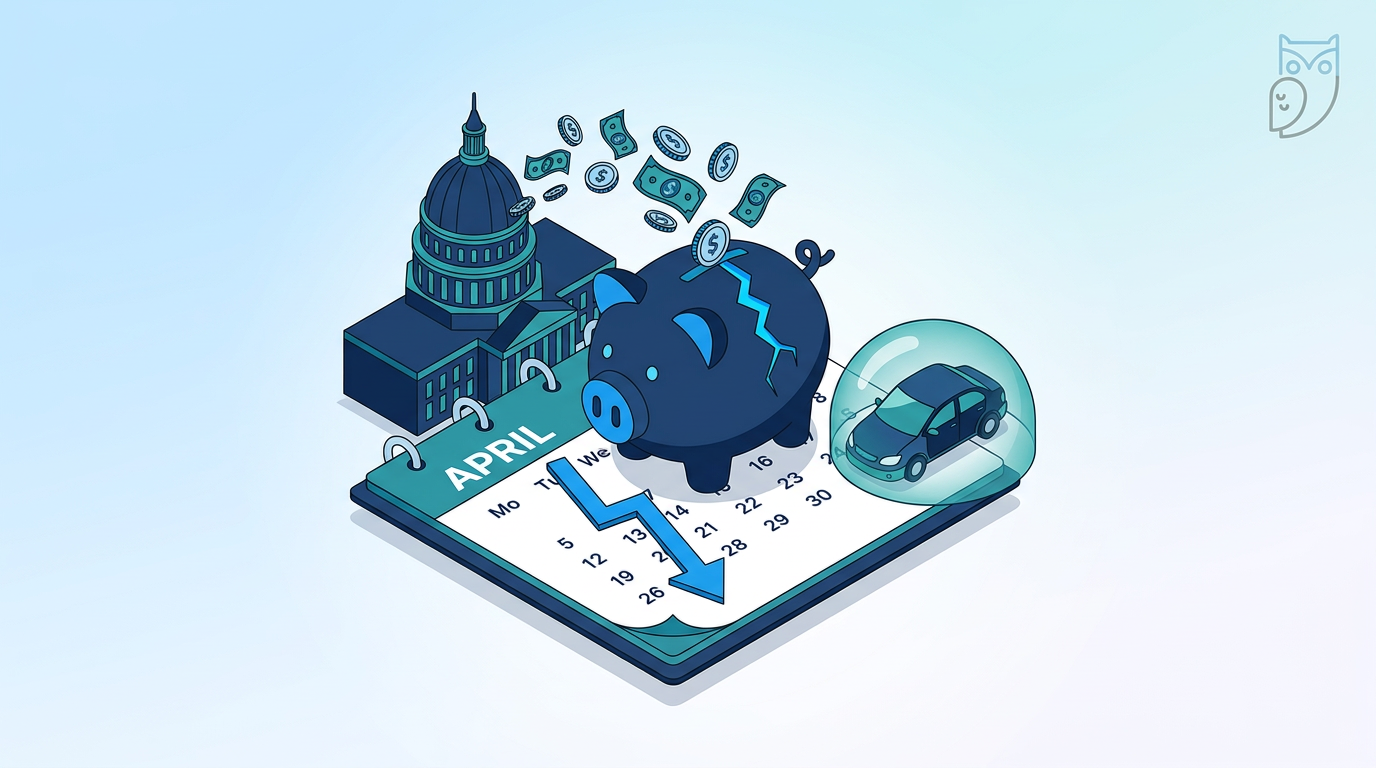
Governor Kathy Hochul has proposed sweeping auto insurance reforms targeting the fraud and lawsuit abuse that pushes New York's average car insurance cost above $4,000 a year. If the legislature passes the plan by the April 1, 2026 state budget deadline, experts say rates could fall 15–20%.
- NY drivers pay $4,000+/year on average — 52% above the national average
- Fraud alone adds an estimated $300/year to every driver's premium
- Six reform planks targeting fraud, lawsuit abuse, and insurer transparency
- April 1, 2026 state budget deadline — the reform lives or dies in 10 days
- If passed, analysts estimate 15–20% rate reduction is possible
New York drivers pay some of the most expensive car insurance in America — over $4,000 a year on average, nearly $1,500 above the national average. Governor Kathy Hochul wants to change that before April 1, 2026, and her plan has a real shot at passing.
Hochul unveiled a comprehensive auto insurance reform package as part of New York's 2027 executive budget, targeting the fraud rings, lawsuit loopholes, and regulatory gaps that industry analysts say are the primary drivers of the state's sky-high premiums. The reforms go to the legislature as part of the annual budget process, with a hard deadline of April 1.
Why New York Car Insurance Is So Expensive
New York's insurance crisis isn't a mystery — it's a predictable result of a system that fraud rings and plaintiff attorneys have learned to exploit. Three structural problems compound each other to produce the nation's highest premiums.
First, there's the fraud pipeline. In 2023, New York recorded 1,729 staged crashes — the second-highest total in the nation, according to the Governor's office. That's not fender benders; these are organized criminal operations where teams of people deliberately cause accidents to file inflated injury claims. By 2025, insurance carriers had reported 43,811 suspected motor vehicle fraud incidents to the New York State Department of Financial Services (DFS) — up 80% from 24,238 incidents in 2020.
Second, New York's no-fault insurance system — originally designed to speed up claim payments — has become a fraud vector. Unscrupulous medical providers sign off on phony diagnoses tied to staged crashes, generating enormous claim payouts that ultimately come out of every driver's premium. According to state estimates, staged accident fraud alone inflates the average New York driver's annual premium by approximately $300.
Third, New York's tort laws are among the most plaintiff-friendly in the country. The state allows drivers who are "mostly at fault" in an accident to still collect significant non-economic damages (pain and suffering). It also allows criminals — including drunk drivers and people committing felonies — to collect these same damages if they're injured during their crime. Most states have closed these loopholes. New York hasn't — until now, if Hochul's plan passes.
What Hochul's Reform Plan Does
The Governor's proposal attacks the cost problem on six fronts simultaneously.
1. Criminalize staged accident fraud. Under current law, criminal penalties typically only apply to the person behind the wheel in a staged crash. Hochul's plan creates new criminal liability for anyone who organizes or orchestrates a staged accident — targeting the ringleaders of fraud operations, not just their foot soldiers.
2. Tighten the serious injury threshold. New York's no-fault law lets people with "serious injuries" sue for pain and suffering damages beyond their medical bills. But the state's legal definition of "serious injury" is vague and has been stretched to include temporary injuries that heal in weeks. The reform proposes objective medical standards for what qualifies, cutting off the frivolous lawsuits that clog courts and drive up premiums.
3. Cut off "mostly at fault" damages. Right now, a driver deemed 60% at fault for a crash can still sue for non-economic damages. The reform would limit damage recovery to drivers who are not primarily at fault — a rule already adopted by the vast majority of states. New York would join those 28+ states in making defendants pay only for the harm they actually caused.
4. Bar criminals from collecting jackpot payouts. If you're driving drunk, fleeing a felony, or driving uninsured when you get into an accident, you shouldn't be able to collect pain and suffering awards from insurance companies. Hochul's plan caps non-economic damage payouts for these individuals, while still preserving reimbursement for medical expenses and lost wages.
5. Reinvigorate the Excess Profit Law. Since the 1970s, New York has maintained a law requiring auto insurers to refund profits that exceed a set threshold directly to policyholders. The law hasn't been enforced aggressively in recent years. If reform passes and rates drop, Hochul is directing DFS Commissioner Adrienne Harris to re-examine the profit threshold — ensuring that insurer savings flow back to consumers, not shareholders.
"For most people, car insurance isn't a luxury — it's a necessity, especially here on Long Island where people rely on their cars to get to work, get to school or even go grocery shopping. These common sense proposals will crack down on the bad actors that are driving up the cost of car insurance and putting that financial burden on innocent, hardworking New Yorkers." — Governor Kathy Hochul
6. Require transparency and safe-driving discounts. Insurers would be required to notify policyholders whenever rates change and explain why. They'd also be required to offer discounts to drivers who voluntarily participate in telematics programs — like usage-based insurance apps that track driving behavior — as long as those programs demonstrably reduce unsafe driving.
What This Means for New York Drivers
If the reform passes, the most optimistic projections put the potential rate reduction at 15–20%. On a $4,000 annual premium, that's $600–$800 back in your pocket every year. More conservative estimates still put savings in the hundreds of dollars range per household.
There's a real-world template for this working. Florida passed sweeping tort reform (HB 837) in 2023, targeting similar lawsuit-abuse dynamics. The result: Florida's top five insurers announced an average 8% rate decrease in 2026, with State Farm alone cutting rates more than 20% since 2024. Progressive refunded nearly $1 billion to Florida auto policyholders after the state's Excess Profit Law was triggered. New York's reform is modeled on those same mechanisms.
There's also a secondary benefit that doesn't get enough attention: the MTA angle. Governor Hochul's office estimates the reform would save the Metropolitan Transportation Authority $48 million annually by preventing "deep pocket" jackpot settlements against MTA buses that weren't primarily at fault in accidents. That money can go back into transit service — a direct benefit for the millions of New Yorkers who rely on trains and buses.
NYC police officers, firefighters, and MTA union officials have publicly backed Hochul's reform. Business groups, Long Island chambers of commerce, and auto body shops have also lent support. The primary opposition comes from the plaintiff's bar — trial lawyers who profit from the current lawsuit environment and have significant influence in the state legislature. Their opposition is the main reason similar reforms have failed in Albany for years.
What You Should Do Now — Before April 1
Here's the honest truth: you can't wait to see if Albany passes this. Your next renewal is coming regardless of what the legislature decides, and the best time to lower your premium is before it renews at current rates.
Find out when your policy renews
Check your declarations page or call your agent. If your renewal is within the next 60 days, you have time to shop before locking in another year at current rates.
Get at least three competing quotes
The insurance market is competitive right now — nationally, rates are nearly flat in 2026 after years of increases. Several carriers are actively pricing for market share. Compare Progressive, GEICO, State Farm, and regional options like Erie Insurance.
Ask about telematics discounts
Most major carriers offer 10–30% discounts for enrolling in usage-based programs (Progressive Snapshot, State Farm Drive Safe & Save, etc.). If reform passes, insurers will be required to offer these — but you can sign up today.
Consider bundling home and auto
Multi-policy discounts of 10–25% are common. If your home or renters insurance is with a different carrier than your auto, switching both to one carrier could offset much of the NY premium penalty.
Looking Ahead: The April 1 Deadline
The New York state budget deadline is April 1, 2026 — ten days from today. The reform either passes as part of the budget or it likely stalls for another year, as past reform attempts have. Legislative observers say the political dynamics are more favorable this time: the affordability message resonates, uniformed services are publicly on board, and the Florida success story gives skeptical lawmakers a concrete example to point to.
Even if reform passes, drivers shouldn't expect immediate rate changes at their next renewal. Rate filings take time — insurers must submit new rate schedules to DFS for approval, and that process typically takes months. Realistically, if the reform passes April 1, most New York drivers would begin seeing lower rates at 2027 renewals. The Excess Profit Law trigger, if activated, would come even later.
Watch for budget news in the final week of March. If the reform clears the legislature, it's worth calling your insurer to ask when revised rate filings are expected in your area.
Frequently Asked Questions
Three main factors drive New York's $4,000+ average: organized fraud rings staging accidents (43,811 suspected fraud incidents reported to DFS in 2025), lawsuit abuse enabled by loose tort laws that let at-fault drivers and criminals collect large payouts, and high medical costs in the NYC metro area. These factors compound each other — fraud generates inflated claims, loose tort law enables jackpot lawsuits, and insurers price all of it into your premium.
Not immediately. Rate changes require insurers to file new schedules with the DFS, which takes months to approve. If the budget passes April 1, 2026, most drivers would start seeing savings at their 2027 renewals. Some carriers may move faster. Check with your insurer after a budget deal is reached.
New York's Excess Profit Law requires auto insurers to return profits that exceed a set threshold directly to policyholders. If Hochul's reforms pass and costs drop, DFS would examine whether current insurer profits trigger a mandatory refund. Florida's version of this law triggered Progressive to return nearly $1 billion to policyholders in 2025 — New York's version could produce similar results if the profit threshold is exceeded.
If the budget deadline passes without the insurance reforms, the proposals don't automatically die — they could be taken up as standalone legislation later in the session. But Albany's history with insurance reform is not encouraging. Similar proposals have stalled repeatedly due to opposition from the plaintiff's bar. Failing the April 1 deadline would likely mean another year or more before New Yorkers see any legislative relief.
Yes. Start by getting competing quotes from at least three carriers — the market is competitive in early 2026. Ask about telematics discounts (10–30% savings for safe driving monitoring). Bundle your home and auto policies for multi-policy discounts. Raise your deductible if you have savings to cover it. NY's rates are high across the board, but there's typically a $500–$1,000+ spread between the cheapest and most expensive carrier for the same driver profile.
- NY Governor's Office — Hochul Highlights Proposals to Bring Down Auto Insurance Rates (February 11, 2026)
- NY Governor's Office — Auto Insurance Reform Would Save MTA $48 Million Annually
- Repairer Driven News — New York Governor Rolls Out Auto Insurance Reform Plan (March 17, 2026)
- BeInsure — New York Auto Insurance Reform Sparks Clash
- Repairer Driven News — Progressive to Pay Back $1 Billion to Florida Auto Policyholders (October 2025)
- Florida Office of Insurance Regulation — Top 5 Auto Insurers Cutting Rates by 8% in 2026