

Key Takeaways
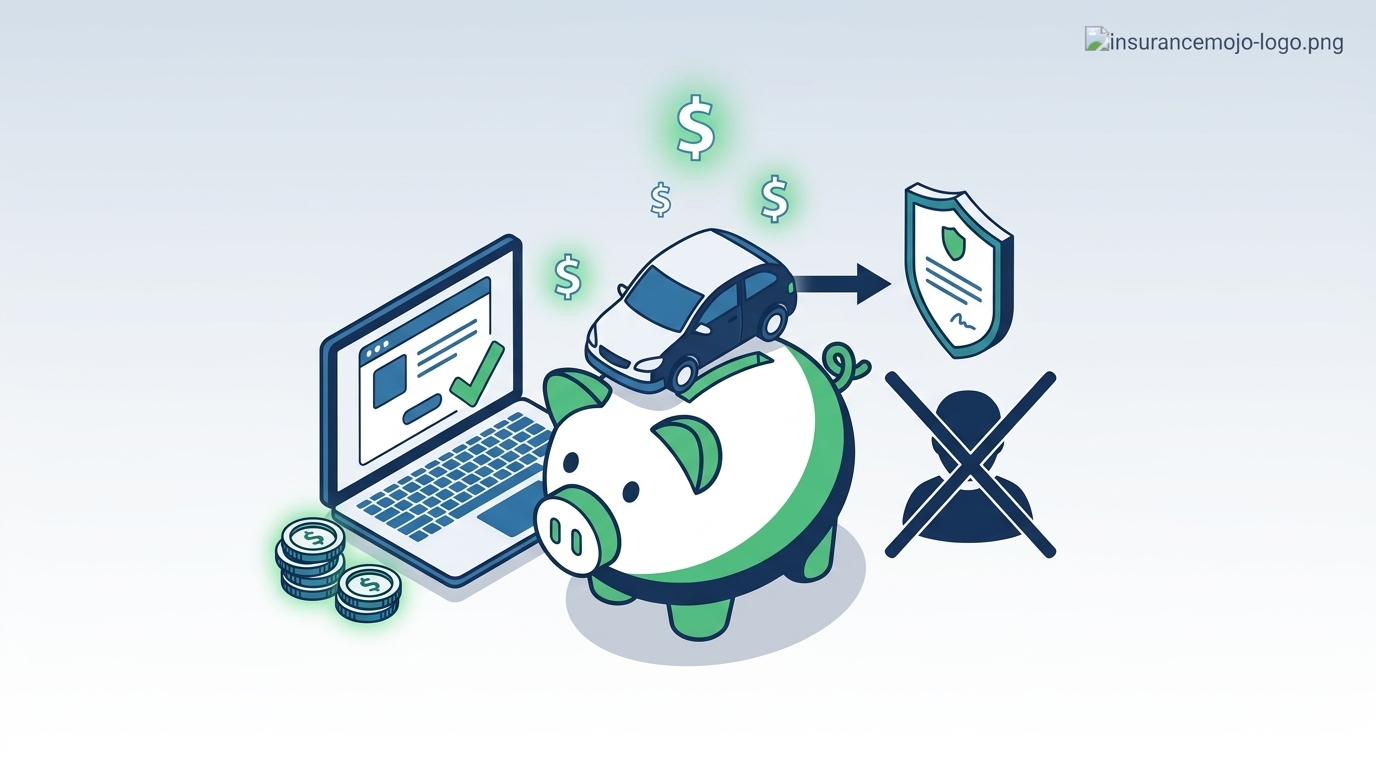
- Direct-to-consumer car insurance eliminates agent commissions (typically 5-15% of your premium), and those savings often translate to lower rates for you.
- GEICO, Progressive Direct, State Farm online, USAA, and Travelers all let you complete the entire process without ever speaking to an agent.
- You can go from zero coverage to fully insured in as little as 15 minutes with instant policy binding.
- The tradeoff is real: no agent means no one reviewing your coverage for gaps, so you need to understand what you are buying.
- Always compare at least three direct quotes before committing, and verify every insurer through your state Department of Insurance.
What Is No Middleman Car Insurance?
If you have ever wondered whether you actually need an insurance agent to get car insurance, the short answer is no, you do not. No middleman car insurance is exactly what it sounds like: you buy your policy directly from the insurance company itself, cutting out agents, brokers, and anyone else who would normally sit between you and the insurer.
This is not a new concept. GEICO built its entire business model around it starting back in 1936. But what has changed dramatically in recent years is how easy the process has become. Today, every major direct writer has a polished online platform where you can get a quote, adjust your coverage limits, apply discounts, and bind your policy without picking up the phone or walking into an office.
The companies that operate this way are called "direct writers" or "direct-to-consumer insurers." They employ their own customer service teams but do not use independent agents to sell policies. That distinction matters because it is the core reason their rates can be lower: they are not paying commissions to outside salespeople.
How Buying Direct Actually Saves You Money
Let us talk numbers, because this is where the rubber meets the road. When you buy through a traditional agent or broker, the insurance company pays that person a commission. For auto insurance, agent commissions typically range from 5% to 15% of your annual premium. On a $1,800 per year policy, that is $90 to $270 going to the agent every single year you renew.
Direct insurers do not pay these commissions, and while they do not always pass every dollar of savings directly to you, competitive pressure means they usually offer lower rates. Here is what real rate comparisons look like for a 40-year-old driver with a clean record and good credit, carrying 100/300/100 liability limits with a $1,000 deductible:
Direct Insurer Rate Comparison (Monthly)
- GEICO: approximately $101/month ($1,212/year)
- State Farm (online): approximately $121/month ($1,452/year)
- Progressive Direct: approximately $129/month ($1,548/year)
- Allstate (online): approximately $162/month ($1,944/year)
Note: Rates are approximate and vary significantly by state, ZIP code, driving history, and credit score. The spread between the cheapest and most expensive here is $61 per month, or $732 per year, for identical coverage.
That $732 annual gap between the cheapest and most expensive direct writer illustrates a critical point: the insurer you choose matters far more than whether you use an agent. But eliminating the middleman gives you one more lever to pull when trying to minimize your costs.
Progressive Direct vs. Agent: A Real-World Example
Here is something most people do not realize: Progressive actually runs two different rating programs. One is for their "Direct" channel (when you buy on progressive.com or call them), and the other is for their "Agent" channel (when an independent agent sells you a Progressive policy). The quotes can be different for the exact same coverage because the agent channel builds in commission costs.
This means you could literally get two different prices from Progressive for the same policy depending on how you buy it. It is always worth checking both if Progressive is on your shortlist.
Which Companies Let You Buy Car Insurance With No Middleman?
Not every insurance company sells directly to consumers. Some operate exclusively through independent agents. Here is a breakdown of the major players and how they sell:
Fully Direct Insurers (No Agent Needed)
- GEICO - The original direct writer. Entirely online and by phone. Licensed in all 50 states and Washington, D.C. Known for consistently competitive rates.
- Progressive Direct - Complete online purchasing with their Name Your Price tool. Available in all 50 states. Remember, their direct rates may differ from agent rates.
- USAA - Exclusively for military members, veterans, and their families. Consistently rated highest in customer satisfaction. Entirely direct, no agents.
- Root Insurance - A newer insurtech company that prices based on how you actually drive, tracked through their app. Fully digital experience.
- Metromile - Pay-per-mile insurance for low-mileage drivers. Entirely app-based. Now part of Lemonade.
Hybrid Insurers (Direct Option Available)
- State Farm - Traditionally agent-based, but now offers full online purchasing in most states. You can complete the entire process on statefarm.com.
- Allstate - Offers online quotes and purchasing, though some states and coverage configurations may route you to a local agent.
- Travelers - Allows direct online purchasing for auto insurance in many states.
- Nationwide - Online quoting and purchasing available, with agent support optional.
Agent-Only Insurers (Must Use an Agent)
- Erie Insurance - Only available through independent agents in their 12-state operating area.
- Amica Mutual - Primarily agent-based, though some direct options exist.
- Auto-Owners Insurance - Exclusively sold through independent agents.
How to Buy Car Insurance Directly: Step-by-Step
Buying car insurance without an agent is straightforward, but you want to go in prepared. Here is exactly what the process looks like from start to finish.
What You Need Before You Start
Gather these four things before you sit down to get quotes. Having everything ready means you can complete the process in one sitting instead of starting and stopping:
- Your Vehicle Identification Number (VIN): This 17-character code is on your registration, your insurance card, or on a plate visible through your windshield on the driver side. The VIN lets the insurer pull exact vehicle details automatically.
- Your driver license number: The insurer uses this to check your driving record. Everyone who will be on the policy needs to provide theirs.
- Your current insurance details: The name of your current insurer and your policy expiration date. If you have a gap in coverage, be upfront about it because a lapse can increase your quoted rate by 10% or more.
- A payment method: Credit card, debit card, or bank account for electronic payment. Some insurers offer a small discount (typically 2-3%) if you pay the full annual premium upfront instead of monthly.
Step 1: Get Quotes From at Least Three Direct Insurers
Go to each insurer's website individually. Do not start with a quote aggregator site. This is important because aggregators often collect your information and sell it to agents who will call you, which defeats the entire purpose of going direct.
When entering your information, use the same coverage limits across all quotes so you are making an apples-to-apples comparison. A good baseline for most drivers is:
- Bodily injury liability: 100/300 (per person/per accident)
- Property damage liability: $100,000
- Comprehensive deductible: $500 or $1,000
- Collision deductible: $500 or $1,000
- Uninsured/underinsured motorist: match your liability limits
Step 2: Compare Quotes and Customize Coverage
Once you have your baseline quotes, look beyond the monthly premium. Check what discounts each company offers and whether you qualify. Common discounts available through direct insurers include:
- Multi-vehicle discount (10-25% off)
- Good driver or safe driver discount (up to 20%)
- Bundling with homeowners or renters insurance (5-15%)
- Paperless billing and autopay (3-10%)
- Good student discount for drivers under 25 (up to 15%)
- Defensive driving course completion (5-10%)
Step 3: Bind Your Policy and Get Proof of Insurance
When you have found the best combination of price and coverage, you can bind the policy immediately. Coverage starts the moment your payment processes. There is no waiting period with any major direct writer. GEICO, for example, confirms binding instantly and delivers your policy number by email within two minutes of purchase. Your full declarations page is typically available within 24 hours.
Download the insurer's mobile app right away. It gives you instant access to your digital insurance card, which is accepted as proof of insurance in all 50 states.
The Real Pros and Cons of Skipping the Middleman
Going direct is not universally better or worse than using an agent. It depends on your situation. Here is an honest look at both sides.
Advantages of Buying Direct
- Often lower rates: Without agent commissions built into the price, direct insurers can be more competitive. The savings vary but can be meaningful over time.
- Speed and convenience: You can quote, compare, customize, and purchase in under 15 minutes from your couch at midnight. No scheduling appointments, no waiting rooms.
- Full control: You make every decision about your coverage without anyone trying to upsell you. You choose your limits, your deductibles, and your add-ons.
- 24/7 self-service: Need to add a vehicle, change your address, or adjust coverage? Direct insurers let you do it through their app or website instantly, without calling anyone.
- Transparency: You see exactly what you are paying for and can toggle coverages on and off to see how they affect your price in real time.
Disadvantages of Buying Direct
- No coverage gap detection: This is the biggest tradeoff. An experienced agent might notice that your liability limits are too low for your net worth, or that you are missing umbrella coverage. The online form will not flag these issues for you.
- Limited comparison shopping: An independent agent represents multiple companies and can shop your profile across 10 or more insurers in one sitting. Going direct, you have to do that work yourself.
- Complex situations may need help: If you have a teenage driver, a modified vehicle, an SR-22 requirement, or multiple properties, an agent can be worth their weight in gold for navigating the complexity.
- Claims advocacy: When you file a claim, an agent can sometimes advocate on your behalf with the insurer. Going direct, you are dealing with the company's claims department on your own.
Who Benefits Most From No Middleman Car Insurance?
Buying direct is a great fit for some people and less ideal for others. Here is a practical guide to help you decide.
You Should Probably Buy Direct If:
- You have a straightforward insurance situation: one or two vehicles, clean driving record, no special circumstances.
- You are comfortable making coverage decisions on your own and understand the basics of liability, comprehensive, and collision coverage.
- You value speed and convenience over personalized guidance.
- You are willing to spend 30 to 60 minutes comparing quotes from multiple direct insurers.
- Your primary goal is getting the lowest possible rate.
You Might Want an Agent If:
- You have a complex situation: multiple vehicles, teenage drivers, a home-based business, or vehicles in multiple states.
- You have had a DUI, multiple accidents, or other issues that make you a high-risk driver. Agents often have access to specialty markets.
- You want someone to review your entire insurance portfolio (auto, home, umbrella, life) for gaps.
- You are buying insurance for the first time and genuinely do not know what coverage you need.
- You recently had a major life change like getting married, buying a home, or having a baby, and want professional guidance on updating your coverage.
How to Avoid Scams When Buying Car Insurance Online
Here is something that does not get talked about enough: buying insurance directly online opens you up to a specific type of fraud if you are not careful. The National Association of Insurance Commissioners (NAIC) reports over 12,000 verified scams targeting auto insurance shoppers every year.
These scams usually work the same way: a website that looks professional offers you an unbelievably low rate, takes your payment, and gives you what appears to be a valid insurance card. Then, when you actually need to file a claim, you discover the "insurer" does not exist.
Three Steps to Verify Any Insurer
- Check your state Department of Insurance website: Every state maintains a searchable database of licensed insurers. If a company is not listed there, do not give them your money. Period.
- Look up their AM Best rating: This is the gold standard for insurance company financial strength. You want a company rated A- (Excellent) or better. This tells you they can actually pay claims.
- Search for NAIC complaint data: The NAIC Consumer Information Source lets you see how many complaints have been filed against any insurer, which tells you how they treat their customers after the sale.
State-Specific Considerations for Direct Buying
Car insurance rules vary significantly from state to state, and this affects your direct-buying experience in a few ways.
In no-fault states like Florida, Michigan, New York, and New Jersey, your coverage requirements are more complex because you need Personal Injury Protection (PIP) on top of standard liability. Michigan in particular has some of the most complicated auto insurance rules in the country, with unlimited lifetime medical benefits historically driving up costs. If you are in one of these states, take extra time to understand what the law requires before buying direct.
In states like California, Proposition 103 heavily regulates how insurers set rates, which means the price difference between buying direct and going through an agent is often smaller. California also prohibits insurers from using credit scores in pricing, which changes the calculus for many drivers.
States like Texas and Georgia have relatively straightforward requirements and competitive direct insurance markets, making them ideal for the no-middleman approach.
The good news is that GEICO, Progressive, and State Farm are all licensed in every state plus Washington, D.C., so direct purchasing is available everywhere. Some states require specific disclosures during the purchase process, but these are handled automatically in the online checkout flow.
7 Tips for Getting the Best Rate When Buying Direct
Once you have decided to go the no-middleman route, here is how to make sure you are getting the absolute best deal:
- Compare at least three direct quotes: This is non-negotiable. Rates vary dramatically between insurers for the same driver. That $732 annual spread we mentioned earlier is not unusual.
- Check for rate differences by payment method: Paying annually instead of monthly can save you 2-3%. Some insurers also give a small discount for autopay or paperless billing.
- Ask about affinity discounts: Some direct insurers offer special rates for members of certain organizations, alumni associations, or professional groups. GEICO is particularly known for these.
- Consider telematics programs: Progressive Snapshot, GEICO DriveEasy, and State Farm Drive Safe & Save all track your driving habits and can reduce your rate by up to 30% if you are a safe driver.
- Review your coverage annually: Because you do not have an agent prompting you, set a calendar reminder to review your policy every year at renewal time. Your rates and coverage needs change over time.
- Bundle if it makes sense: Even without an agent, most direct insurers offer multi-policy discounts. Bundling auto and renters insurance, for example, can save 5-15%.
- Do not let your coverage lapse: A gap in coverage, even for a few days, can increase your next quoted rate by 10% or more. If you are switching insurers, make sure your new policy starts before your old one ends.
Frequently Asked Questions
Can you buy car insurance without an agent in every state?
Yes. Major direct writers like GEICO, Progressive, and State Farm are licensed in all 50 states and Washington, D.C. You can complete the entire purchase online regardless of where you live. Some smaller direct insurers may have limited state availability, so always check before starting a quote.
Is the coverage the same when you buy direct versus through an agent?
Absolutely. A GEICO auto policy with 100/300/100 limits is the same product whether you buy it online or through any other channel. The coverage terms, claims process, and legal protections are identical. The only difference is the buying experience and potentially the price.
How long does it take for coverage to start when you buy direct?
Coverage starts immediately upon payment. There is no waiting period. Most direct insurers will email your policy number within minutes and your full declarations page within 24 hours. You can download a digital insurance card to your phone right away.
What happens if you accidentally provide wrong information when buying online?
Insurers verify the information you provide (through DMV records, claims databases, and credit reports where allowed). If they find discrepancies, they will adjust your rate. Intentionally providing false information is considered fraud and can result in policy cancellation and denied claims. If you make an honest mistake, call the insurer to correct it as soon as you realize the error.
Is the claims process different if you bought your policy directly?
The claims process itself is the same. The only difference is that you will not have an agent to help guide you through it. Direct insurers typically have 24/7 claims hotlines and mobile app claim filing. A 2023 J.D. Power study found that customers who purchased auto insurance directly reported 17% faster initial claims filing than those who used agents.
Are quote aggregator websites the same as buying direct?
No, and this is an important distinction. Aggregator sites like The Zebra, Gabi, or Policygenius collect your information and show you quotes from multiple insurers, but they often route your information to agents who will contact you. If your goal is truly no middleman, go directly to each insurer's own website: geico.com, progressive.com, statefarm.com, and so on.
Sources and Further Reading
- National Association of Insurance Commissioners (NAIC) - Consumer Information Source
- J.D. Power 2023 U.S. Auto Insurance Study
- State Department of Insurance websites for licensing verification
- AM Best Company for insurer financial strength ratings