

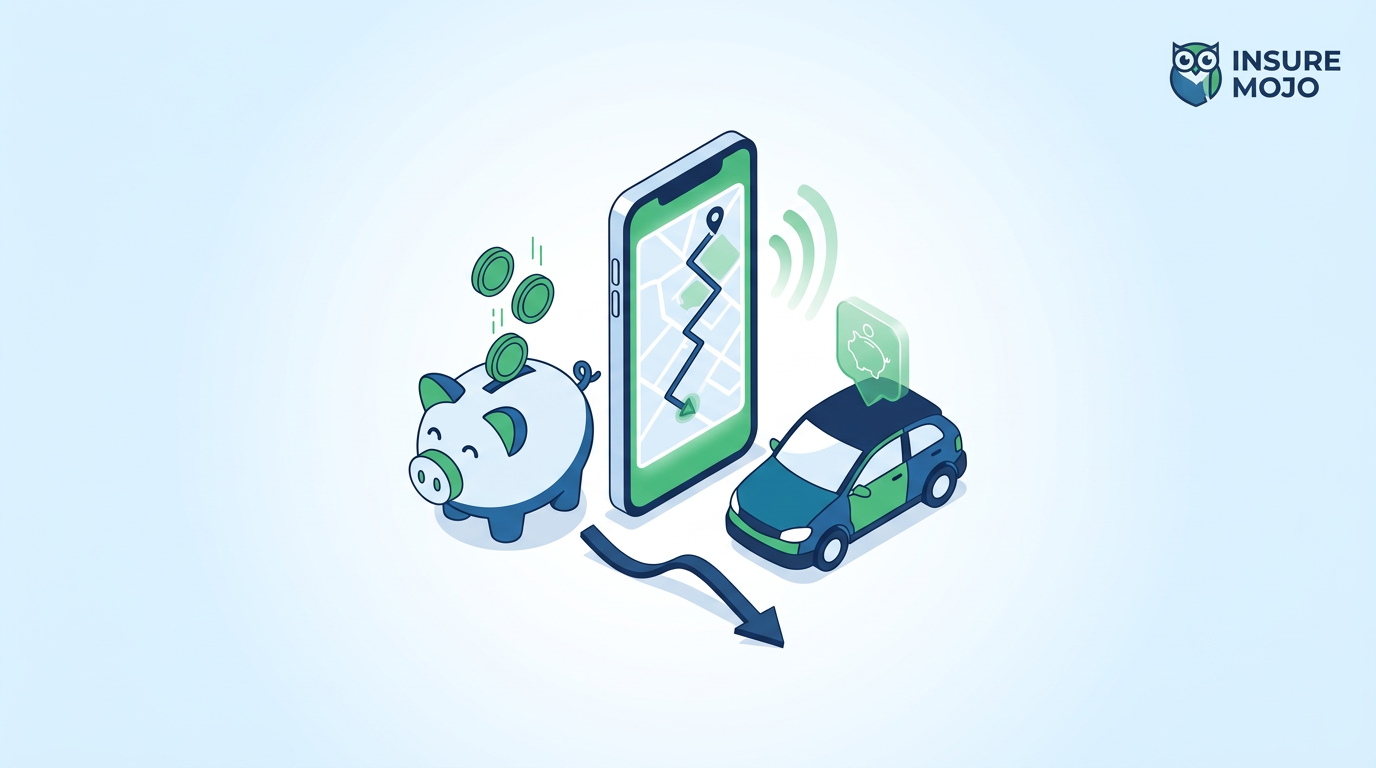
After years of record-high auto insurance premiums, telematics-based insurance is going mainstream in 2026. Smartphone programs from Progressive, Allstate, State Farm, and GEICO can cut your bill by 30–40% — and industry analysts say more drivers are finally signing up to make it happen.
- Telematics programs at major carriers can save you 30–40% on your premium
- The shift to smartphone apps (from plug-in OBD devices) makes enrollment easier in 2026
- Progressive Snapshot saves drivers an average of $231/year after the monitoring period
- About 20% of Snapshot participants see rate increases — it's not risk-free
- 73% of consumers are concerned about data privacy with telematics programs
After four years of painful premium increases that pushed the average US full-coverage policy to $2,256 per year, drivers are getting serious about telematics. The Zebra's CCO David Seider put it plainly in the company's 2026 State of Insurance report: "Telematics or usage-based insurance used to feel a bit too 'big brother' for most folks. Perhaps its time in the mainstream is coming as people are desperate to find any way to bring down insurance premiums in 2026."
The data backs him up. The global telematics insurance market — valued at $5.89 billion in 2025 — is projected to reach $19.23 billion by 2032. That's not a niche product anymore. That's a fundamental shift in how Americans pay for car insurance.
What Is Telematics Insurance?
Telematics is a form of usage-based insurance (UBI) that tracks how you actually drive — not just who you are on paper. Instead of basing your rate solely on age, ZIP code, credit score, and driving record, a telematics program uses real driving data to reward safe behavior with lower premiums.
In 2026, most major carriers have shifted from plug-in OBD-II devices to smartphone apps. You enroll in a program, let your insurer track your trips for a set period (typically 90–180 days), and then receive a discount at renewal — all from your phone, with no hardware required.
The factors most carriers track include:
- Hard braking and rapid acceleration
- Speeding (how often and by how much)
- Nighttime driving (typically between midnight and 5 a.m.)
- Phone use while driving
- Cornering and overall driving smoothness
- Miles driven (for pay-per-mile programs)
How Much Can You Actually Save?
Savings vary significantly by carrier and by how you drive. Here's a side-by-side look at the major programs, according to Bankrate's analysis:
| Carrier | Program | Max Discount | Rate Increase Risk? | Enrollment Bonus |
|---|---|---|---|---|
| Allstate | DriveWise | 40% | Yes | Yes |
| GEICO | DriveEasy | Varies | Yes | Yes |
| Nationwide | SmartRide | 40% | No | 10% at signup |
| Progressive | Snapshot | $231/yr avg | Yes (~20% of users) | $94 avg at signup |
| State Farm | Drive Safe & Save | 30% | No | Yes |
Progressive's Snapshot program gives a clear benchmark: drivers save an average of $94 at sign-up, then $231 per year after the monitoring period ends, according to Bankrate. That's about $19 off your monthly bill just for letting an app run in the background.
But there's a catch. With Progressive, about 20% of participants actually see their rates go up because their driving data reveals higher risk. Allstate's DriveWise carries the same risk for drivers with poor habits. If you brake hard frequently, use your phone behind the wheel, or regularly drive late at night, telematics could cost you more, not less.
Which Programs Are Safest to Try?
If you're on the fence, Nationwide's SmartRide is the lowest-risk starting point. It offers up to a 10% discount just for enrolling and up to 40% for safe driving — and unlike several competitors, SmartRide will not increase your rates if your driving score comes in low. State Farm's Drive Safe & Save also does not penalize drivers for low scores.
GEICO's DriveEasy goes further than most in what it measures — including cornering, overall smoothness, and a crash detection feature that activates when hard braking is detected. It's available in 37 states plus Washington D.C.
"Telematics or usage-based insurance used to feel a bit too 'big brother' for most folks. Perhaps its time in the mainstream is coming as people are desperate to find any way to bring down insurance premiums in 2026." — David Seider, CCO, The Zebra
The Privacy Question You Need to Ask Before Signing Up
Here's what most carriers don't advertise prominently: telematics requires sharing a significant amount of personal data. Beyond driving behavior, some programs collect geolocation data, personal identifiers, and in some cases internet browsing history and purchasing tendencies, according to Bankrate's analysis of major carrier privacy agreements.
As of 2026, only California and New York have clear statewide restrictions on how insurers can collect, store, and use telematics data. In other states, the fine print may permit carriers to share or sell your driving data to third parties.
A recent survey found that 73% of consumers are concerned about data sharing through telematics programs. That concern is legitimate — but so is the potential for saving $200–$500 a year. The decision comes down to your personal privacy threshold and your trust in your specific carrier's data practices.
Before enrolling in any telematics program, read your carrier's privacy policy to understand exactly what data is collected, how long it's stored, and whether it can be shared with third parties. In most states outside California and New York, insurers have significant latitude in how they use your driving data.
Is Telematics Right for You?
Telematics works best for drivers who:
- Drive fewer than 10,000–12,000 miles per year
- Rarely drive between midnight and 5 a.m.
- Don't use their phone while driving
- Brake smoothly and don't accelerate aggressively
- Have a commute that's mostly highway rather than city stop-and-go
Telematics is a worse deal — and potentially a rate increase — for:
- Rideshare or delivery drivers logging heavy miles at odd hours
- Teen or young adult drivers with aggressive habits
- Anyone who regularly drives late at night
- Drivers in heavy stop-and-go traffic who brake frequently
What You Should Do Now
Check if your carrier offers a program
Log into your insurer's app or website and look for usage-based insurance, telematics, or safe driver discount programs. Most major carriers have one in 2026.
Ask whether enrollment gives you an immediate discount
Some programs (like Nationwide SmartRide) give you a discount just for signing up. Others wait until after the monitoring period. Find out what your carrier offers upfront.
Confirm whether a bad score can raise your rate
Nationwide SmartRide and State Farm Drive Safe & Save do not penalize low scores. Progressive Snapshot and Allstate DriveWise can raise your rate. Know the risk before you enroll.
Use the monitoring period to improve your score
Most programs show your real-time score in the app. Use it as feedback — reduce phone use, ease off the brakes, and avoid late-night trips during the monitoring window to maximize your discount.
Shop competing quotes with telematics in mind
If you're a consistently safe driver, telematics programs can make some carriers dramatically cheaper than others. Get quotes from at least three carriers and compare what each program offers for your driving profile.
What to Expect as Telematics Goes Mainstream
The shift isn't slowing. The Zebra's 2026 State of Insurance report highlights telematics adoption as a top consumer trend for the year. In some states, major carriers are already defaulting new customers to opt-in telematics programs rather than traditional pricing at sign-up.
Regulators are paying closer attention too. Consumer advocates have raised questions about whether telematics algorithms could disadvantage certain demographics — for example, essential workers who drive at night or lower-income drivers who live farther from their jobs and log more miles. Expect more state-level regulation around telematics data collection in the coming years, particularly in states that haven't yet followed California and New York's lead.
Frequently Asked Questions
Not necessarily. With programs like Progressive Snapshot and Allstate DriveWise, about 20% of participants end up with a rate increase because their driving data reveals higher risk. Programs like Nationwide SmartRide and State Farm Drive Safe & Save do not increase rates for low scores — making them lower-risk starting points for cautious drivers.
Policies vary by carrier. Some allow you to unenroll at any time during the monitoring period, while others lock in your rate after it ends. Ask your agent specifically about exit options before signing up.
Most major telematics programs are not available in California due to the state's strict insurance regulations. Progressive Snapshot and Allstate DriveWise are both excluded from California. Check directly with your specific carrier for California availability.
Most telematics programs collect geolocation data to verify your trips and driving patterns. Some carriers' privacy agreements allow this data to be used for purposes beyond just calculating your discount. California and New York have the strongest state-level protections. Read your carrier's full privacy policy before enrolling if location privacy is a concern.
Traditional telematics programs score how you drive and apply a discount to your standard premium. Pay-per-mile insurance (like Nationwide SmartMiles or Allstate MileWise) charges a base rate plus a per-mile charge based on how much you actually drive. Pay-per-mile typically works best for drivers who put on fewer than 7,500–10,000 miles per year.