
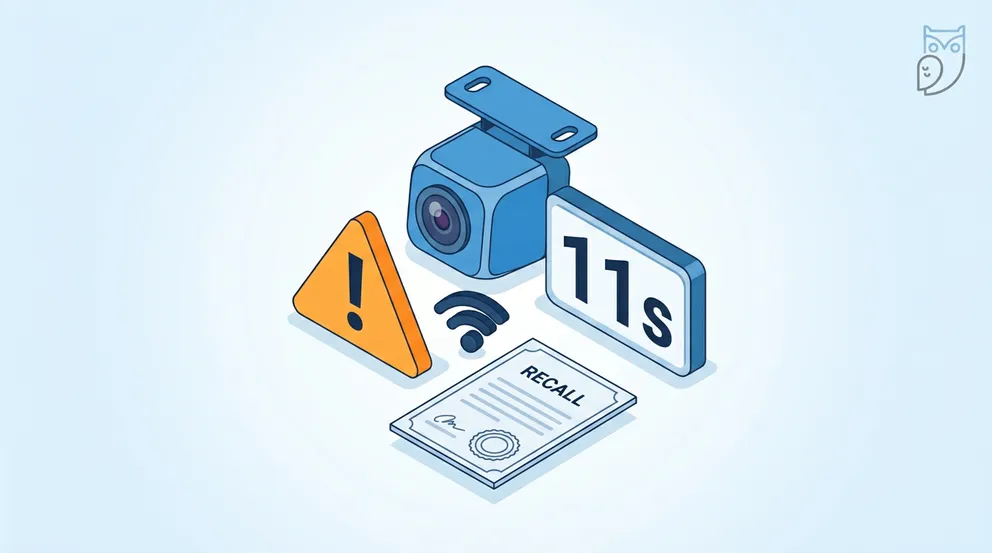
Tesla filed a recall on May 5, 2026 covering 218,868 Model 3, Model Y, Model S, and Model X vehicles whose rearview camera display can stay blank for up to 11 seconds after the driver shifts into reverse. The defect violates Federal Motor Vehicle Safety Standard 111, but Tesla had already pushed an over-the-air software fix to 99.92% of affected cars by the time the paperwork landed at NHTSA.
NHTSA recall campaign 26V283000 covers 218,868 Tesla vehicles equipped with Hardware 3 and running software version 2026.8.6. The remedy, software release 2026.8.6.1, downloads automatically over Wi-Fi at no charge. No dealer visit, no claim, and no service appointment is required for any vehicle already running the latest software.
- 218,868 vehicles included: 2017 Model 3, 2021-2023 Model 3, 2020-2023 Model Y, plus 2021-2023 Model S and Model X
- On wake-up, the rearview camera image can stay blank for up to 11 seconds
- Tesla pushed software 2026.8.6.1 starting April 11, 2026; 99.92% installed it before the May 5 NHTSA filing
- Owner notification letters mail July 3, 2026 under NHTSA campaign 26V283000
- Twenty-seven warranty claims, two field reports, and zero confirmed crashes were tied to the defect
Which Teslas Are Affected
The recall applies only to Hardware 3 vehicles running software version 2026.8.6, built between November 29, 2017 and January 3, 2024. Tesla's recall notice lists the 2017 Model 3, 2021 through 2023 Model 3, 2020 through 2023 Model Y, 2021 through 2023 Model S, and 2021 through 2023 Model X as the affected lineup.
Owners can verify a VIN through the Tesla VIN Recall Search tool at service.tesla.com or NHTSA's recall portal at nhtsa.gov/recalls. To check the installed software version, tap Controls > Software on the touchscreen or scroll to the bottom of the home screen in the Tesla app. A version of 2026.8.6.1 or later means the fix is in place and no further action is required.
How the Defect Works
On power-up, a software configuration can prevent camera streams from reaching the media control unit for up to 11 seconds, leaving the rearview display blank when the driver shifts into reverse during that window. The condition violates FMVSS 111, S5.5.3, the rear visibility standard that requires a working camera image within two seconds of selecting reverse.
Tesla discovered the issue through 27 warranty claims and 2 field reports filed by owners. The company has reported no crashes, injuries, or deaths related to the defect. Drivers who hit the blackout window can still reverse safely by performing a shoulder check and using their mirrors, the Tesla support page advises.
What This Means for Tesla Insurance
A manufacturer recall does not automatically raise auto insurance premiums, according to GEICO. Insurers don't penalize policyholders for a defect they didn't cause, since the fault sits with the automaker. The Zebra reports the same finding: a recall on its own is treated as a manufacturer issue, not an underwriting risk.
What carriers do scrutinize is owner behavior after a recall notice arrives. If a driver receives a recall letter and skips the repair, that delay can factor into claims handling later, especially if the unfixed defect contributes to a loss. For NHTSA campaign 26V283000, that risk is unusually low: the fix downloads automatically, no appointment is required, and Tesla reported 99.92% of vehicles already on 2026.8.6.1 when it filed.
Tesla owners already pay sharply higher premiums than the broader market. Insurance.com puts the average Tesla full-coverage premium at $4,149 per year versus $2,513 for all vehicles, a 65% gap that reflects high parts costs, sensor-laden bodywork, and longer repair cycle times.
| Vehicle | Avg. Annual Premium | vs. National Avg ($2,513) | Cheapest Major Carrier |
|---|---|---|---|
| Tesla Model 3 | $3,871 | +54% | State Farm ($1,545) |
| Tesla Model Y | $3,836 | +53% | State Farm |
| Tesla (all models) | $4,149 | +65% | State Farm |
| National Average | $2,513 | baseline | Varies by state |
Source: Insurance.com, Insurify, and MoneyGeek 2026 rate data. Full coverage includes liability, collision, and comprehensive for drivers ages 30 to 50 with clean records and good credit.
If a Tesla owner reverses into another vehicle during the 11-second blackout before installing 2026.8.6.1, collision coverage still pays the claim, the Insurance Information Institute confirms. The catch is the deductible, which on most Tesla policies runs $500 to $1,000 per claim. An at-fault filing also lifts renewal premiums by 28% to 49% based on Insurify's 2026 rate data.
Buyers and dealerships routinely check the NHTSA database before pricing a used Tesla. Cars with open, unfixed recalls sell at a discount or sit on the lot longer, and CarMax and Carvana have policies preventing the sale of any vehicle with an open safety recall until the fix is documented.
The Bigger 2026 Tesla Recall Pattern
This is at least the third Tesla recall logged with NHTSA in 2026. April brought a battery pack contactor recall on certain 2025 Model 3 and 2026 Model Y vehicles built between March and August 2025. May added a Cybertruck rear-wheel-drive wheel recall covering 173 trucks where wheels could detach in service.
The 218,868-vehicle camera campaign is by far the largest of the year, but it's also one of the easiest fixes Tesla has pushed. Over-the-air remedies now resolve the majority of Tesla's software-related NHTSA actions, an industry pattern that reduces dealer wait times and labor costs but shifts more responsibility onto the owner to keep firmware current.
What You Should Do Now
Check Your Software Version
Tap Controls > Software on the touchscreen. If you see version 2026.8.6.1 or higher, the fix is installed. Vehicles still on 2026.8.6 should connect to Wi-Fi and trigger the update through the Tesla app.
Verify Your VIN
Run your 17-character VIN through service.tesla.com or nhtsa.gov/recalls. Both tools flag campaign 26V283000 and confirm whether the OTA remedy has been applied to your specific vehicle.
Document the Fix
Screenshot the software version page once 2026.8.6.1 is installed. If you sell the car, that screenshot helps the buyer or dealer verify the recall is closed and protects your trade-in price.
Looking Ahead
Owner notification letters from Tesla are scheduled to mail on July 3, 2026, even though most affected cars are already running the corrected software. Drivers who haven't received the OTA update should watch for that letter or contact Tesla service if the vehicle has not connected to Wi-Fi recently.
NHTSA continues to track open recalls on every VIN, and insurance carriers increasingly query that database during underwriting and claims review. Keeping your Tesla current on firmware avoids both safety questions and potential friction at policy renewal.
Frequently Asked Questions
Run your VIN through the Tesla Recall Search at service.tesla.com or NHTSA's portal at nhtsa.gov/recalls. Only Hardware 3 vehicles running software 2026.8.6 are included: 2017 and 2021-2023 Model 3, 2020-2023 Model Y, and 2021-2023 Model S and Model X built before January 3, 2024.
No. The fix is software release 2026.8.6.1, which downloads automatically over Wi-Fi at no charge. If your vehicle is already on 2026.8.6.1 or later, no further action is required. Tesla reported 99.92% of affected vehicles installed the update before the recall was filed on May 5, 2026.
No, a manufacturer recall by itself does not raise auto insurance rates, GEICO and The Zebra both confirm. Carriers may scrutinize the recall later if you ignore the notice and a related crash occurs, but installing 2026.8.6.1 closes that risk. Tesla owners already average $4,149 per year for full coverage, 65% above the $2,513 national average, per Insurance.com.
Collision coverage still pays the claim, the Insurance Information Institute confirms. You'll owe your deductible, typically $500 to $1,000 on a Tesla policy, and an at-fault filing can raise renewal premiums by 28% to 49% based on Insurify's 2026 rate data. The defect is the manufacturer's responsibility, not yours, but your insurer pays first and may pursue subrogation against Tesla.
Yes. CarMax, Carvana, and most franchise dealers will not sell a used vehicle with an open safety recall until the fix is documented. Private buyers who run the VIN through NHTSA also see the open campaign and may negotiate the price down. Installing 2026.8.6.1 closes the recall in the NHTSA database and protects the trade-in price.
- NHTSA Recall Campaign 26V283000 - Tesla Rearview Camera Display
- Tesla Support - Update Vehicle Firmware to Correct Loss of Back Up Camera Feed
- Insurance.com - How Much Is Tesla Insurance in 2026? Model-by-Model Breakdown
- Insurify - Average Cost of Tesla Car Insurance 2026
- The Zebra - How an Auto Recall Impacts Car Insurance
- GEICO - What Is a Recall on a Car?
- Benzinga - Tesla Recalls Over 218,000 Vehicles In US
- Autoblog - Tesla Recalls 219,000 Cars After Rear Camera Fails for Up to 11 Seconds