

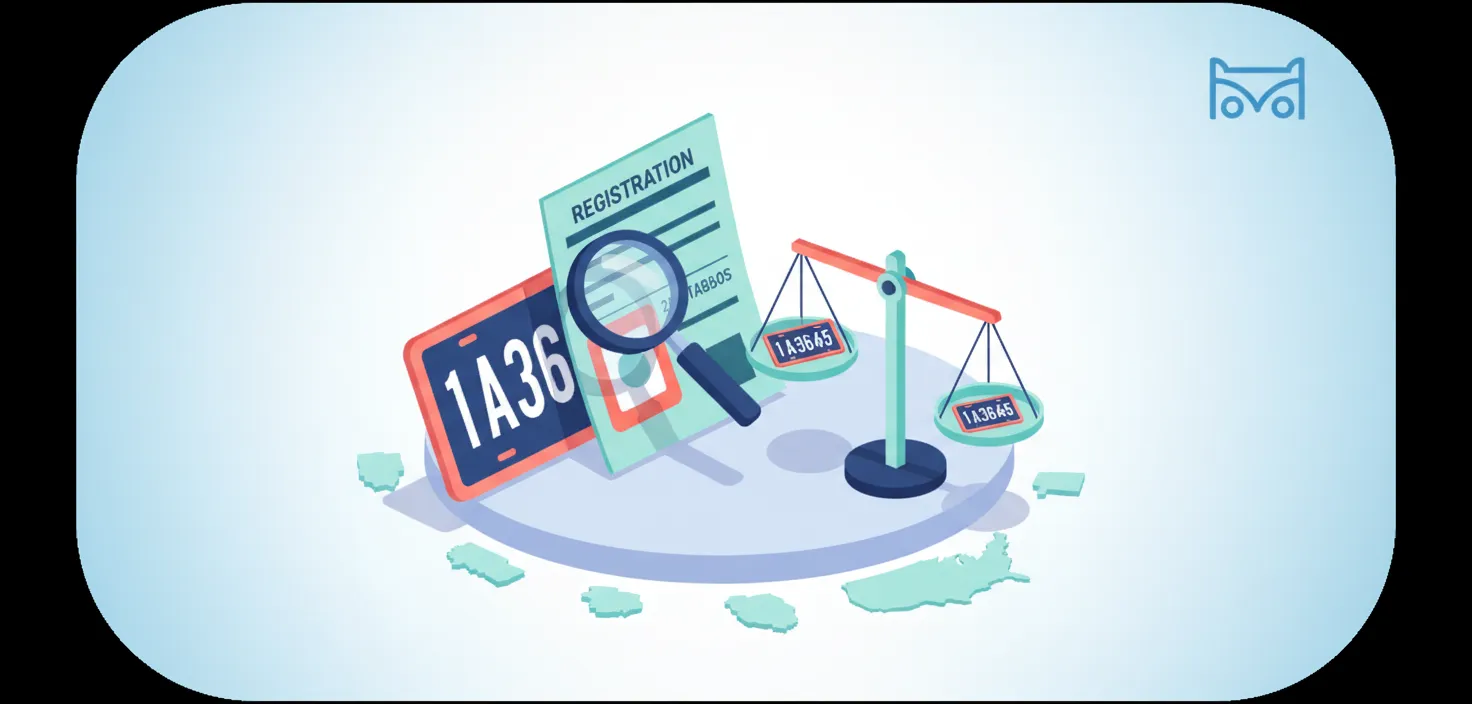
"Car tags" can mean two different things depending on where you live: the physical license plate itself (common in southern states), or the small registration sticker you stick on your plate each year to prove you've paid your renewal fees. Either way, driving without valid tags is illegal and can result in fines or even a vehicle impoundment.
Ask someone in Georgia to "go renew their tag" and they'll head to the county tag office to get new license plates or a renewal sticker. Ask the same thing in Minnesota and they might look at you sideways. The term "car tag" is one of those wonderfully regional American expressions that means different things in different places — and the confusion is completely understandable.
Here's the deal: whether your state calls them tags, plates, decals, or stickers, they all serve the same essential purpose. They prove your vehicle is legally registered and that you've paid the fees your state requires. Let's break down exactly what car tags are, how they differ from license plates, and what you need to know to stay legal on the road.
- "Car tag" is a regional term — in southern states it typically means the license plate itself; elsewhere it refers to the renewal sticker
- Registration stickers (tags) prove you've paid your annual vehicle registration fee
- Pennsylvania, Connecticut, Vermont, and New Jersey have eliminated physical registration stickers
- Registration fees vary wildly by state — from $8 in Arizona to over $600 in Oregon
- Driving with expired tags can result in fines of $25 to $500+ depending on your state
What Are Car Tags, Exactly?
Walk into a DMV in Alabama or a "tag office" in Georgia, and you'll quickly realize that "car tag" usually refers to the entire license plate — that rectangular metal plate bolted to your bumper with a combination of letters and numbers that identifies your vehicle. In these states, "renewing your tag" means renewing your registration and getting new plates or a renewal sticker.
In other parts of the country, though, "car tag" specifically means the small registration sticker that gets placed in a corner of your license plate each year. This little sticker — usually showing the year or month of expiration and color-coded so officers can spot it from a distance — is proof that you've paid your vehicle registration for that period.
Confusing? A little. But here's the simple version: both definitions come down to the same thing — proof that your car is legally registered in your state.
License Plates vs. Registration Stickers: What's the Difference?
Think of it this way: a license plate is like your vehicle's permanent ID card, while a registration sticker (tag) is like the annual renewal stamp showing that ID card is still valid.
- License plate: The metal plate assigned to your vehicle by the state. It has a unique alphanumeric combination and typically stays with the car (or sometimes the owner) for years. You get a new one when you move to a different state or when the old plate gets damaged.
- Registration sticker (tag): A small decal, usually placed in the upper corner of the rear license plate, showing when your registration expires. You renew this annually (or every two years in some states) and get a new sticker to replace the old one.
Your license plate number doesn't change when you renew your registration — only the sticker changes. However, if you move to a new state, you typically need entirely new plates issued by your new state's DMV.
What Information Does a Car Tag (Registration) Contain?
Your vehicle registration connects your car to you as the owner and tracks key information about the vehicle. When law enforcement runs your plates, here's what pops up:
- Vehicle make, model, and year
- VIN (Vehicle Identification Number)
- Registered owner's name and address
- Registration expiration date
- Whether the vehicle has passed any required inspections
- Lienholder information (if you have a car loan)
In states that still use registration stickers, the decal itself typically shows just the expiration month and year — enough for an officer to visually confirm your registration is current without running your plates.
States That No Longer Use Registration Stickers
Here's something that surprises a lot of people: not every state still uses physical registration stickers. Several states have ditched the decal entirely, relying instead on electronic systems that let officers verify registration in real time by running your plates.
| State | Sticker Status | Year Eliminated | How Officers Verify |
|---|---|---|---|
| Pennsylvania Stickerless | Eliminated | 2017 | Electronic license plate readers |
| Connecticut | Eliminated | 2010 | Real-time database lookup |
| New Jersey | Eliminated | 2016 | Electronic verification systems |
| Vermont | Eliminated | 2023 | License plate readers |
| Florida | Considering | TBD (proposed 2025) | Proposal under review |
Even in these stickerless states, you still absolutely need to renew your registration on time — you just won't get a sticker to prove it. If an officer's system shows your registration is expired, you'll get pulled over regardless of what's (or isn't) on your plate.
Living in a stickerless state doesn't mean you can skip registration renewal. Officers use electronic plate readers that flag expired registrations automatically. Many jurisdictions now run every plate they pass — even when you're just parked on the street.
How Much Do Car Tags Cost? Registration Fees by State
Let's be honest — registration fees feel like they were designed specifically to confuse you. Every state has its own formula, and what you pay depends on your vehicle's weight, age, value, and sometimes even where in the state you live.
Here's a snapshot of what you might pay in different states:
| State | Base Registration Fee | Notes |
|---|---|---|
| Arizona | $8 + $32 public safety fee | One of the lowest base fees |
| California | $65+ (varies by vehicle value) | Additional VLF fee based on purchase price |
| Texas | $50.75 | Safety inspection no longer required (2025) |
| Oregon Highest | $268–$636 (new vehicles) | Highest registration fees in the US |
| Florida | $225–$400+ depending on weight | Includes various county fees |
| Georgia | $20 (base) + county fees | County "tag fees" vary significantly |
Some states offer multi-year registration to save you the hassle of annual renewals. Check if your state allows 2-year registration — the upfront cost is higher but you'll make fewer DMV trips and won't risk forgetting to renew.
How to Renew Your Car Tags
Renewal is usually easier than you think — most states now let you skip the DMV entirely. Here are your typical options:
- Online: Most states offer online renewal through their DMV or DOT website. You'll need your license plate number, last four digits of your VIN, and a credit card. Your sticker arrives by mail in 5–10 business days.
- By mail: Many states send renewal notices by mail. Just fill out the form, include your check, and send it back. Same sticker-by-mail timeline applies.
- In person: Visit your local DMV, tag office, or (in some states) authorized tag agencies. You'll get your sticker on the spot — useful if you're cutting it close to the deadline.
- Kiosks: Several states have self-service kiosks at grocery stores or gas stations for quick renewals.
You'll typically need proof of current auto insurance before your registration can be renewed. This is your state's way of making sure you're not driving uninsured — and in every state, driving without insurance is illegal.
Many states require a valid emissions test or safety inspection before issuing a renewal. Check your state's requirements before you start the renewal process — getting stuck at the DMV because you don't have an inspection certificate is a waste of everyone's time.
What Happens If Your Tags Expire?
This is where a lot of people get caught off guard. Expired tags are one of the most common traffic stops, and officers are trained to notice that sticker on your plate (or run your plates to check digitally in stickerless states).
Consequences vary by state and how long your tags have been expired, but generally you're looking at:
- A fix-it ticket: Some states issue a correctable violation — you pay a small administrative fee after renewing, and the ticket goes away.
- A fine: Ranges from about $25 in some states to $500 or more if your registration is significantly overdue.
- Vehicle impoundment: If your registration is severely expired or you're a repeat offender, some states allow officers to impound your vehicle on the spot.
- Insurance complications: Some insurers consider a lapsed registration a red flag and may flag your policy for review.
Bottom line — set a reminder on your phone for 30 days before your registration expires. It takes maybe 10 minutes to renew online, and it's a lot cheaper than a ticket.
Do Car Tags Affect Your Auto Insurance?
Here's something most drivers don't think about: your vehicle registration and your auto insurance are connected. Most states require proof of current insurance to renew your tags. But the relationship goes both ways.
If your registration lapses, you might be driving on a technically "unregistered" vehicle — and some insurance policies have exclusions or complications around unregistered vehicles. Additionally, certain violations related to expired registration can end up on your driving record, which insurers use to calculate your premiums.
Keeping your tags current is one of those small habits that keeps both your legal status and your insurance situation clean. It's also worth noting that in many states, your vehicle registration fee is tied to the insured value of your car — so keeping accurate coverage documentation can sometimes affect what you pay at renewal time.
When you move to a new state, you typically have 30–90 days to transfer your registration and get new plates. Don't wait until the last minute — during that transition window, also shop around for new auto insurance, as rates vary dramatically by state.
Why Do Some People Call License Plates "Tags"?
If you grew up in the South — Georgia, Alabama, South Carolina, North Carolina, Tennessee — calling your license plate a "tag" is perfectly natural. You go to the "tag office," you "renew your tag," you "get new tags." The terminology is so ingrained that entire county offices are built around it (Georgia literally has county "tag offices" instead of DMVs).
The term traces back to the early days of automobile registration when a small metal tag or placard was literally attached to the vehicle — not unlike a luggage tag. As registration systems evolved into the modern license plate system, different regions held onto different terminology. In the South, "tag" stuck. In the North and West, "plate" became standard. Both mean the same thing.
If you've recently moved from one region to another, this linguistic quirk can cause genuine confusion. But now you know — tags, plates, and decals are all part of the same vehicle registration system.
Frequently Asked Questions
It depends on where you live. In southern states like Georgia and Alabama, "car tag" typically refers to the license plate itself. In other parts of the US, "tag" specifically means the small registration renewal sticker placed on the license plate. Either way, both terms relate to your vehicle's registration status.
Check your registration sticker — it typically shows the month and year of expiration. You can also check your vehicle registration card, which you should keep in your glove compartment. Most states mail a renewal notice 30–60 days before your expiration date, though relying solely on that notice is risky if you've moved recently.
Technically no — driving with expired registration is illegal in all 50 states. However, many states have a brief grace period (typically a few days to a month) before officers are required to ticket you. That said, with electronic license plate readers becoming ubiquitous, getting caught is easier than ever. Renew before you expire to avoid the risk entirely.
It depends on your state. Nineteen states require only a rear license plate: Alabama, Arizona, Arkansas, Delaware, Florida, Georgia, Indiana, Kansas, Kentucky, Louisiana, Michigan, Mississippi, New Mexico, North Carolina, Oklahoma, Pennsylvania, South Carolina, Tennessee, and West Virginia. All other states require both front and rear plates.
Requirements vary by state, but typically you'll need: your current registration card or renewal notice, proof of current auto insurance, payment for the renewal fee, and in some states, proof of a passed emissions or safety inspection. Many states let you renew entirely online in under 10 minutes if all your documents are in order.