

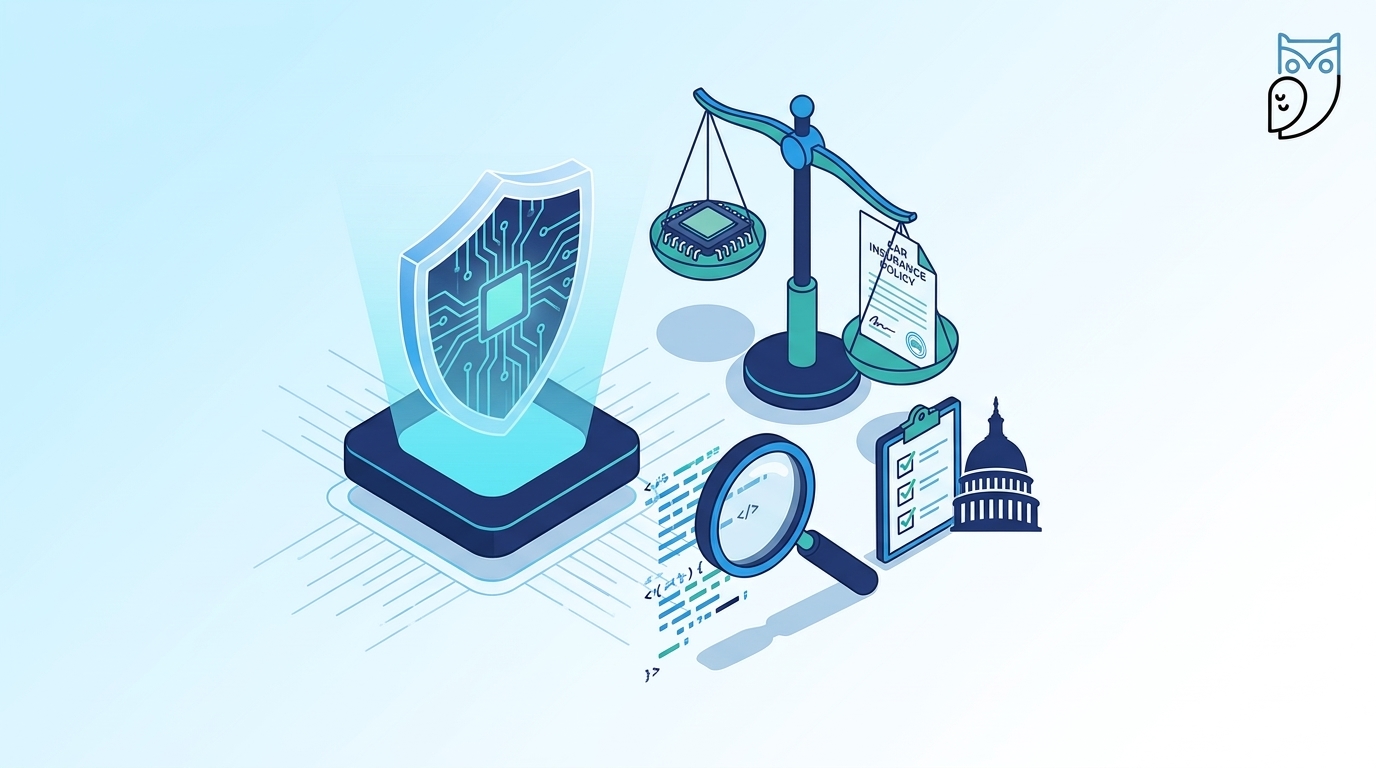
The National Association of Insurance Commissioners (NAIC) launched a new Market Conduct Regulation Modernization Working Group in March 2026 to examine how AI, telematics, and digital tools are changing auto insurance pricing — and whether consumers are adequately protected. Meanwhile, AI already determines your rate at most major carriers, often using data you didn't know was collected.
- NAIC formed a new working group at its March 2026 Spring National Meeting in San Diego to modernize market conduct regulation
- AI and algorithmic pricing are already standard at most major auto insurers — often using data beyond your driving record
- Colorado and California have the strongest state-level protections; 23 states + DC have adopted the NAIC's AI Model Bulletin
- NAIC's AI Evaluation Tool is in pilot in 12 states through September 2026, with nationwide rollout expected by November 2026
- Consumers now have limited but growing rights to review and challenge AI-driven pricing decisions
Regulators Finally Look at How AI Is Setting Your Auto Insurance Rate
State insurance regulators took a significant step in March 2026, formally launching a new working group dedicated to assessing how artificial intelligence, telematics, digital distribution, and large-scale data vendors are reshaping the auto insurance market. The group, appointed at the NAIC's 2026 Spring National Meeting in San Diego on March 25, is tasked with delivering actionable recommendations by the end of 2026.
"Artificial intelligence, new distribution models, national scale vendors, and other technological advances are significantly changing both consumers' expectations and insurers' business models and practices," said Illinois Department of Insurance Director Ann Gillespie, who chairs the NAIC's Market Regulation and Consumer Affairs Committee. "State insurance regulators focus on leading, not just responding."
For most American drivers, the timing matters. AI-based pricing systems are not a future trend — they are already at work today, and most policyholders have no idea what data those systems are using or how to challenge the results.
What AI Actually Does to Your Premium
Traditional actuarial models have always used statistical categories to price risk — age, driving record, vehicle type. What's new in AI-driven underwriting is the scale and opacity of the inputs. Modern machine learning models can simultaneously process thousands of variables, many of which have no obvious connection to how you drive.
Major carriers and their data broker partners — primarily LexisNexis and Verisk — feed these models inputs that can include your credit history, home ownership status, purchasing behavior, geographic movement patterns, and in some cases, connected car telemetry updated in real time. A 2024 investigation revealed that some automakers had been quietly sharing driving behavior data from connected vehicles directly with insurers and their data partners without clear consumer disclosure.
The controversy isn't just about privacy. If an AI model correlates a factor like ZIP code, home ownership, or purchasing habits with accident risk, it can effectively function as a proxy for race or income — even unintentionally. That's the core concern driving regulators to act now.
Beyond your driving record, AI pricing models at major carriers may use: credit score, payment history, ZIP code demographics, home ownership, purchasing patterns from third-party data brokers, telematics data from your phone or vehicle, and real-time connected car data. You may have limited ability to see or dispute these inputs depending on your state.
Which States Have the Strongest Protections Now
Regulation of AI in auto insurance is entirely state-level, and the gap between states is significant. If you live in California or Colorado, you currently have the strongest consumer protections in the country. California's broader regulatory environment — already one of the most active in the country — is examined in our coverage of how new California auto insurance rules are hitting drivers' wallets.
| State | Key AI Regulation | Effective Date | What It Does |
|---|---|---|---|
| California | Proposition 103 | 1988 (ongoing) | Requires actuarial justification for all rating factors; heavily restricts algorithm-only pricing |
| Colorado | SB 21-169 + SB 24-205 | Nov 2023 / Oct 2025 / Feb 2026 | Bans unfairly discriminatory algorithm use; requires bias testing and annual compliance reports for auto insurers |
| 23 States + DC | NAIC AI Model Bulletin | Varies by state (through 2025) | Requires written AI governance programs, documentation, and audit procedures |
| 12 States* | NAIC AI Evaluation Tool Pilot | Jan–Sep 2026 | Regulators actively reviewing insurer AI systems for discriminatory outputs |
*Pilot states: California, Colorado, Connecticut, Florida, Iowa, Louisiana, Maryland, Pennsylvania, Rhode Island, Vermont, Virginia, and Wisconsin. Source: NAIC, 2026. Nationwide rollout expected November 2026.
In states without these protections, insurers have wide latitude to use third-party data models with minimal disclosure requirements. The NAIC working group is expected to address this patchwork by developing model standards — including transparency requirements, consumer disclosure rules when AI drives an adverse decision, and potential audit mandates — that states can adopt uniformly.
What the NAIC Working Group Will Examine
The Market Conduct Regulation Modernization Working Group has a broad mandate that goes beyond AI alone. According to the NAIC's announcement, the group will examine AI underwriting models, telematics data use, digital distribution channels, and the growing role of national-scale vendors selling algorithmic tools to insurers across multiple states.
That last piece — third-party vendor accountability — is particularly significant. Many insurers don't build their own AI models; they purchase them from vendors like LexisNexis Risk Solutions, Verisk, or smaller insurtech firms. Until recently, carriers could largely blame the vendor if a model produced discriminatory results. The NAIC's model bulletin already pushes back on this: carriers are now expected to take full accountability for the AI tools they deploy, regardless of where those tools came from.
The working group will collect broad stakeholder input throughout 2026 and aims to deliver concrete recommendations by year-end. While the NAIC's process moves deliberately — its model laws are advisory, not binding — the standards it sets tend to be adopted by many states in subsequent legislative sessions.
What This Means for Your Auto Insurance Rate
The immediate practical impact of the NAIC announcement is modest — the working group's recommendations won't produce new state laws overnight. But the regulatory environment for AI in auto insurance is clearly tightening, and that has real near-term implications for drivers.
First, if you live in one of the 12 AI Evaluation Tool pilot states, your insurer's pricing model is already under active regulatory scrutiny in 2026. States like Florida, California, Colorado, and Connecticut are part of this pilot — which means insurers operating there are under more pressure to clean up discriminatory or opaque pricing practices now, ahead of the November 2026 nationwide rollout.
Second, under the NAIC Model Bulletin already adopted by more than half of states, carriers are required to provide consumers with timely written explanations when AI influences an adverse underwriting outcome. If your insurer raises your rate significantly or declines to cover you, you have grounds to ask for a written explanation of what factors drove that decision. Texas went even further — its new 2026 law requires insurers to explain policy denials in writing, a model other states are now watching closely.
Third — and this is the gap most consumers don't know about — you already have the right to request your insurance score from data brokers like LexisNexis. That score, built from your credit history and claims data, feeds directly into the AI models pricing your policy. A wrong entry in that score can cost you hundreds of dollars per year.
Request Your LexisNexis Consumer Report
Visit the LexisNexis consumer disclosure center (lexisnexis.com/personal/consumer-disclosure) and request your full consumer report. This is free and shows the data about you that insurers may be feeding into AI models. Errors can and do occur.
Request Your CLUE Report
Your Comprehensive Loss Underwriting Exchange (CLUE) report shows your claims history. Request it free at LexisNexis or through your state insurance department. An incorrect claim or payout amount on this report can inflate your rate without your knowledge.
Ask for an Adverse Action Explanation
If your rate increased significantly at renewal, ask your insurer in writing for a specific explanation of the factors that drove the change. Under NAIC Model Bulletin guidelines adopted in most states, they are required to provide this. If they refuse, contact your state department of insurance.
Compare Quotes Across Carriers
Different carriers weight AI factors differently. One insurer's model may penalize your ZIP code heavily; another's may focus primarily on your driving record. Get quotes from at least 3 carriers to see how pricing varies for the same coverage. See our car insurance hub for a state-by-state comparison of average rates.
Evaluate Telematics Carefully
Usage-based insurance programs can save you money if you're a safe driver — but the same data that earns you a discount also feeds the AI model. Understand what your carrier collects and how long they retain it before enrolling. Programs like State Farm Drive Safe & Save or Progressive Snapshot collect your speed, braking, and time-of-day driving.
Looking Ahead: What to Expect by End of 2026
By November 2026, the NAIC's AI Evaluation Tool is expected to expand beyond the current 12-state pilot to all 50 states and D.C. That means regulators in every state will have a standardized framework for auditing insurer AI systems — a significant shift from the current patchwork. The NAIC working group's recommendations will likely accompany this rollout, setting the stage for new model laws in 2027 state legislative sessions.
Consumers in states that have been slower to regulate AI — many in the South and Midwest — may see meaningful new protections within 12-18 months if the NAIC's model standards gain traction. In the meantime, the most important step you can take is to know what data is being used to price your policy and to actively compare rates across carriers, since the AI gap between insurers can easily mean hundreds of dollars per year in premium differences.
Frequently Asked Questions
At most major carriers, yes. AI and machine learning models are used to some degree in auto insurance pricing across the industry. Some carriers rely on them heavily for real-time pricing decisions; others use them alongside traditional actuarial models. Telematics programs like Progressive Snapshot and State Farm Drive Safe & Save explicitly feed AI models with behavioral driving data.
This varies by state. Most states allow insurers to use credit history, claims history, driving record, ZIP code, vehicle type, and telematics data. Colorado and California have the strictest rules, requiring insurers to demonstrate that any rating factor — including AI-derived ones — is actuarially justified and doesn't produce unfair discrimination. Other states have fewer guardrails.
Yes, in states that have adopted the NAIC's AI Model Bulletin (23 states + DC as of late 2025). You can request a written explanation of the factors that drove an adverse decision. You can also request your data from LexisNexis and dispute errors. If your insurer doesn't respond adequately, file a complaint with your state's department of insurance.
The Market Conduct Regulation Modernization Working Group was formed at the NAIC's Spring 2026 National Meeting in San Diego. It will gather broad industry and consumer input throughout 2026 and aims to deliver actionable recommendations by year-end. These recommendations may become model laws that states adopt in 2027 legislative sessions, but implementation will vary by state.
California and Colorado have the most comprehensive protections. California's Proposition 103 requires insurers to justify every rating factor actuarially. Colorado's SB 21-169 and SB 24-205 require bias testing, annual compliance reports, and consumer disclosure when AI drives adverse outcomes in auto insurance. The 12 states in the NAIC's 2026 AI Evaluation Tool pilot also have active regulatory oversight underway.
- NAIC Newsroom — State Insurance Regulators Look to the Future of Market Conduct Regulation (March 25, 2026)
- Insurance Journal — Consumer Acceptance of Telematics Widens, Says Survey (January 14, 2026)
- Colorado Division of Insurance — SB21-169: Protecting Consumers from Unfair Discrimination in Insurance Practices
- McDermott Will & Emery — State Regulators Address Insurers' Use of AI: 11 States Adopt NAIC Model Bulletin
- U.S. News — Will AI Raise Your Insurance Premiums, Deny Claims? Know What Rules Can Protect You in 2026
- Fenwick — Tracking the Evolution of AI Insurance Regulation
- NAIC — Insurance Topics: Artificial Intelligence