

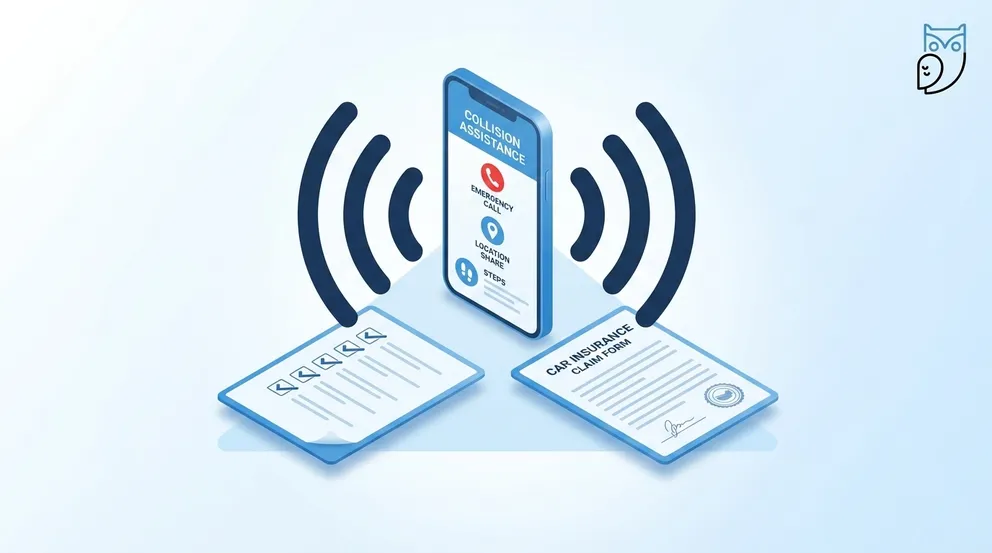
General Motors rolled out Collision Assistance in the myChevrolet, myGMC, myBuick, and myCadillac mobile apps on May 14, 2026. The feature walks crash victims through photographing damage, starting an insurance claim, and locating a body shop in the GM Collision Repair Network. It requires an active OnStar service plan.
- Collision Assistance went live May 14, 2026 in four GM vehicle apps.
- OnStar subscribers (12 million globally at the end of 2025) qualify on eligible Chevrolet, GMC, Buick, and Cadillac vehicles.
- A new self-discovery flow lets drivers open the tool anytime, not only right after a crash.
- Drivers still pick their repair shop, but the app prioritizes facilities that perform pre- and post-repair ADAS scans.
What GM's New Collision Assistance Tool Does
GM announced Collision Assistance on May 14, 2026, and the feature is now active in the myChevrolet, myGMC, myBuick, and myCadillac apps for U.S. owners with an OnStar subscription. The tool addresses the roughly 17,000 police-reported crashes that occur every day in the United States, according to NHTSA Traffic Safety Facts Report DOT HS 813 762.
Through the in-app flow, drivers photograph damage, capture details at the scene with guided prompts, and pause whenever they need to take an emergency call or speak with police. After the immediate scene work, the app connects users to facilities in the GM Collision Repair Network, which includes both independent body shops and dealership service centers that follow GM repair procedures.
The Self-Discovery Feature Is the Real Upgrade
GM piloted a basic version of Collision Assistance in November 2024, but that earlier flow only triggered when the vehicle detected a crash. The May 14 update adds a self-discovery option so drivers can start the workflow whenever they choose, including hours or days after a fender bender they never reported through OnStar's automatic crash response.
That detail matters. Insurance Information Institute guidance notes that adjusters typically contact policyholders within one to three days of a claim, and insurers reserve the right to challenge late-reported damage. The self-paced design also lets drivers hand the phone over to a passenger to handle paperwork while the driver speaks with the responding officer.
"The moments after a collision are stressful. Many drivers aren't sure what to do first, how to work with insurance, what to ask for in a repair, and where to go for help."
From General Motors press release, May 14, 2026
Why GM Is Pushing Drivers Toward Its Certified Network
Repair quality on vehicles with advanced driver-assistance systems hinges on calibration. ADAS sensors that control automatic emergency braking, lane keep assist, and adaptive cruise must be recalibrated after almost every front-end or windshield repair. Calibration runs $250 to $450 per system at independent shops, and dealerships typically start at $400 to $500 per system because of OEM-specific equipment requirements.
Facilities in the GM Collision Repair Network conduct pre-repair and post-repair scans, follow GM-approved procedures, and source ACDelco and GM Genuine parts. A non-certified shop that skips the post-repair scan can leave a forward collision warning system out of alignment, which degrades crash performance and may void portions of the safety-system warranty.
The average collision claim runs roughly $4,700 per job in 2025 industry data, and shop labor rates have climbed to $120 to $160 per hour for collision work. One missed calibration on a Cadillac LYRIQ or GMC Sierra adds $400 to $600 to the final bill, frequently as an out-of-pocket charge the policyholder did not anticipate.
How GM's Network Compares to Insurance Direct Repair Programs
Major carriers run direct repair programs (DRPs) that funnel claimants toward preferred body shops. GM is now competing for that same workflow at the OEM level, while State Farm Select Service, GEICO Auto Repair Xpress, and Allstate Good Hands Repair Network defend turf they have built since the late 1990s.
| Program | Operator | Guarantee | Key Feature |
|---|---|---|---|
| GM Collision Repair Network | General Motors | GM-recommended repair procedures | OEM parts, mandatory pre/post scans |
| State Farm Select Service | State Farm | Repair warranty for as long as you own the vehicle | Direct billing, digital photo estimates |
| GEICO Auto Repair Xpress | GEICO | Lifetime warranty on repairs | Adjuster on-site at the shop |
| Allstate Good Hands Repair Network | Allstate | Guaranteed repairs | 4,500+ certified shops nationwide |
Source: Insurer marketing materials and the May 14, 2026 GM press release. Repair network sizes are approximate and vary by state.
Carriers steer policyholders toward DRP shops to control claim severity. Read how those programs work in our State Farm auto insurance review and GEICO auto insurance review, which cover what each program guarantees and where claimants have run into pushback.
Federal and state laws protect your right to pick any licensed body shop, regardless of what your carrier or the GM app recommends. In most states, the insurer cannot deny a claim simply because you chose a non-network facility. The trade-off is paperwork, since out-of-network claims often require more documentation and longer back-and-forth on the estimate.
What to Do in the First 30 Minutes After a Crash
The Collision Assistance flow mirrors the standard post-accident checklist that state insurance regulators have published for years. Drivers in a Honda Civic, a Ford F-150, or any vehicle without OnStar can apply the same five-step workflow.
Confirm Safety and Call 911
Check for injuries first. Call 911 even when the damage looks cosmetic. A police report number speeds up the insurance investigation, which typically runs 7 to 30 days according to claim adjuster timelines published by the Insurance Information Institute.
Photograph Everything
Capture wide shots of the scene, license plates, both vehicles, every damaged panel, the road surface, and any traffic signals or signs. The myChevrolet app prompts you for each angle, and your phone's built-in camera works the same way for non-GM owners.
Exchange Information
Collect the other driver's name, phone number, license number, insurance carrier, and policy number. Avoid discussing fault on scene because casual admissions can affect liability findings later.
Open the Claim Within 24 Hours
Call your insurer or open the in-app first notice of loss. State Farm, GEICO, Progressive, and Allstate all support photo upload at filing. Carriers must acknowledge a new claim within 15 days in most states.
Pick a Shop That Performs ADAS Scans
Confirm the shop performs both pre-repair and post-repair scans if your vehicle has automatic emergency braking, lane keep, or adaptive cruise. Ask for the printed scan reports before you accept the keys back.
OEM Apps Are Encroaching on Insurance Workflows
GM's launch pulls a claim-adjacent task inside its branded software. Tesla has run a similar in-app collision flow for years, and Toyota's connected services route crash data through dealer service in markets like Japan and parts of Europe. For carriers, OEM-controlled claim intake creates new sources of structured photo and crash data they can use to verify damage and shorten cycle times.
For drivers, the practical effect is fewer phone calls during the worst hour of vehicle ownership. The app captures photo metadata and scene information that an adjuster would otherwise request days later. Compare the carrier-by-carrier claim experience across major insurers on our car insurance hub page, where reviews break down each company's first-notice workflow.
Looking Ahead
GM did not announce expansion plans for Cruise robotaxis, GM Defense vehicles, or imports like the Chevrolet Trax. Drivers outside the United States will have to wait, since the May 14 press release limits availability to U.S. owners. Watch for State Farm or GEICO to respond with their own OEM data partnerships, because manufacturer-controlled claim intake threatens the leverage that direct repair programs have built since the late 1990s.
Frequently Asked Questions
Yes. GM's press release confirms the feature requires an active OnStar service plan. The 8-year OnStar Connected Access trial included on every 2025-and-newer GM vehicle covers the basic services needed to access the tool.
No. Your insurance payout depends on the cost of repair, not on which shop performs it. Some carriers may take longer to approve estimates from non-DRP shops, so expect more back-and-forth if you pick a GM network shop that is not on your insurer's preferred list.
Yes. The new self-discovery feature lets owners launch the Collision Assistance flow at any time, even days after a low-speed bump. The app does not automatically file a claim with your insurer, so you still need to call your carrier or use their mobile app to open the loss.
No, not automatically. The Collision Assistance flow keeps your photos and notes inside the app for you to share. You decide whether to forward them to your carrier or your repair shop. Review your OnStar privacy settings if you want to limit data sharing further.
No. Federal law prohibits manufacturers from requiring a specific repair facility as a condition of warranty coverage. GM recommends its network because of parts, training, and scan protocols, but you keep the right to use any licensed body shop.
- GM Press Release - GM Collision Assistance Helps Drivers Navigate What Comes Next After a Crash (May 14, 2026)
- GM Authority - GM Launches New Collision Assistance Tool To Simplify Post-Crash Repairs
- NHTSA Traffic Safety Facts - DOT HS 813 762
- Insurance Information Institute - How to File an Auto Insurance Claim
- State Farm Select Service Repair Network
- Allstate Good Hands Repair Network
- GM Authority - OnStar Hits 12 Million Global Subscribers (January 2026)