

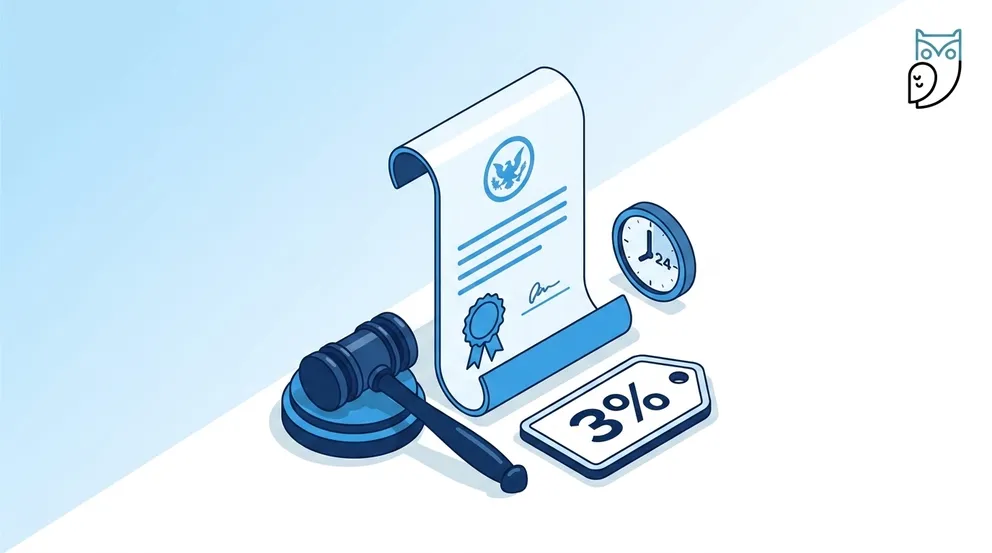
Indiana drivers who get their car towed after a crash or breakdown gain new legal protections on July 1, 2026, when House Bill 1184 takes effect. Gov. Mike Braun signed the measure on March 4, 2026, capping towing card fees at 3%, forcing yards to release a vehicle within 24 hours of a 75% payment, and banning charges just to inspect a car or grab personal items.
Indiana's House Bill 1184 takes effect July 1, 2026, capping towing and storage credit card fees at 3% and requiring companies to release a vehicle within 24 hours after the owner pays 75% of the invoice. The law also bars any fee to inspect a towed car or retrieve belongings, a change that directly affects Indiana drivers settling a comprehensive, collision, or total-loss insurance claim.
- Gov. Mike Braun signed HB 1184 on March 4, 2026; the law is effective July 1, 2026
- Yards must release a vehicle within 24 hours after the owner pays 75% of the bill
- Credit card service fees are capped at 3%, and cash, certified checks, money orders, and insurance checks must be accepted
- Charging to inspect a vehicle or pull out personal items is now prohibited
- Tow-away-zone signs must sit between 5 and 7 feet off the ground, or the tow is invalid
What the Law Changes for Drivers
HB 1184, titled "Towing matters," moved through the Indiana General Assembly with Rep. Craig Haggard as lead author and Sen. James Tomes carrying it in the Senate. The bill rewrites how towing operators and storage yards treat a stranded vehicle owner.
The centerpiece is the release rule. A towing or storage company must hand back your vehicle within 24 hours once you pay 75% of the invoice, leaving the disputed 25% to be sorted out afterward. Operators can no longer hold your car hostage over a contested charge.
Payment flexibility is the second major shift. Yards must accept cash, certified checks, money orders, and insurance checks, and any credit card service fee is capped at 3% of the transaction. A separate provision bars operators from charging a vehicle owner, lienholder, or insurance representative a fee just to inspect the car or retrieve belongings.
| Provision | Before July 1, 2026 | Under HB 1184 |
|---|---|---|
| Vehicle release | No statutory deadline | Within 24 hours of a 75% payment |
| Credit card fee | Unregulated, often above 3% | Capped at 3% |
| Inspect car or get belongings | Fee sometimes charged | $0, no fee allowed |
| Accepted payment | Cash-only was common | Cash, certified check, money order, insurance check, card |
| Tow-away-zone signage | Loosely enforced | 5 to 7 feet off ground, or tow is invalid |
Source: Indiana HB 1184 (enrolled), effective July 1, 2026. The "before" column reflects prior Indiana towing and storage practice in the absence of statutory caps.
What It Means for Your Insurance Claim
Towing and storage charges quietly inflate the cost of a wreck. A single tow can run $150 to $500, and storage yards routinely bill $25 to $75 per day, so an impounded car can rack up hundreds of dollars before an adjuster ever inspects it. Those fees fall under your comprehensive and collision coverage when the tow follows a covered accident, though they still count against your policy limits and deductible.
The new release rule hands Indiana drivers leverage they did not have before. Storage clocks keep running while an insurer and a yard argue over an itemized bill, and a delayed pickup can stall a total-loss settlement for days. Paying 75% to spring the vehicle within 24 hours stops the daily storage meter while you dispute the balance.
Indiana premiums sit well below the national average, with full coverage running about $1,847 a year, roughly $154 a month, according to InsureMojo's Indiana car insurance data. Indianapolis drivers pay closer to $2,146 a year. Avoiding a few hundred dollars in out-of-pocket storage fees matters more in a state where the average policyholder already pays about 20% less than the typical American driver.
The 24-hour release still requires real money. You must pay 75% of the invoice up front to get your car back, and the remaining 25% becomes the subject of any dispute. The rule speeds up recovery; it does not make the tow free.
Why Indiana Passed It
Predatory towing complaints have piled up across the Midwest, and trucking outlets including Overdrive and Commercial Carrier Journal covered HB 1184 because oversized commercial recoveries can run into five figures. Lawmakers heard from drivers stuck with cash-only demands, surprise card surcharges, and cars held over disputed line items.
The signage crackdown targets a common complaint behind nonconsensual tows from private lots. A commercial property owner who sets up a tow-away zone must post a sign between 5 and 7 feet off the ground, and a company cannot legally tow from that lot if the sign sits outside that range. Operators must also keep a 24-hour phone line open and hand over an itemized receipt at payment.
Get an Itemized Receipt
Demand a written, itemized invoice before paying. HB 1184 requires it, and your insurer needs the line items to reimburse towing and storage under a covered claim.
Pay 75% to Free the Vehicle
If a charge looks inflated, pay 75% to trigger the 24-hour release and stop the daily storage fee, then contest the remaining 25% afterward.
Loop In Your Adjuster Fast
Call your insurer the same day. After a not-at-fault crash, you can also route towing costs through a third-party claim against the at-fault driver's carrier.
File a Complaint If Fees Are Unreasonable
Report card surcharges above 3% or refused payment methods to the Indiana Attorney General's Consumer Protection Division, which fields towing and impound disputes.
Frequently Asked Questions
HB 1184 takes effect July 1, 2026. Gov. Mike Braun signed it on March 4, 2026, and its consumer protections apply to tows and storage on or after the effective date.
No. Under HB 1184, a yard must release your vehicle within 24 hours after you pay 75% of the invoice. You can dispute the remaining 25% after you recover the car.
Yes, when the tow follows a covered accident. Comprehensive and collision coverage typically reimburse towing and storage up to your policy limits, minus your deductible. After a not-at-fault crash, the other driver's insurer may cover them through a third-party claim.
The credit card service fee is capped at 3% of the transaction. Yards must also accept cash, certified checks, money orders, and insurance checks as payment.
- Indiana General Assembly - House Bill 1184 (Towing matters), 2026 Session
- Inside Self-Storage - Indiana Governor Signs House Bill 1184
- Overdrive - New Indiana Law Addresses Predatory Towing
- Commercial Carrier Journal - New Law Addressing Predatory Towing Takes Effect in Indiana
- LegiScan - Indiana HB 1184, 2026 Regular Session