
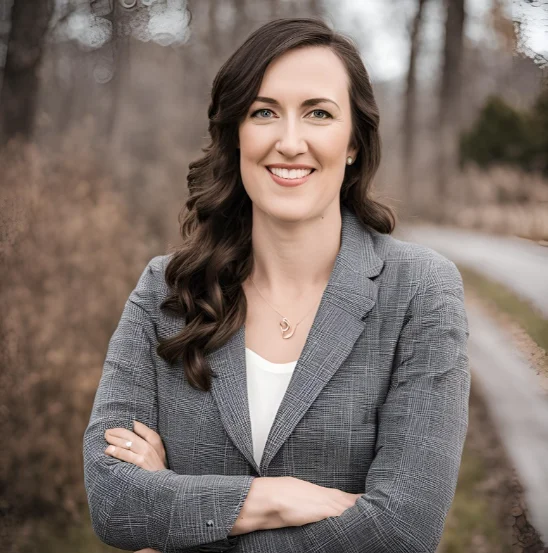

State Reps. Mark Tisdel (R-Rochester Hills) and Julie Rogers (D-Kalamazoo) introduced bipartisan auto insurance legislation on May 14, 2026, that would standardize how Michigan reimburses long-term care for catastrophically injured crash survivors. The bill keeps the 2019 no-fault reform intact and is not expected to raise the state's $2,794 average annual premium.
State Reps. Mark Tisdel (R-Rochester Hills) and Julie Rogers (D-Kalamazoo) filed bipartisan auto insurance legislation on May 14, 2026 that targets one of Michigan's most contested no-fault flashpoints: the payment rules for residential rehab and attendant care after a catastrophic crash. The package would replace the 2019 charge-master pricing model with standardized reimbursement categories tied to clearly defined levels of care.
Roughly 7.1 million licensed Michigan drivers will want the same answer: does this change my premium? Tisdel said it will not. The bill leaves the 2019 reform's Medicare-based caps and the 56-hour weekly limit on family-provided attendant care untouched. Michigan is one of only two true no-fault states with mandatory PIP medical coverage, alongside New York, which means provider-payment rules drive a larger share of premium math than in at-fault states.
- Bipartisan package filed May 14, 2026 by Tisdel (R) and Rogers (D)
- Replaces 2019 charge-master pricing with standardized reimbursement categories
- Keeps existing Medicare-based caps: 195% for hospitals, 160% for outpatient providers
- Rogers also filed HB 5981, which would extend mandatory PIP rate reductions through July 2, 2028
- Not expected to materially change Michigan's $2,794 average annual premium
What the Tisdel-Rogers Package Would Change
Michigan currently reimburses long-term care providers at 55% of their January 1, 2019 charge masters for services not covered by Medicare. That rule, enacted in the 2019 overhaul (Public Acts 21 and 22 of 2019), pegged each provider's payment to whatever they happened to bill in early 2019. Two providers offering identical residential brain-injury rehab can receive different reimbursement based on prices set seven years ago.
The Tisdel-Rogers bill scraps that approach. Reimbursement would instead be tied to standardized care categories covering residential, community-based, and supervised programs. A facility delivering Level 3 residential rehab gets the same rate as another facility delivering Level 3 residential rehab, regardless of what either billed in 2019.
"A provider that operated efficiently in 2019 while charging reasonable rates should not be locked into lower reimbursement rates because the law was changed to punish bad actors. Outdated pricing structures should not determine future payments," said Rep. Mark Tisdel.
The package keeps the Medicare-based reimbursement ceilings that took effect January 1, 2025: 195% of Medicare for hospital services and 160% of Medicare for outpatient providers. Accreditation requirements would expand for residential and in-home long-term care providers, adding a quality-of-care floor that critics say has been missing since the original fee schedule took hold.
Why This Matters for Michigan Drivers
The Michigan Brain Injury Provider Council has documented dozens of clinic closures since the 55% fee rule took effect on July 1, 2021. Post-acute rehab facilities cut staff, reduced therapy hours, or stopped taking no-fault patients. Families with a catastrophically injured loved one paid out of pocket or moved care home, even with unlimited PIP on the policy.
Drivers carrying unlimited PIP pay an extra $84 per vehicle for the 2026-2027 MCCA assessment, per the Michigan Catastrophic Claims Association ($65 pure premium plus $19 deficit recoupment). Capped-PIP and opt-out policyholders pay $19. The Tisdel-Rogers bill does not change that assessment, but it directly affects what your unlimited PIP actually buys when a serious injury claim is filed. Pending claims for residential rehab, attendant care, or post-acute therapy could be re-adjudicated under standardized categories if the bill becomes law, making the past 24 months of denial letters and care logs valuable evidence.
Michigan Auto Insurance Rates Snapshot
| Metric | Current Figure | Source |
|---|---|---|
| Full coverage (annual) | $3,207 | Bankrate (Nov 2025) |
| Minimum coverage (annual) | $897 | Bankrate (Nov 2025) |
| Statewide average (annual) | $2,794 | Experian (Apr 2026) |
| MCCA unlimited PIP (per vehicle) | $84 | MCCA 2026-2027 assessment |
| MCCA capped/opt-out PIP | $19 | MCCA 2026-2027 assessment |
| National rank (most expensive) | 4th | Insurify 2026 American Driver Report |
Methodology: Bankrate figures reflect a 40-year-old driver with a clean record and good credit. Experian averages cover Q1 2026 quote activity across all driver profiles. MCCA assessment applies per insured vehicle and is collected separately from the base premium. Insurify's ranking compares full-coverage averages across all 50 states.
The Companion Bill: Rogers' HB 5981
Rogers also introduced House Bill 5981 on May 14, 2026 with 20 co-sponsors. That measure would extend the mandatory PIP premium reductions insurers must offer on Michigan auto policies through July 2, 2028. Carriers currently have to provide minimum average rate cuts tied to each PIP level: 45% for the $50,000 Medicaid-only option, 35% for $250,000, 20% for $500,000, and 10% for unlimited. Without HB 5981, those mandatory reductions sunset under current statute, putting the 2019 reform's promised savings at risk even as MCCA assessments and medical inflation climb.
Keep every denial letter, billing statement, and care log from the past 24 months. The Tisdel-Rogers bill would standardize the appeals pathway, meaning previously denied or partially paid claims could be re-evaluated under the new categories. Documentation gaps weaken those appeals.
What You Should Do Now
Identify your PIP coverage level
Pull your declarations page and confirm whether you carry $50,000 (Medicaid only), $250,000, $500,000, or unlimited PIP. Drivers on unlimited PIP have the most at stake if catastrophic-care rules change under the Tisdel-Rogers package.
Document any prior PIP denials
Gather denial letters, partial-pay statements, and provider correspondence from the past 24 months. If the bill becomes law, standardized appeals could revisit those decisions, but only with proper documentation in hand.
Compare quotes before renewing
Michigan's average full-coverage premium climbed to $3,207 in late 2025, but rate spreads between carriers stay wide. Insurify and Bankrate quote data both show 20% or larger gaps between the cheapest and most expensive carriers for identical driver profiles. Get at least three quotes from carriers you have not used before.
Statewide rate context, city-level comparisons, and carrier breakdowns sit on our Michigan car insurance guide. Drivers who opened a May 2026 renewal notice showing higher rates can review our analysis of the May PIP premium increases, which walks through the MCCA assessment math in detail.
How This Differs From Prior Reform Attempts
Two prior PIP-fix attempts stalled in committee. HB 4486 (2023) tried to repeal large portions of the fee schedule and ran into Senate Insurance Committee opposition. SB 530 (2024) targeted similar provider-payment rules but never received a hearing. Both bills sought broader rollbacks than the Tisdel-Rogers package.
The new bill is narrower. It does not eliminate the 55% rule for non-Medicare services; instead it replaces the underlying charge-master reference with standardized care categories. The 2019 reform's headline cost savings of $357 per vehicle over five years, per a December 2025 Milliman report commissioned by Michigan's Department of Insurance and Financial Services, stay intact. Bipartisan co-sponsorship from a Republican in Oakland County and a Democrat in Kalamazoo also gives the package a procedural lift that earlier single-party attempts lacked.
No HB number has been assigned by the Clerk's Office, and no Senate companion has been introduced. Committee assignment will be the first signal of how seriously the package moves. Michigan drivers comparing rates statewide can also browse the full lineup on the car insurance by state hub.
Frequently Asked Questions
Rep. Tisdel said the package is not expected to significantly raise costs for Michigan drivers. The bill keeps the 2019 reform's Medicare-based caps (195% for hospitals, 160% for outpatient providers) and the 56-hour family attendant care limit. The offsetting drop in litigation is intended to balance any upward shift in provider payments.
No. Michigan drivers still choose from $50,000 (Medicaid only), $250,000, $500,000, or unlimited PIP medical coverage. The bill does not modify those tiers or the default unlimited selection.
The legislation would standardize the appeals process for denied or partially paid claims. Documented denials from the past 24 months would be processed through the new pathway. Keep denial letters, billing statements, and care logs in case your prior claim qualifies for re-evaluation.
HB 4486 (2023) and SB 530 (2024) both pushed broader fee-schedule rollbacks and stalled in committee. The Tisdel-Rogers package is narrower and carries bipartisan sponsorship from the start, giving it a stronger procedural path.
No HB number or committee assignment has been announced yet. Michigan bills typically take 90 days after the governor's signature to take effect, so the earliest realistic implementation is late 2026.
- Michigan House Republicans - Rep. Tisdel Introduces Bipartisan Auto Insurance Reforms (May 14, 2026)
- Michigan DIFS - Milliman Report: Auto Insurance Costs Reduced by $357 per Vehicle (Dec 2025)
- AAIS - MCCA Per-Vehicle Assessment 2026-2027
- Experian - Average Cost of Car Insurance in Michigan for 2026
- Bankrate - Average Cost of Car Insurance in Michigan in 2026
- Insurance Business - HB 5981 Extends PIP Premium Cuts Through 2028
- Michigan Auto Law - MCCA Assessment Explained
- Michigan Legislature - MCL 500.3157 (Provider Fee Schedule)