
Why the New York Budget Is Stuck
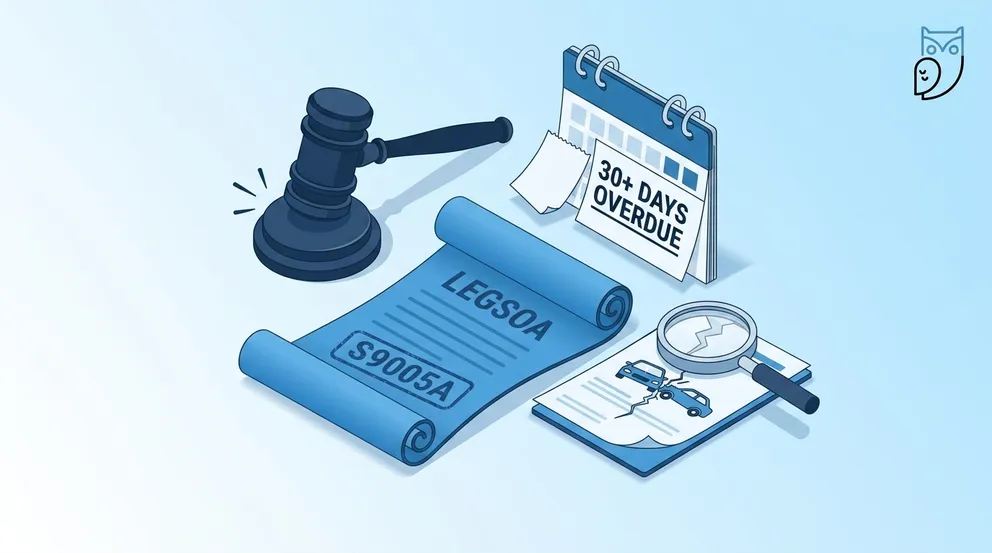
New York's $260 billion state budget is now over a month late, stalled in Albany since April 1 because Governor Kathy Hochul refuses to drop her auto insurance reform package S9005A. Drivers in the state pay roughly $4,000 a year for full coverage, about $1,500 above the national average, and Hochul argues her bill could cut premiums by 15% to 20%.
On Sunday May 4, lawmakers passed the ninth budget extender, pushing the deadline to May 6. That same day, the New York Daily News editorial board endorsed Hochul's framework, calling several of the reforms overdue.
Bill S9005A, the public protection and general government budget bill, would expand criminal liability for staged-accident rings, cap pain-and-suffering damages at $100,000 for uninsured or impaired drivers, switch New York from pure to modified comparative negligence, and tighten the "serious injury" threshold that lets crash victims sue beyond no-fault limits. The package has held up budget passage for five weeks.
- NY drivers pay an average $4,000 a year, the highest premium burden in the country
- 43,811 suspected fraud incidents reported in 2025, up 80% from 24,238 in 2020
- 1,729 staged crashes recorded in 2023, the second-highest count of any U.S. state
- Hochul claims 15% to 20% rate cuts; outside analysts estimate roughly $200 per policy
- MTA would save $48 million annually under the joint and several liability change Hochul ultimately dropped
What's Inside S9005A
The bill bundles five distinct reforms into the public protection budget article. Each one targets a different cost driver in New York's auto insurance system.
Modified Comparative Negligence
New York is one of 12 pure comparative negligence states, meaning a driver 90% at fault for a crash can still recover 10% of damages from the other party. S9005A would move New York to the modified comparative negligence rule used by roughly 35 states, blocking recovery for any driver more than 50% at fault.
Serious Injury Threshold
The bill keeps the eight existing categories of "serious injury" (death, dismemberment, disfigurement, fracture, fetal loss, permanent organ loss, permanent consequential limitation, and significant body-function limitation) but removes the controversial 90/180-day rule that classified temporary impairments as serious if they lasted 90 of the 180 days after a crash. Trial lawyers say the rule protects victims with delayed-onset injuries, and insurers call it the loophole that drives soft-tissue litigation costs higher than $300 per policy.
Fraud Prosecution Expansion
S9005A creates new criminal liability for anyone who "hires, requests, encourages, orchestrates, or invites" another to stage a motor vehicle accident, going beyond the drivers themselves. The Manhattan U.S. Attorney's office recently busted a Queens-area fake-accident ring, a case Hochul cited at her February 11 announcement to argue the existing law lets organizers escape charges.
$100,000 Pain-and-Suffering Cap
Drivers who were uninsured, impaired, drunk, or committing a felony at the time of a crash would face a $100,000 ceiling on non-economic damages they could recover. The $50,000 no-fault medical-and-wage threshold for ordinary claimants stays unchanged.
Rate Investigation Window
Insurers would get more than the current 30-day window to investigate suspect claims, but must pay interest on any examination that runs long. The DFS rate-approval threshold (currently 5% annual increases without state approval) is also under negotiation, with one option lowering it to 2% and another eliminating it entirely.
Source: NY Department of Financial Services 2025 fraud data, Office of Governor Hochul February 11 and March 13, 2026 announcements. Premium figure reflects the New York full-coverage average drawn from Bankrate and Insurify quote data through March 2026, covering drivers ages 20 to 70 with clean records and average or better credit.
Why the Budget Is Deadlocked
The fight pits Hochul against the New York State Trial Lawyers Association, which has spent millions defending pure comparative negligence and the 90/180-day rule. LAWPAC, the trade group's political action committee, has distributed nearly $3 million across more than 300 campaigns since 2021, with the biggest checks going to legislative committees controlled by Senate Deputy Majority Leader Michael Gianaris and Assembly Speaker Carl Heastie.
At an April 24 rally, Hochul put the contributions front and center.
"I don't want the trial lawyers lining their pockets from all of these outrageous cases they bring, because you know who is paying for that? Our drivers." (Governor Kathy Hochul, April 24, 2026)
Senate Majority Leader Andrea Stewart-Cousins has said the chamber needs assurances that insurers will actually cut rates if litigation costs fall. Last week Hochul dropped the joint and several liability change from her package as a concession, leaving the existing rule that lets a defendant less than 50% at fault be on the hook for the entire non-economic award if co-defendants cannot pay. The other four reforms remain on the table.
New York's no-fault personal injury protection costs run more than 200% above New Jersey's and 500% above Massachusetts's, according to Insurance Journal coverage of DFS rate analysis. Commercial trucking premiums in the state have doubled in five years, climbing from $5,000 to $6,000 per truck up to $10,000 to $12,000.
What It Means for New York Drivers
If S9005A passes intact, Hochul's office projects average savings of 15% to 20%, which on a $4,000 policy would translate to $600 to $800 a year. Independent analysts cited in Insurance Journal's March 24 coverage put the figure closer to $200 annually, citing uncertainty about whether insurers will pass litigation savings through to policyholders.
For accident victims with whiplash or concussion claims, the picture is harder. Removing the 90/180-day rule means temporary injuries lasting up to six months would no longer qualify for pain-and-suffering recovery, capping these claimants at the $50,000 no-fault threshold for medical bills and lost wages. The New York State Trial Lawyers Association argues this disproportionately affects gig drivers, rideshare operators, and lower-wage workers who file most soft-tissue claims.
Drivers who comply with state minimum coverage and avoid impaired-driving incidents see no change to their lawsuit rights. Anyone who gets behind the wheel uninsured or drunk loses the ability to collect more than $100,000 in pain-and-suffering damages, even if the other party caused the crash.
"This is a once-in-a-generation chance to get auto insurance costs in New York under control. Lawmakers should not waste it." (New York Daily News editorial board, May 4, 2026)
Public Support and the MTA Angle
Polling commissioned by Uber and released in March put public support for Hochul's package at 86%, with 75% of respondents calling auto insurance a household financial burden. The Metropolitan Transportation Authority projects $48 million in annual savings under the joint-and-several liability change Hochul ultimately dropped, and another $25 million in combined annual savings for the more than 130 transit agencies operating outside MTA territory.
Three police unions, the New York State Sheriffs' Association, and several fire-service associations have endorsed the fraud-prosecution language, citing the $300-per-policy cost that DFS attributes to staged crashes. Trucking groups including the New York State Motor Truck Association have backed the package, citing the doubling of commercial premiums in five years.
What You Should Do Now
Pull Your Current Declarations Page
Check your renewal date and compare your premium to a year ago. If your rate increased more than 5%, your insurer needed DFS approval, which under proposed reforms could drop to a 2% threshold or full prior approval on every increase.
Get Three Competing Quotes
Compare State Farm, GEICO, Progressive, Allstate, and at least one regional carrier. The New York rate spread between cheapest and most expensive carrier on the same risk profile typically runs 30% to 50%.
Ask About Telematics Discounts
Hochul's package mandates discount eligibility for drivers using safety apps or devices. Many carriers (Progressive Snapshot, Allstate Drivewise, State Farm Drive Safe and Save) already offer 5% to 30% off based on driving behavior.
Looking Ahead
Hochul said May 1 she expects a budget deal by mid-May, after lawmakers passed the ninth extender. If S9005A passes in its current shape, DFS would need 12 to 18 months to issue rate-filing guidance, and savings would not appear on driver renewals until late 2026 or early 2027. If the bill stalls or gets gutted, Hochul has signaled she will return with a standalone insurance bill in the post-budget legislative session.
Watch for the next round of DFS rate filings due this summer. Carriers including GEICO, State Farm, and Progressive have either filed or are preparing 2026 rate adjustments tied to the reform outcome. The Excess Profit Law, which currently requires insurers to return profits above 21% over six years, gets a re-examination under the bill, with DFS instructed to lower the trigger if litigation costs fall.
Frequently Asked Questions
Hochul's office projects 15% to 20% in savings, equivalent to $600 to $800 on a $4,000 average policy. Independent estimates cited by Insurance Journal land closer to $200 annually. Actual reductions depend on DFS rate-approval rules and whether insurers pass litigation savings through to policyholders.
If the bill passes by mid-May 2026, DFS guidance and rate filings would take 12 to 18 months. Most New York drivers would see the impact on renewal notices issued in late 2026 or early 2027.
No. The $50,000 personal injury protection limit on medical bills and lost wages stays the same. The bill changes the rules for when crash victims can sue beyond no-fault for pain-and-suffering damages.
Under current pure comparative negligence in New York, you could still recover 40% of your damages from the other party. Under the proposed modified rule, you would recover nothing because you exceeded the 50% fault threshold. Roughly 35 states already use this rule.
Yes and no. New York's no-fault structure stays in place, with the $50,000 PIP threshold unchanged. The bill changes the litigation overlay that runs on top of no-fault, particularly the serious injury exception that allows lawsuits beyond the threshold.
- New York Daily News Editorial Board - Reform N.Y.'s auto insurance: Hochul has the right ideas to lower costs (May 4, 2026)
- Office of Governor Hochul - Money in Your Pockets: Auto Insurance Reform Proposals (February 11, 2026)
- Office of Governor Hochul - Auto Insurance Reform Would Save MTA Nearly $50 Million Annually (March 13, 2026)
- Insurance Journal - NY Lawmakers Urged to Have Faith in Auto Insurance Reform Numbers (March 24, 2026)
- Gothamist - Car insurance crackdown: NY Gov. Hochul, lawmakers weigh limit on rate hikes (April 28, 2026)
- Spectrum News - New York lawmakers pass ninth state budget extender (May 4, 2026)
- NY Department of Financial Services - Auto Insurance Reform Press Release (February 11, 2026)
- New York Focus - Uber Pours $3M Into New Election Spending Group (February 3, 2026)