
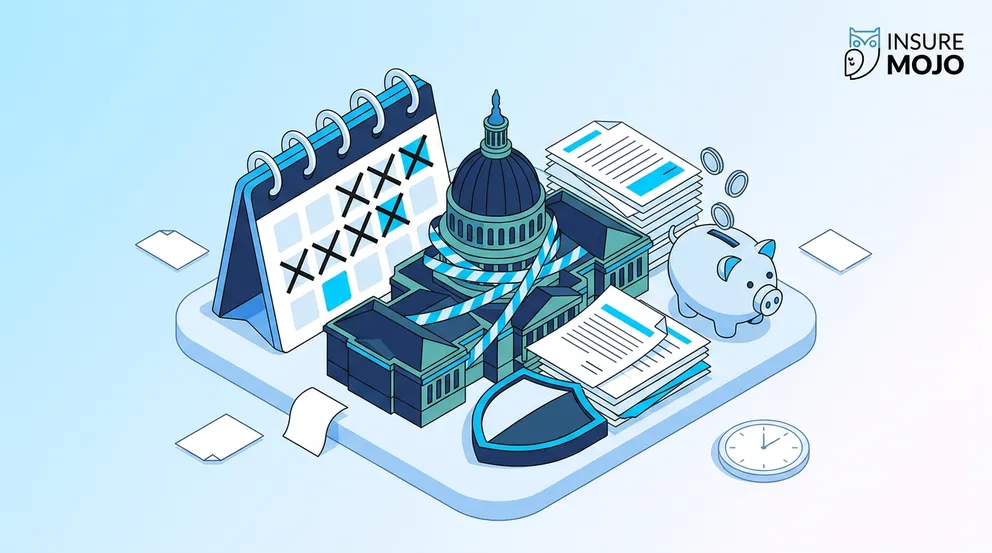
Governor Hochul's auto insurance reform plan remains the biggest sticking point in New York's $263 billion budget, which missed its April 1 deadline by more than two weeks. Lawmakers passed a fourth budget extension on April 16, 2026, keeping the government funded through April 20 while negotiations drag on. New York drivers still pay $341/month for full coverage, according to Bankrate, nearly double the national average.
- Fourth budget extension passed April 16, running through April 20, with auto insurance reform still unresolved
- Uber has spent $9 million on ads backing Hochul's plan; trial lawyers spend $120,000/month on lobbying against it
- Senate Deputy Leader Gianaris told reporters on April 15: "I don't think we're close" to a deal
- NY drivers pay $4,000+/year for full coverage, and DFS received 43,811 suspected auto fraud reports in 2025
Budget Standoff Enters Third Week
New York's state legislature passed its fourth budget extension on April 16, 2026, funding government operations through April 20 while Governor Kathy Hochul and legislative leaders remain deadlocked over auto insurance reform. The $263 billion budget was due April 1, according to City & State New York. Auto insurance, along with climate legislation and tax policy, ranks among the three biggest unresolved disputes preventing a deal.
Senate Deputy Leader Mike Gianaris, a Queens Democrat, told the New York Public News Network on April 15 that he does not believe the two sides are close to an agreement. Hochul's office fired back by noting that Gianaris leads the Senate Democrats' campaign committee, which counts trial lawyers among its top donors, according to WAER. The governor told reporters on April 15 that she remains "proud" of the reform proposals and insists "money has no influence" on her position, despite her campaign receiving roughly $200,000 from auto insurers since taking office in 2021.
What Hochul Wants to Change
Hochul introduced her reform package in January 2026 as the centerpiece of her affordability agenda. New York drivers pay $341 per month for full coverage, according to Bankrate, compared to roughly $180/month nationally. DFS data shows the state saw 43,811 suspected motor vehicle fraud reports in 2025, an 80% increase from 24,238 in 2020. Staged crashes alone totaled 1,729 incidents in 2023, ranking New York second nationally, according to the Insurance Information Institute.
The reform package targets six areas, according to the Governor's January proposal:
- Fraud crackdown: New criminal penalties for individuals organizing staged crashes, not just the drivers involved. DFS and State Police would receive dedicated anti-fraud resources.
- Serious injury threshold: Tighter, objective medical standards to qualify for pain-and-suffering payouts under the no-fault system. The current definition is "vague" and "applied inconsistently," per the Governor's office.
- Comparative fault: Drivers found mostly at fault would lose eligibility for non-economic damages. Only 12 states still allow majority-at-fault drivers to collect full damages, according to the American Tort Reform Association.
- Safe driver discounts: Insurers would be required to offer reduced rates for drivers using telematics apps or dashcams.
- Excess profit cap: DFS would re-examine the threshold at which insurers must return profits to policyholders.
- Rate transparency: Carriers would need to notify policyholders about rate changes and explain the reasons.
Hochul claims these reforms could cut premiums by 15% to 20%, according to DFS. For the average New York driver paying $4,092/year, that translates to $614 to $818 in annual savings.
The $12 Million Lobbying War Behind the Stalemate
Uber has spent more than $9 million on a television, digital, and mail campaign supporting the reforms through a group called Citizens for Affordable Rates (CAR), according to Gothamist. CAR commissioned a Beacon Research poll of 1,004 voters that found 86% support for the proposals across Democrats, Republicans, and independents. Uber-funded clergy rallies at the state Capitol have added grassroots pressure.
Trial lawyers are fighting back with concentrated political spending. The New York State Trial Lawyers Association (NYSTLA) pays $120,000 per month in lobbying fees and has hired Patrick Jenkins, a former roommate of Assembly Speaker Carl Heastie, as its lead lobbyist, according to WAER. NYSTLA's political action committee, LAWPAC, has distributed nearly $3 million to more than 300 campaigns since 2021. Top recipients include the legislative campaign committees controlled by Speaker Heastie and Senator Gianaris.
"The trial lawyers have controlled this town for far too long," said Tom Stebbins, leader of the Lawsuit Reform Alliance, at an April 15 press conference arranged by the governor's office.
NYSTLA President Andrew Finkelstein countered that Hochul is "in the pocket" of Uber and insurers. His own firms spent at least $3.7 million on more than 20,274 legal service ads in 2025, according to the American Tort Reform Association. Trial lawyer ad spending across New York totaled $179 million last year, an 84% increase from 2023.
Why Lawmakers Are Skeptical
Neither the Assembly nor the Senate included Hochul's reforms in their budget proposals, according to Insurance Journal. Assembly Member Jeffrey Dinowitz told Gothamist he wants "guarantees" that savings flow to consumers. Senator Andrew Gounardes, who pays $8,000/year to insure his family's two cars including a 2012 Subaru Outback, asked industry representatives what percentage of premiums are attributable to excess litigation. The panel could not provide a specific figure, according to Insurance Journal's March 24 report.
Senate Majority Leader Andrea Stewart-Cousins told Streetsblog the proposals were omitted from the Senate budget because auto insurance reform "is a broader conversation." Assembly Member Philip Palmesano noted that advocates cite Florida's tort reform results but have yet to produce a "formal, actual analysis" verifying similar outcomes for New York.
Florida's top five insurers cut rates by an average of 8% in 2026 following that state's 2023 tort reform, according to Citizens for Affordable Rates. Progressive, GEICO, State Farm, Allstate, and USAA all filed decreases covering 78% of Florida's market. Applying that same 8% reduction to New York's $4,092 average would save drivers roughly $327/year.
What New York Drivers Should Do Now
Compare Quotes From at Least 3 Carriers
New York's competitive market means rates vary dramatically. Bankrate data shows the cheapest full-coverage options in NY start around $200/month, nearly $140 less than the state average of $341/month. Request quotes from GEICO, Progressive, and Erie, which consistently rank among the lowest for NY drivers.
Ask About Telematics Discounts Now
Hochul's plan would mandate safe-driver discounts, but many carriers already offer them voluntarily. State Farm's Drive Safe & Save program and Progressive's Snapshot can reduce premiums by 10% to 30%, according to each company's published discount ranges.
Review Your No-Fault PIP Coverage
New York mandates $50,000 in PIP coverage, among the highest in the country. Check whether your health insurance overlaps with PIP benefits. While you cannot reduce the $50,000 minimum, confirming your health coverage may help you avoid paying for unnecessary medical payment add-ons.
Install a Dashcam
With 1,729 staged crashes reported in 2023, a front-and-rear dashcam protects against fraud. Some insurers offer 5% to 10% discounts for dashcam users. A quality dual-camera system costs $100 to $200, according to Consumer Reports.
What Happens Next
The fourth budget extender runs through April 20, 2026. If no deal is reached, lawmakers will need to pass a fifth extension. Capitol Pressroom reported on April 14 that legislators want written guarantees that any insurer savings from reduced fraud and litigation will flow directly to policyholders through lower rates. For background on how the standoff reached this point, see our earlier coverage of the budget deadline.
Hochul told CBS she believes there is "still time to negotiate it back in." The reforms do not require budget inclusion to become law; they can be introduced as standalone legislation. Assembly Member Landon Dais summarized the stakes at a March hearing, according to Insurance Journal: "The people of New York are the jury, and they're looking for a verdict of affordability."
Even if the full package fails, the fraud-crackdown provisions have bipartisan support. DFS announced a new partnership with the State Police on April 8 to expand insurance fraud investigations. That enforcement push moves forward regardless of budget negotiations, according to the DFS press release.
Premiums in the New York City metro area reach $5,000 to $7,000 annually, according to DFS. The MTA analysis shows Hochul's reforms would save the authority $48 million/year by limiting "jackpot" settlements on bus crashes. Over 130 transit agencies outside the MTA region would save an additional $25 million/year, potentially stabilizing fares and reducing local tax burdens.
How New York Compares to Other No-Fault States
| State | Avg. Full Coverage ($/mo) | PIP Minimum | No-Fault Type | 2025 Rate Change |
|---|---|---|---|---|
| New York | $341 | $50,000 | Full no-fault | +13.5% |
| Michigan | $293 | $50,000 (opt-down available) | Full no-fault (reformed 2019) | -4.2% |
| New Jersey | $260 | $15,000 | Choice no-fault | +6.1% |
| Massachusetts | $187 | $8,000 | Full no-fault | +4.8% |
| Florida | $272 | $10,000 (repealed 2023) | Tort (since 2023) | -8.0% |
Sources: Bankrate, Insurify, and state DOI filings. Rates reflect 2026 averages for drivers ages 25-65 with clean records. Michigan's rate decline follows its 2019 no-fault reform that allowed PIP opt-downs, a model Hochul's team has studied, according to Insurance Journal.
New York's PIP costs are more than 200% higher than New Jersey's and over 500% higher than Massachusetts', according to the New York Civil Justice Institute. Michigan's 2019 no-fault reform cut rates by 18% over five years by allowing drivers to opt down from unlimited PIP coverage, a change that saved drivers an average of $1,200/year, according to the Michigan Department of Insurance and Financial Services.
Frequently Asked Questions
Not yet. The proposals are still part of active budget negotiations as of April 17, 2026. Budget talks are ongoing through a series of weekly extensions. Hochul told CBS the reforms can still be "negotiated back in," and they can also be introduced as standalone legislation outside the budget process.
Governor Hochul and DFS estimate 15% to 20% premium reductions, which translates to $614 to $818/year for the average New York driver paying $4,092 annually. Florida's tort reform produced an 8% rate cut in its first full year, which would equal roughly $327/year if applied to New York's average.
NYSTLA argues the proposals would restrict injured New Yorkers' rights to sue and limit jury awards, while providing no guarantee that insurers will actually lower rates. President Andrew Finkelstein stated that "curtailing legal remedies does not reduce the cost of car insurance" and instead shifts costs "onto the backs of victims and taxpayers."
Partially, yes. DFS announced a new enforcement partnership with the State Police on April 8, 2026, to expand fraud investigations. This initiative does not require legislative approval. The broader fraud penalty provisions, including new criminal charges for staged-crash organizers, still require the legislature to act.
Not immediately. The proposals have not been enacted, so no rate changes are triggered. Compare quotes from at least three carriers now, since New York's competitive market means significant savings are available without legislative action. Check our New York car insurance guide for current rate comparisons by city.
- Governor's Office - Hochul Proposes Measures to Bring Down Auto Insurance Rates (January 13, 2026)
- WAER/New York Public News Network - Hochul, NY Lawmakers Bicker Amid Battle Over Auto Insurance (April 15, 2026)
- Insurance Journal - NY Lawmakers Urged to Have Faith in Auto Insurance Reform Numbers (March 24, 2026)
- NY State of Politics - Lawmakers Pass Fourth Budget Extender Through April 20 (April 16, 2026)
- Bankrate - Average Cost of Car Insurance in New York for 2026
- NY DFS - Governor Hochul Announces Partnership to Crack Down on Insurance Fraud (April 8, 2026)
- City & State NY - Lawmakers Pass Fourth Budget Extender Amid Ongoing Negotiations (April 16, 2026)
- Capitol Pressroom - Lawmakers Look for Guarantee of Car Insurance Savings (April 14, 2026)