
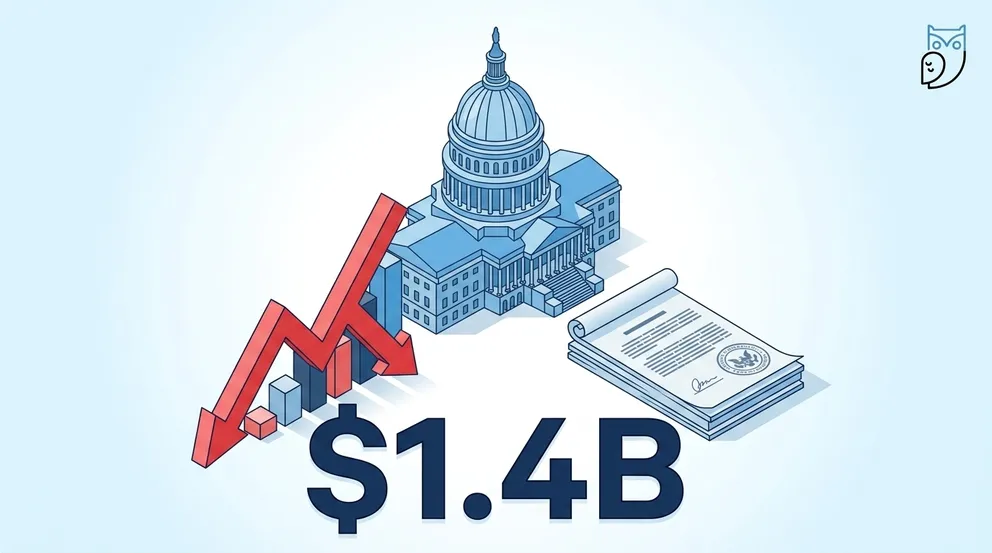
New Jersey's insurance watchdog has blocked an estimated $1.4 billion in rate increases over the past three years across auto, home, and health lines, Acting Commissioner Susan Ochs told state lawmakers at a May 10, 2026 budget hearing in Trenton.
Gov. Mikie Sherrill's $60.7 billion fiscal year 2027 budget would now hand the Department of Banking and Insurance (DOBI) a roughly $12 million funding increase, an 18% bump that would fill 94 vacant positions and modernize the regulator's software and hardware before the July 1, 2026 budget deadline.
New Jersey DOBI says it has stopped about $1.4 billion in proposed insurance rate hikes over three years, even with nearly 25% of its staff positions empty. Gov. Mikie Sherrill's FY2027 budget plan would deliver an 18% funding increase to fill 94 vacancies. Acting Commissioner Susan Ochs also said her conversations with carriers point to auto insurance rate requests "starting to level off."
- DOBI blocked an estimated $1.4 billion in insurance rate hikes from 2023 through 2025 across auto, home, and health filings
- Sherrill's FY2027 budget adds about $12 million to DOBI, an 18% increase tied to 94 new hires and roughly $2 million in technology upgrades
- Nearly 25% of DOBI's authorized positions sit vacant today, forcing the agency to lean on outside actuaries that bill three times the cost of a full-time staffer
- Carriers' rate requests are "starting to level off," Ochs told lawmakers, echoing Insurify's national outlook that rates will stabilize in 2026
- On January 1, 2026, the New Jersey minimum auto liability requirement jumped to 35/70/25, adding pricing pressure to spring renewal premiums
What the $1.4 Billion Figure Actually Means
DOBI runs a prior-approval rate review process for property and casualty lines, which means carriers must justify auto and home rate filings before charging policyholders the new amount. At the May 10 budget hearing, Ochs disclosed that her department's actuaries rejected or reduced enough filings over three years to keep about $1.4 billion in premium dollars out of consumer bills. The auto-specific share remains unconfirmed because the acting commissioner did not split that figure by line of business in her testimony.
DOBI oversees more than 300,000 entities, including insurance carriers, state-chartered banks, credit unions, and real-estate firms. Recent statutes added e-bike, pet, and travel insurance to the agency's docket without adding proportional staff, Ochs said. The regulator now leans heavily on consultants for technical work like actuarial review, and those contractors bill roughly three times the cost of an equivalent state employee.
Is the "Leveling Off" Claim Real?
Ochs offered a notable forward-looking comment to lawmakers: "My conversations with companies suggest an overall trend of rate requests starting to level off, in New Jersey and around the country." That statement aligns with Insurify's February 2026 outlook, which projects roughly flat full-coverage rates nationally in 2026 after a 6% drop in 2025.
The reality on the ground in New Jersey looks tougher than the national picture. Insurify pegs the current NJ full-coverage average at $3,084 per year, or about $257 per month, which ranks among the most expensive markets in the country. Rates climbed 20% during 2025, the steepest one-year jump of any state, pushing New Jersey from 15th to 6th in the national affordability rankings, according to Insurify and MoneyGeek data.
| Metric | Figure | Change / Context |
|---|---|---|
| Rate hikes blocked by DOBI (2023-2025) | ~$1.4 billion | Across auto, home, and health |
| NJ avg annual full-coverage premium | $3,084 | +20% YoY in 2025 (largest US increase) |
| NJ minimum-coverage avg annual premium | $2,163 | $180/month, Insurify 2026 |
| National avg full-coverage YoY change | -6% | 2025 actual; ~flat projected for 2026 |
| NJ national premium ranking | 6th most expensive | Up from 15th in 2024 |
Source: Insurify rate data through February 2026, based on 97 million-plus quotes from drivers ages 20-70 with clean records and average or better credit; MoneyGeek state cost rankings 2026; NJ DOBI budget testimony May 10, 2026. Full coverage includes liability, collision, and comprehensive.
Why DOBI Staffing Matters for Drivers
A 25% vacancy rate inside the regulator hits New Jersey consumers in two specific ways. Rate filings move through DOBI's prior-approval review more slowly when the actuarial bench is thin, which delays both pending rate decreases and tougher scrutiny of unjustified increases. The Consumer Inquiry and Response Center, which fields complaints about auto claims, surcharges, and PIP medical bills, also backs up when staffing falls below authorized headcount.
Ochs warned lawmakers that DOBI's understaffing has produced "backlogs and extended wait times, for both New Jersey consumers and for those we regulate." The agency operates a consumer hotline at 1-800-446-7467, where representatives handle disputes over auto claim denials, surcharges, total-loss valuations, and personal injury protection medical benefit issues.
The $1.4 billion blocked-rate figure is cumulative across auto, home, and health filings from 2023 through 2025. It is not a refund or dividend coming back to policyholders. The number reflects proposed increases that DOBI's actuaries cut down or rejected before they appeared on renewal bills, so the savings show up as "rates that did not go up as much as the carrier wanted," not as a check in the mail.
January 2026 Minimum-Limit Change Is Still Pricing In
Two regulatory currents are colliding inside NJ auto premiums right now. DOBI is cutting carrier rate requests, while a separate statute raised the state minimum auto liability requirement to 35/70/25 on January 1, 2026 (up from 25/50/25). Drivers carrying minimum-limit policies in particular are seeing that change reflected in renewal premiums this spring.
For a full breakdown of how the new limits affect coverage and pricing, see our analysis of the 2026 New Jersey minimum coverage requirements. Drivers in Newark, Jersey City, and Paterson can pull city-specific rate ranges on our New Jersey car insurance hub, with detailed local comps on the Newark car insurance page and the Jersey City car insurance page.
What NJ Drivers Should Do Now
Read your renewal declarations page line by line
Compare the new premium to last year's. If the increase exceeds 10% without a claim, an at-fault accident, or a moving violation, ask your carrier in writing for the specific DOBI rate filing that justifies the change.
Get at least three competing quotes
The NJ market includes GEICO (averaging $1,950 per year for full coverage), NJM, State Farm, Progressive, Allstate, and Liberty Mutual. Carrier rate differences in New Jersey can exceed $1,000 per year on the same risk profile.
File a complaint with DOBI when a carrier will not explain or fix the issue
Call the Consumer Hotline at 1-800-446-7467 between 8:30 a.m. and 5:00 p.m. ET on weekdays, or submit the online complaint form at nj.gov/dobi/consumer.htm. With 25% of positions vacant, expect a queue, but DOBI logs every case with a tracking number and contacts the carrier for a response.
Reassess coverage limits against the new 35/70/25 minimum
Drivers who carried 25/50/25 before January 1, 2026 are now below the legal floor on bodily injury. Bumping up to 100/300/100 typically costs $80 to $200 more per year and protects against at-fault claims that exceed minimum limits.
"My conversations with companies suggest an overall trend of rate requests starting to level off, in New Jersey and around the country," said Susan Ochs, Acting Commissioner of the NJ Department of Banking and Insurance.
How This Fits With the National Rate Picture
Ochs's "leveling off" comment matches the messaging coming out of Berkshire Hathaway's recent annual meeting, where Vice Chairman Greg Abel told shareholders the auto insurance market is softening. GEICO's Q1 2026 underwriting profit fell 35% year-over-year, and we covered the implications in our analysis of GEICO's first quarter results. Allstate reported $2.4 billion in Q1 net income with auto policies in force growing 2.6%, also pointing to a more competitive market in our Allstate earnings breakdown.
The state-level picture varies dramatically. Georgia's tort reform package is delivering the first round of auto insurance rate cuts in that state, while Illinois lawmakers are advancing a rate regulation bill (SB 1486) modeled in part on the prior-approval system New Jersey already operates through DOBI.
Looking Ahead
The Sherrill budget faces a hard July 1, 2026 deadline before a state government shutdown would kick in. Legislative Democrats control both chambers in Trenton, and DOBI's $12 million ask is a small line item inside a $60.7 billion total budget, so the funding boost is widely expected to pass. The bigger uncertainty is execution: filling 94 specialized positions (actuaries, examiners, IT staff) in a tight labor market will take 12 to 18 months, not weeks.
For drivers, the next signal will come in summer 2026 rate filings. If carriers begin filing flat or modestly lower auto rates with DOBI, that confirms the "leveling off" trend Ochs flagged. If filings still seek 8% or 10% increases through the second half of the year, expect the regulator to push back harder, especially with new actuarial capacity coming online later in 2026.
Frequently Asked Questions
No. The $1.4 billion figure represents proposed rate increases that DOBI rejected or reduced over the past three years across auto, home, and health insurance filings. The number reflects bill increases that never happened, not refunds. Policyholders did not receive any direct payment from this regulatory action.
Call the DOBI Consumer Hotline at 1-800-446-7467 (or 609-292-7272) on weekdays between 8:30 a.m. and 5:00 p.m. ET, or submit an online complaint at nj.gov/dobi/consumer.htm. You can also mail a completed complaint form to the Consumer Inquiry and Response Center at P.O. Box 471, Trenton, NJ. DOBI assigns a tracking number to every case and contacts the carrier for a response.
Acting Commissioner Susan Ochs said carrier rate requests are "starting to level off" in New Jersey and nationwide. Insurify projects roughly flat full-coverage rates in 2026 following a 6% national drop in 2025. New Jersey specifically saw rates climb 20% in 2025, so even a flat 2026 leaves drivers paying near the 6th-highest premiums in the country.
For private passenger auto and most property and casualty lines, carriers must file proposed rate changes with DOBI and receive approval before charging policyholders. The department's actuaries review filings for actuarial soundness and disapprove or reduce increases that are not adequately supported. This is different from individual health insurance market filings, which are largely informational and not subject to prior approval.
Gov. Sherrill and the Democratic-controlled state legislature have until July 1, 2026 to enact the FY2027 budget. The $12 million DOBI line item is small inside the $60.7 billion total budget and is closely tied to the affordability message both Sherrill and lawmakers have prioritized. Final approval is widely expected, though the legislature can adjust funding totals before the deadline.
- NJ Spotlight News - Amid affordability push, Sherrill wants full consumer watchdog staff (May 11, 2026)
- NJ Department of Banking and Insurance - Consumer Information and Complaint Filing
- Insurify - Average Cost of Car Insurance in New Jersey in 2026
- Insurify - Car Insurance Prices Tumbled 6% in 2025, Stabilization Projected for 2026
- Insurance Journal - After Falling 6% in 2025, Average Auto Insurance Cost Will Stabilize in 2026
- Bankrate - New Jersey's Evolving Car Insurance Laws
- MoneyGeek - Average Car Insurance Cost in New Jersey (2026 Rates)