

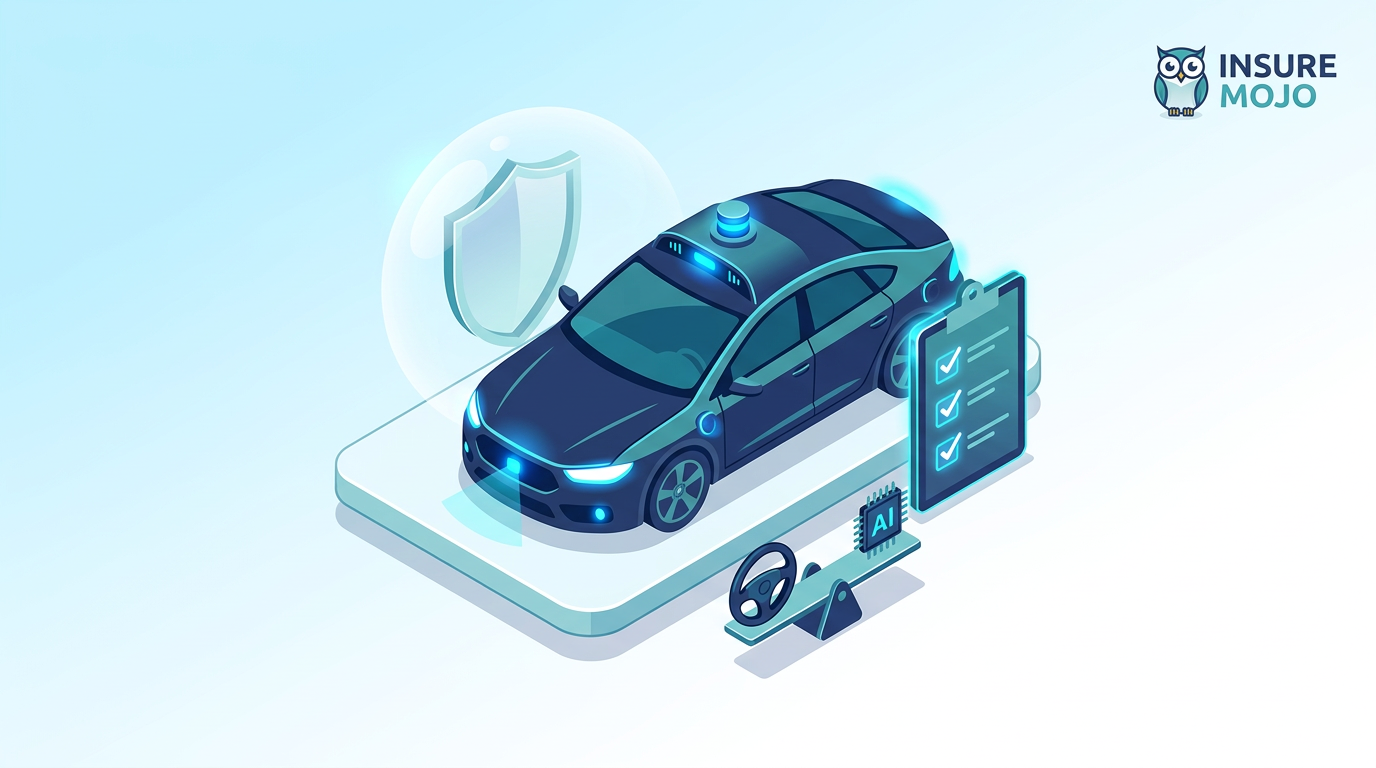
In 2025, the top self-driving vehicles range from Mercedes-Benz's Level 3 DRIVE PILOT system (the only hands-free, eyes-off consumer tech approved in the U.S.) to Tesla's FSD-equipped fleet and Waymo's driverless robotaxis. True Level 5 autonomy still doesn't exist — but we're closer than ever, and your insurance premiums are starting to feel the shift.
- Most "self-driving" cars sold today are Level 2 — you still need to pay attention
- Only Mercedes-Benz offers Level 3 (eyes-off) technology for consumer purchase in the U.S.
- Waymo robotaxis complete 250,000+ paid rides per week — fully driverless, in multiple cities
- Autonomous vehicles cause more minor fender-benders but 91% fewer serious injuries than human drivers
- Full coverage for Tesla vehicles runs $2,000–$3,000/year — roughly double the national average
- Goldman Sachs projects AV tech will cut insurance costs by 50%+ over the next 15 years
Let's be honest — the phrase "self-driving car" has been oversold for years. Remember all those predictions about fully autonomous vehicles taking over roads by 2020? That didn't happen. But here's the thing: 2025 is genuinely different. Real progress is happening, and some of it will surprise you.
Whether you're considering a Tesla with FSD, curious about that hands-free Cadillac your neighbor drives, or just wondering what Waymo is and whether it's coming to your city — this guide breaks it all down. Plus, we'll cover what self-driving features mean for your auto insurance bill right now.
The Six Levels of Autonomy (And Where Real Cars Fall)
Before diving into specific vehicles, you need to understand the SAE scale — because it exposes a lot of marketing hype. The Society of Automotive Engineers defines six levels of driving automation:
- Level 0 — Fully manual. You control everything, always.
- Level 1 — Single-function assistance (adaptive cruise OR lane-keeping, not both at once)
- Level 2 — The car controls steering AND speed simultaneously, but you must supervise and stay alert. Hands-free in some versions.
- Level 3 — You can take your eyes off the road in specific conditions, but must be ready to take over quickly.
- Level 4 — Fully driverless within defined geographic areas or conditions. No human input required.
- Level 5 — True full autonomy, anywhere, anytime. This does not yet exist commercially.
The vast majority of new cars advertised with "self-driving" features in 2025 are Level 2. You must still pay attention, even if your hands are off the wheel. Accidents caused while treating Level 2 vehicles as fully autonomous are almost always the driver's fault.
Here's what the current market actually looks like: Level 2 vehicles are everywhere. Level 3 is available from two manufacturers. Level 4 exists — but only in robotaxi fleets you can't buy. Level 5 is still on the horizon.
Top Self-Driving Cars Available in 2025
1. Mercedes-Benz S-Class / EQS — DRIVE PILOT (Level 3)
If you want the most advanced consumer self-driving technology you can actually buy in the U.S. right now, Mercedes-Benz is your only option at Level 3. Their DRIVE PILOT system lets you take your eyes completely off the road in low-speed highway traffic — and here's the kicker: Mercedes legally assumes liability when DRIVE PILOT is engaged.
The system uses a sensor-rich redundant setup — LiDAR, radar, cameras, ultrasonic sensors, and HD maps — to ensure it genuinely knows what's happening around the car. Currently approved in Los Angeles, San Diego, San Francisco, and Las Vegas.
If liability matters to you (and it should), Level 3 vehicles where the manufacturer accepts fault during autonomous operation could significantly change how accidents are handled with your insurance company. Ask your insurer specifically about AV-mode liability coverage before buying.
2. Tesla Model S / Model 3 / Model Y — FSD (Supervised), v14 (Level 2)
Tesla's Full Self-Driving is probably the most talked-about system on this list — and also the most misunderstood. Despite the name, FSD is Level 2. The driver must supervise at all times. Tesla's camera-only approach (no LiDAR, no radar) is a bold technical bet that has made it both impressive and controversial.
FSD v14 can handle city streets, traffic signals, lane changes, and cross-country navigation. Tesla even launched a Cybercab robotaxi service in Austin in June 2025 and expanded to San Francisco in August — though those cars still logged 14 incidents in the Austin fleet alone through January 2026. Real-world deployment is messy, even for the industry's biggest name.
One notable change: Tesla moved FSD to subscription-only in January 2026. No more buying outright.
3. Chevrolet Tahoe / Cadillac Escalade — Super Cruise (Level 2)
GM's Super Cruise is genuinely impressive hands-free driving — available on LiDAR-mapped highways stretching hundreds of thousands of miles across North America. Unlike Tesla's approach, Super Cruise uses extensive HD mapping plus a driver-monitoring camera to ensure you stay attentive.
It's limited to those pre-mapped highways, which is actually a feature, not a bug. The system knows exactly where it is and what to expect, making it more reliable (if less flexible) than vision-based competitors.
4. Ford F-150 / Mustang Mach-E — BlueCruise v1.5 (Level 2)
Ford's BlueCruise delivers hands-free driving within designated "Blue Zones" — pre-mapped highway segments. Version 1.5 added more natural automatic lane changes and improved lane centering. Like Super Cruise, a driver-monitoring camera watches to ensure you're paying attention.
Ford has ambitious plans for Level 3 "eyes-off driving" targeting 2028, though given the company's history with AV timelines, treat that date with some skepticism.
5. BMW X5 — Highway Assistant (Level 2)
BMW's Active Driving Assistance Professional package includes a hands-free highway system backed by LiDAR for redundancy — unusual for a Level 2 system. The result is a notably smooth, confident feel in traffic. If you're a BMW owner who spends a lot of time on the highway, this is worth checking out.
6. Volvo V90 Cross Country — Pilot Assist (Level 2)
Volvo takes a more conservative approach — Pilot Assist requires hands on the wheel, making it a Level 2 system in the traditional sense. What sets it apart is predictability and smoothness. For long highway drives, it reduces fatigue significantly even without hands-free capability. Volvo's philosophy: always keep the driver engaged, always prioritize safety.
| Vehicle | System | SAE Level | Hands-Free? | Eyes-Off? |
|---|---|---|---|---|
| Mercedes S-Class / EQS Most Advanced | DRIVE PILOT | Level 3 | Yes | Yes (limited conditions) |
| Tesla Model 3 / Y / S | FSD (Supervised) v14 | Level 2 | Yes | No |
| Cadillac Escalade / Chevy Tahoe | Super Cruise | Level 2 | Yes | No |
| Ford F-150 / Mach-E | BlueCruise v1.5 | Level 2 | Yes | No |
| BMW X5 | Highway Assistant | Level 2 | Yes | No |
| Volvo V90 Cross Country | Pilot Assist | Level 2 | No | No |
Robotaxis and Level 4: What You Can Ride But Can't Buy (Yet)
Level 4 autonomous technology exists and is operating on real streets right now — just not in vehicles you can purchase. The robotaxi space is where the truly driverless action is happening.
Waymo — The Industry Leader
Alphabet's Waymo is the furthest along of any AV company. As of mid-2025, Waymo is running fully driverless operations in Phoenix, Los Angeles, San Francisco, and Austin — completing more than 250,000 paid rides per week. Expansion to Miami, Washington D.C., Boston, Las Vegas, New York City, and Philadelphia is planned for 2026.
There's some controversy — NTSB opened an investigation after Waymo robotaxis illegally passed stopped school buses in multiple states. But the safety data remains compelling. More on that below.
Amazon Zoox
Zoox launched fully driverless operations in Las Vegas (September 2025) and San Francisco (November 2025), and received the first-ever exemption under NHTSA's expanded Automated Vehicle Exemption Program. If you're in those cities, you might already be seeing these distinctive, purpose-built vehicles on the street.
Tensor Robocar — The Wild Card
Here's something genuinely new: Tensor is developing what they claim will be the world's first Level 4 autonomous vehicle designed for private ownership — not a fleet vehicle. Targeted delivery in the second half of 2026 for U.S., Europe, and UAE buyers. Color us cautiously intrigued.
Are Self-Driving Cars Actually Safer? The Data Is Complicated
Ever heard the statistic that self-driving cars crash more often than human-driven cars? It's technically true — and also deeply misleading.
Through November 2025, the U.S. has recorded 5,202 total AV accidents. The raw crash rate of 9.1 crashes per million miles for AVs looks bad compared to 4.1 for human-driven vehicles. But here's what that statistic leaves out: severity.
Raw crash rate statistics for autonomous vehicles are frequently cited without severity context. Many AV "accidents" are minor fender-benders where a human rear-ends a stopped AV. Always look at injury and fatality rates, not just crash counts.
Waymo's data, validated in a December 2024 Swiss Re study, tells a different story:
- 91% fewer serious injury or fatal crashes versus human drivers on the same roads
- 80% fewer crashes causing any injury
- 92% reduction in bodily injury insurance claims
- 88% reduction in property damage claims
Human error causes 94% of serious crashes (according to NHTSA). Distracted driving alone killed 3,100+ people and injured 424,000 in a single year. AVs eliminate most of those error sources — they don't text, don't drink, don't get tired. The "more accidents" headline misses the forest for the trees.
What Self-Driving Features Mean for Your Insurance
This is where things get really interesting for your wallet — both right now and looking ahead.
What You'll Pay Today
Owning a Tesla with FSD is significantly more expensive to insure than a comparable conventional car. Full coverage for Tesla vehicles typically runs $2,000–$3,000 per year, compared to roughly $1,674 nationally for the average car. The primary reason isn't the autonomous technology itself — it's repair costs. Replacing cameras, sensors, and specialized components is expensive. Highly efficient electric powertrains in premium-priced vehicles also push values (and premiums) up.
New Insurance Products Are Emerging
The insurance industry is starting to catch up. Lemonade launched an "Autonomous Car Insurance" product offering 50% off premiums for miles driven with Tesla FSD engaged — citing data that FSD miles are twice as safe as human-driven miles. It's usage-based pricing at its most logical: pay less when the system driving is statistically safer.
Expect more insurers to follow with products that:
- Track autonomous vs. manual mode via telematics
- Split liability coverage based on who was "driving" at the time of a crash
- Include cyber liability protection for software failures
- Shift product liability claims toward manufacturers for verified AV-mode incidents
The Long Game: Insurance Costs Are Expected to Drop Significantly
Goldman Sachs projects that autonomous vehicle technology will cut insurance costs by more than 50% over the next 15 years — from roughly $0.50 per mile today to around $0.23 per mile by 2040. That's a massive shift driven by fewer accidents, fewer injuries, and lower severity when crashes do occur.
If you drive a Level 2 vehicle with ADAS features, ask your insurer about telematics discounts. Some companies reward safe driving behavior — including using driver-assist features correctly — with meaningful premium reductions.
The one catch, as insurance expert Scott Holeman from the Insurance Information Institute notes: "Even if policies cost less, this technology costs money, so there's a shift in where you pay the money." Sensor repair bills are real. A cracked LiDAR unit or damaged camera array can cost thousands — and that has to be factored in somewhere.
Regulations: The Federal Government Is Moving Fast
One of the biggest developments of 2025 was a genuine federal push to unify autonomous vehicle regulation. Key moves from NHTSA:
- April 2025: NHTSA announced an AV Framework with three stated principles: safety first, remove barriers to innovation, enable commercial deployment
- Three new rulemakings to modernize Federal Motor Vehicle Safety Standards for ADS vehicles — including vehicles with no manual controls
- Expanded Automated Vehicle Exemption Program to include domestically produced vehicles (Zoox was the first recipient)
- SELF DRIVE Act of 2026 (discussion draft): first proposed federal statute dedicated specifically to AV safety
State rules still vary significantly. California requires $5M minimum coverage for AV testing companies. Florida mandates $1M minimum liability for fully autonomous vehicles. Texas permits fully driverless freight operations with enhanced telematics. The federal push aims to prevent this patchwork from becoming unmanageable as AV deployment accelerates.
What's Coming Next: 2026 and Beyond
The next few years will be pivotal. Here's what to watch:
- Tesla Cybercab expanding to seven new cities in H1 2026
- Waymo targeting 10+ U.S. cities by 2028
- Tensor Robocar — first Level 4 vehicle for private ownership — targeting H2 2026 delivery
- Ford targeting Level 3 "eyes-off" capability for 2028
- 50%+ of new U.S. cars projected to offer some form of hands-free driving by 2028
- Goldman Sachs projects up to 10% of global new car sales could be Level 3 vehicles by 2030
The honest assessment: we're not heading toward a world where every car drives itself in 5 years. But we are heading toward a world where most new cars have meaningful autonomy assistance, where robotaxi services become mainstream in major cities, and where the first private-ownership Level 4 vehicles begin shipping. That's genuinely transformative — just on a more realistic timeline than the hype suggested.
Frequently Asked Questions
The Mercedes-Benz S-Class and EQS with DRIVE PILOT offer the most advanced consumer-purchasable autonomous technology — SAE Level 3, which means you can legally take your eyes off the road in specific conditions. It's the only Level 3 system approved for consumer use in the U.S., currently available in California and Nevada.
Not in the true sense. Tesla FSD (Supervised) is SAE Level 2, meaning the driver must remain alert and ready to take control at all times. The name is widely criticized as misleading. That said, FSD v14 is technically impressive and continues to improve — it's just not a fully autonomous system.
Not yet in most cases — and for some vehicles like Tesla, it actually costs more to insure due to expensive sensors and high vehicle values. However, Lemonade offers 50% discounts on miles driven with Tesla FSD engaged. Over the next decade, experts project AV technology will significantly reduce premiums industry-wide as safety records accumulate.
At Level 2, the driver is almost always legally responsible. At Level 3 (like Mercedes DRIVE PILOT), the manufacturer assumes liability when the system is engaged. At Level 4 (robotaxis), the operating company holds liability. As autonomy levels increase, expect insurance liability to shift increasingly toward manufacturers and software developers.
It depends how you measure it. Self-driving cars have more reported accidents per mile, but most are minor. For serious injuries and fatalities, the data is clearly better: Waymo vehicles cause 91% fewer serious injury crashes than human drivers on the same roads. The raw crash number is misleading without severity context.
- U.S. News & World Report — Vehicles That Are Almost Self-Driving in 2026
- NHTSA — AV Framework to Modernize Safety Standards (April 2025)
- Fortune — Goldman Sachs Predicts Autonomous Cars Will Slash Insurance Costs by 50%
- CarInsurance.com — Guide to Auto Insurance for Self-Driving Cars in 2025
- Consumer Shield — Self-Driving Car Accident Statistics
- Inszone Insurance — Impact of Autonomous Vehicles on Auto Insurance in 2025