

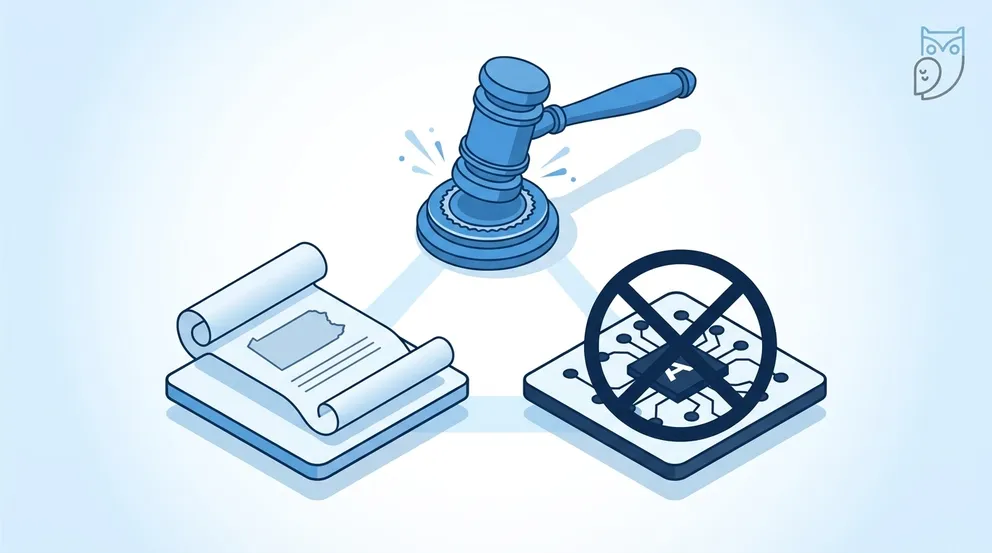
Pennsylvania Attorney General Dave Sunday announced a settlement with GEICO on May 23, 2026 over an AI-driven policy review that cancelled a West Philadelphia woman's auto coverage and left her driving uninsured. GEICO will give new customers an extra week to submit verification documents, accept a single proof of residency instead of two, and follow the Pennsylvania Insurance Department's AI guidance going forward.
GEICO has agreed to overhaul the cancellation process behind an artificial intelligence review tool that left a Philadelphia policyholder unknowingly uninsured, Pennsylvania Attorney General Dave Sunday's office announced May 26, 2026. The settlement gives every new GEICO customer in the state an extra week to respond to underwriting requests and slashes the required residency paperwork in half.
The agreement, formally entered May 23, marks one of the first state enforcement actions against a top-five US auto insurer specifically tied to AI-assisted underwriting. GEICO admitted no violation of Pennsylvania law as part of the deal.
- Pennsylvania AG Dave Sunday settled with GEICO on May 23, 2026 over an AI-flagged cancellation that left a West Philadelphia driver uninsured
- Four immediate consumer wins: one week of extra response time, one residency document instead of two, driver's license accepted as residency proof, retrained customer service reps
- GEICO ranks third in Pennsylvania's private-passenger auto market behind State Farm and Progressive, so the changes touch hundreds of thousands of state policyholders
- Pennsylvania is one of 12 states piloting the NAIC AI Evaluation Tool through September 2026, signaling more enforcement to come
What Happened in the GEICO Pennsylvania Case
The dispute began with a single complaint from a new GEICO policyholder in West Philadelphia. During the company's standard 60-day review for new customers, an AI-equipped tool flagged her file for further underwriting scrutiny. GEICO then requested additional verification documents to confirm her residency.
She believed she had submitted everything required. The Attorney General's office found that GEICO did not clearly tell her the documents were inadequate before pulling the plug on her policy. Cancellation happened without adequate notice, and she kept driving for some time without realizing her coverage had lapsed.
Driving uninsured in Pennsylvania carries a $300 minimum fine, a three-month registration suspension, a three-month license suspension, and at least $94 in restoration fees once the driver wants to get back on the road legally. For an unsuspecting consumer who believed her policy was active, those penalties stack on top of the financial pain of a coverage lapse on her record.
"Consumers deserve transparency and fairness throughout the insurance process, especially when losing coverage can leave someone unknowingly uninsured and vulnerable to penalties and financial risk," Sunday said in the May 26 announcement.
The Four Changes GEICO Agreed To
GEICO will adhere to the Pennsylvania Insurance Department's 2024 bulletin on the use of artificial intelligence systems by insurers, the document that lays out the state's expectations for AI governance, fairness testing, and consumer transparency. That binds the carrier to a state-issued framework rather than its own internal AI policy.
New policyholders selected for the 60-day underwriting review will get an additional seven days to gather and submit any documents GEICO requests. Previously the window was short enough that the West Philadelphia complainant ran out of time without realizing it.
Two pieces of residency proof are no longer required. One will suffice. And a current driver's license now counts as that proof, provided the address on the license matches the address on the policy. That single change closes the most common consumer trap, where someone has just moved, has not yet received new utility bills, and cannot easily produce two separate residency documents on demand.
GEICO will also retrain customer service representatives on the updated requirements and on the need to communicate clearly when a document submission is incomplete. The training piece addresses the original failure point: the policyholder thought she had complied, and no one at GEICO told her otherwise before her policy was terminated.
What This Means for GEICO Customers Nationwide
GEICO writes coverage for roughly 28 million vehicles across all 50 states and is the second-largest US auto insurer by direct premiums, trailing only State Farm. Our full GEICO auto insurance review covers the carrier's pricing, claims, and digital tools in detail. In Pennsylvania auto insurance alone, the Berkshire Hathaway subsidiary ranks third in the private-passenger market behind State Farm and Progressive, putting hundreds of thousands of state drivers within the scope of the new procedures.
The settlement technically applies only to Pennsylvania policyholders. But GEICO operates centralized underwriting systems, so customer-service script changes and the AI-governance commitments will be difficult to confine to one state in practice. Consumers in Ohio, New Jersey, Maryland, and other neighboring states with similar 60-day new-customer reviews should expect the same loosened residency rules to filter into their interactions.
If you are a GEICO customer who has been asked for residency verification recently, the new policy is enforceable starting now in Pennsylvania. Push back on any request for two documents and ask whether your driver's license alone satisfies the requirement. Document every submission with a date-stamped email or portal upload confirmation.
If GEICO cancelled your Pennsylvania auto policy in the past 12 months following a residency-verification request, file a complaint with the Pennsylvania Insurance Department at insurance.pa.gov. The new settlement creates leverage to seek reinstatement, and the agency is actively tracking AI-driven cancellation patterns through the NAIC pilot program.
The Bigger Regulatory Picture on Insurance AI
The GEICO settlement is the latest sign that state regulators have launched a major review of AI's role in auto insurance pricing, treating algorithmic decision-making as a compliance category rather than an experimental technology. Twelve states currently participate in the National Association of Insurance Commissioners' AI Evaluation Tool pilot, which runs January 2026 through September 2026 and includes Pennsylvania alongside California, Colorado, Connecticut, Florida, Iowa, Louisiana, Maryland, Rhode Island, Vermont, Virginia, and Wisconsin.
Each participating state is testing a structured framework for reviewing insurer AI systems during market conduct examinations. That means by the end of 2026, every major auto insurer doing business in those 12 jurisdictions can expect regulators to ask detailed questions about how AI models are trained, audited, and documented in underwriting.
| State | AI Insurance Rule | Status |
|---|---|---|
| Colorado | SB 21-169 algorithm inventories, bias testing, annual CRO-signed reports | Expanded to auto and health October 2025 |
| California | SB 1120 bans AI-only health claim denials; AG bias guidance for auto | Effective January 2025 |
| New York | DFS Circular Letter 2024-7 requires bias testing and explainability | In effect |
| Pennsylvania | 2024 PID bulletin on AI governance; HB 1925 pending in legislature | Now enforceable against GEICO under settlement |
| Virginia | HB 2094 mirrors Colorado framework | Awaiting effective date |
Sources: State insurance department bulletins, NAIC AI Issue Brief (March 2026), Cooley LLP state AI law tracker (April 2026).
Pennsylvania House Bill 1925, sponsored by lawmakers concerned about discrimination in algorithmic decision-making, would write much of the Insurance Department's AI bulletin into statute and add anti-bias protections covering both insurance and healthcare AI systems. The state has been part of a broader regional push, joining Iowa, Oklahoma, and New York in efforts to ban credit-score-based auto insurance pricing. The GEICO settlement gives that pending legislation a high-profile case study.
What You Should Do If Your Insurer Asks for Verification
Read the Request Carefully and Note the Deadline
Underwriting verification letters specify a hard deadline. Mark it on your calendar and aim to submit at least three business days early. If your insurer is GEICO and you live in Pennsylvania, you now get a full week longer than the previous window.
Send Documents Through the Portal, Not Email
Use the carrier's official portal or app to upload verification documents. The portal generates a confirmation receipt that proves you submitted by a specific date and time. Screenshot it.
Call to Confirm Receipt Within 48 Hours
Pick up the phone two business days after submitting. Ask the agent to confirm the documents are on file and to read back exactly what GEICO needs. If anything is missing, you have time to fix it.
Get the Cancellation Decision in Writing
If your insurer says it will cancel anyway, demand the reason in writing. Pennsylvania carriers must specify the legal basis for cancellation and explain how to appeal. Save the letter and the envelope showing the postmark. (Every state has its own rules, so check the car insurance requirements where you live.)
File a Complaint With Your State Insurance Department
Pennsylvania residents can file at insurance.pa.gov. The department investigates every complaint, and the GEICO case proves regulators take AI-driven cancellation patterns seriously. Filing a complaint also creates a paper trail if you need to pursue reinstatement or restoration of your driving privileges.
"This agreement secures meaningful improvements that will help protect policyholders, and ensures that the company's use of new technology is done within industry standards." — Attorney General Dave Sunday
Looking Ahead: More State Enforcement Coming
The next test will arrive when the NAIC AI Evaluation Tool pilot concludes in September 2026. Expect a public report summarizing what the 12 participating states found in their market conduct reviews, followed by individual state enforcement actions against carriers whose AI systems failed transparency or fairness checks.
Colorado's regulator has signaled it will publish its first annual AI compliance report card for auto insurers in late 2026, naming carriers that failed to file required algorithm inventories. California Insurance Commissioner Ricardo Lara has separately been preparing bias-testing rules specifically for auto underwriting models, with a draft expected before year-end. GEICO will be one of the highest-profile carriers in scope for each of those processes.
Frequently Asked Questions
Legally, the settlement covers only Pennsylvania policyholders. In practice, GEICO runs centralized customer-service and underwriting operations, so customer-facing changes like accepting a driver's license as residency proof are likely to spread to other states. If you live elsewhere and your insurer requests two residency documents, ask whether one will suffice.
Most auto insurers in Pennsylvania run an underwriting review within the first 60 days of a new policy, a period state law permits insurers to use to verify information you provided during the application. GEICO uses an AI tool to flag higher-risk files for closer review during that window. The settlement does not eliminate the 60-day review, but it does change the documentation rules and gives you more time to respond.
You can request reinstatement and file a complaint with the Pennsylvania Insurance Department at insurance.pa.gov. The settlement does not automatically reinstate prior cancellations, but it does put GEICO on notice that the agency is monitoring AI-driven decisions. Bring documentation of what you submitted and the cancellation notice you received.
Ask your agent directly and request a written response. New York's DFS Circular Letter 2024-7 already requires insurers to disclose AI use in decisions affecting consumers, and similar rules are taking effect in Colorado and California. Pennsylvania's pending House Bill 1925 would extend that disclosure requirement statewide.
Acceptable residency documents typically include a current driver's license matching the policy address, a utility bill dated within the past 60 days, a lease or mortgage statement, a bank or credit card statement, or a government correspondence such as a tax notice. Under the GEICO settlement, the driver's license alone now suffices for Pennsylvania policyholders.
- Pennsylvania Office of Attorney General - AG Sunday and GEICO Agree on Improvements (May 26, 2026)
- Insurance Journal - After Complaint, GEICO Agrees to Modify Cancellation Process That Uses AI
- ABC27 - Pennsylvania reaches agreement with GEICO after 'unfair' insurance cancellation
- Law360 Insurance Authority - GEICO Settles Pa. Probe Into AI-Driven Policy Cancellations
- AM Best - Pennsylvania, GEICO Strike Settlement Over Auto Policy Cancellation Practices
- NAIC - Artificial Intelligence and State Insurance Regulation (March 2026 Issue Brief)
- Cooley LLP - State AI Laws: Where Are They Now? (April 2026)
- PropertyCasualty360 - Pennsylvania Issues AI Guidelines for State-Licensed Insurers