
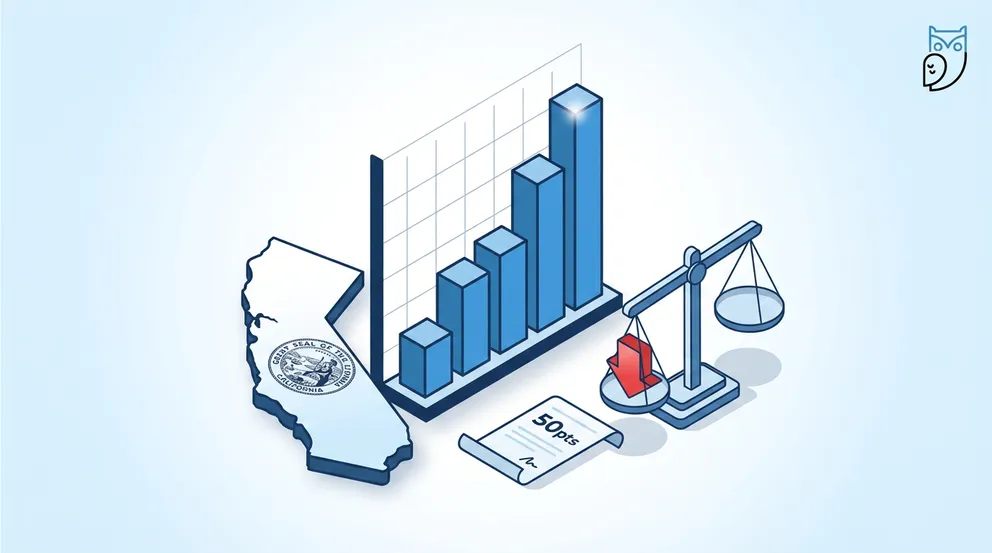
Kemper Corporation will file approximately four California auto insurance rate adjustments in 2026, including a 6.9% aggregate increase already filed in April that concentrates roughly 50 percentage points of additional rate on bodily injury coverage. The plan follows a $1.7 million GAAP net loss for Q1 2026 reported May 6, 2026, which executives blamed on California's higher liability minimums and rising bodily injury severity.
Kemper (NYSE: KMPR) posted a $1.7 million Q1 2026 net loss on May 6, 2026, against $99.7 million in net income a year earlier, with Specialty Personal Auto running at a 110.9% combined ratio. The carrier confirmed four California rate filings for 2026; the April filing carries a 6.9% aggregate increase, with about 50 percentage points of that rate concentrated on bodily injury coverage to absorb losses tied to the state's January 2025 liability-minimum reset.
- Q1 2026 revenue of $1.11 billion missed the $1.17 billion consensus by 5.5% and fell 6.9% year over year
- Adjusted EPS landed at $0.21 versus an $0.80 analyst forecast, a 73.8% miss
- Specialty Personal Auto combined ratio reached 110.9%; the underlying loss-and-LAE ratio jumped to 87.7% from 70.1%
- Four California rate filings are planned for 2026; the April filing already includes ~50 points on bodily injury
- Florida statutory profit-limit refunds added a $28.0 million drag to the quarter
Why Q1 2026 Missed by 73.8% on Earnings
Revenue of $1.11 billion landed 5.5% below the $1.17 billion analyst consensus and fell 6.9% from the prior-year quarter, according to coverage from IndexBox dated May 17, 2026. Adjusted earnings per share came in at $0.21 against $0.80 expected, a 73.8% miss that pulled adjusted EBITDA to negative $6.5 million.
Operating margin collapsed to negative 0.7% from positive 10.1% in Q1 2025, and the company finished the quarter with a $1.81 billion market capitalization. Interim CEO Carl Evans called the quarter "disappointing and below expectations" on the May 6 earnings call.
The damage centered on the Specialty Personal Auto book, which operates almost entirely through the Infinity brand in California and through Kemper Auto in other states. Combined ratio for that segment hit 110.9% (a level at which the carrier loses 10.9 cents on every premium dollar before investment income), and the underlying loss-and-LAE ratio climbed to 87.7% from 70.1% a year earlier.
CFO Bradley Camden told analysts on the call that reserves remain "sufficient" despite "higher severity trends in older accident years," responding to a question from UBS analyst Brian Meredith about adverse reserve development. Camden added that Kemper's risk-based capital ratio stays within the company's target range.
What "50 Points on Bodily Injury" Means for a California Policyholder
Kemper President Matthew Hunton told Raymond James analyst Charles Peters during the call that "multiple rate adjustments are underway and further filings are being prepared" to address California loss costs. The April filing landed at a 6.9% aggregate increase, but Hunton emphasized that the rate is "textured" by coverage, with roughly 50 percentage points concentrated on bodily injury limits.
Working that math against an Infinity non-standard policy averaging $3,402 per year for full coverage (per Bankrate's 2026 rate data), the bodily-injury slice of the policy faces a far steeper move than the 6.9% headline suggests. A driver paying $1,099 annually for California minimum coverage on Infinity would see most of the rate change land on the liability portion of that bill, the same portion that grew when limits jumped from 15/30/5 to 30/60/15 on January 1, 2025.
Three more filings are expected to land at the California Department of Insurance over the remainder of 2026. Under the state's prior-approval system, each filing must clear CDI review before taking effect, with timelines that have historically stretched 9 to 18 months between submission and approval.
| California Carrier Action | Direction | Filing Status | Year Effective |
|---|---|---|---|
| Kemper / Infinity | +6.9% (April filing) | 4 filings planned for 2026 | 2026 |
| State Farm | -6.2% | Approved by CDI | 2026 |
| Farmers | 22% bundle discount | Live September 2026 | 2026 |
| Allstate | 2.6% policy growth | Q1 2026 results | 2026 |
Sources: IndexBox earnings coverage May 17, 2026; CDI rate filing approvals (State Farm California rate cut); Farmers bundling expansion; Allstate Q1 2026 earnings. Rate changes reflect filings on file or approved as of May 2026.
SB 1107 Is Now Driving Carrier Loss Costs
California's Protect California Drivers Act (SB 1107) took effect January 1, 2025, raising minimum bodily injury and property damage limits for the first time since 1967. Per-person bodily injury jumped from $15,000 to $30,000, per-accident from $30,000 to $60,000, and property damage from $5,000 to $15,000.
Bodily injury claims typically take 12 to 24 months to settle, so carriers are now paying out at $30,000 per-person caps on claims priced when the cap sat at $15,000. The minimums climb again to 50/100/25 on January 1, 2035. For a deeper breakdown of how the new limits affect coverage choices, see our California SB 1107 explainer or browse city-level rate comparisons on the California car insurance page.
"Multiple rate adjustments are underway and further filings are being prepared," said Matthew Hunton, President, Kemper Corporation, on the May 6, 2026 earnings call.
The Proposition 103 Pipeline Slows Every Filing
Every Kemper rate change must clear the California Department of Insurance under Proposition 103, the 1988 voter initiative that requires prior approval before any property and casualty rate takes effect. Average resolution times run over a year, with outlier cases stretching past 24 months under intervenor review.
Commissioner Ricardo Lara submitted a Prop 103 rulemaking package for final review on April 20, 2026 that imposes firm timelines on rate-filing decisions. The package has not yet been adopted, so Kemper's four planned filings will likely face current review timelines. Florida statutory profit-limit refunds added another $28.0 million drag to Specialty Personal Auto expenses in Q1, unrelated to California pressure but compounding the segment's combined-ratio damage.
What California Kemper and Infinity Policyholders Should Do Now
Check Your Renewal Date
Locate your declarations page or log into the Kemper or Infinity customer portal. Note the renewal date, and confirm whether the April 2026 6.9% rate filing applies to your policy term.
Request Quotes From Standard Carriers
State Farm, Farmers, and Allstate are all filing or running discount programs in California for 2026. Pull a fresh quote from each, especially if your record has improved since the policy began (clean three-year record, paid SR-22 obligation, no lapses).
Review Your Liability Limits
The 30/60/15 minimum took effect January 1, 2025, so any policy renewing in 2026 already carries the higher limits. Drivers carrying minimum-only coverage should consider 100/300/100 limits, which typically add 10% to 15% to premium but pay claims that would otherwise leave the driver personally liable. For carrier-by-carrier strategies to absorb the SB 1107 cost bump, see our guide to managing rising California auto insurance costs.
Use the California Low-Cost Auto Program If Eligible
Drivers with household income at or below 250% of the federal poverty level qualify for the California Low Cost Auto Insurance Program (CLCA), which offers liability-only policies starting around $239 to $943 per year depending on the county. Our California savings guide covers eligibility rules, county rate caps, and how the CLCA application interacts with carrier non-renewals.
Document Any Non-Renewal Notice
California requires 30 days' advance written notice for non-renewal on most policies. Save the notice, photograph it, and start shopping immediately. If denied by standard carriers, the California Automobile Assigned Risk Plan (CAARP) places coverage at minimum limits.
Looking Ahead
Kemper's three remaining 2026 California filings will hit CDI over the next two to three quarters, and management said expense actions plus accelerated claim work should pull the Specialty Personal Auto combined ratio back toward target levels through 2027. The broader California auto market continues to bifurcate: State Farm just won approval for a 6.2% rate cut, while non-standard carriers like Kemper, Infinity, and Mercury face the steepest bodily injury severity inflation.
Watch for Kemper's Q2 2026 earnings release in early August. The combined ratio trajectory in that report, especially whether Specialty Auto closes the gap from 110.9% toward the 100% breakeven mark, will signal whether the rate-filing strategy is working fast enough to stop the bleeding.
Frequently Asked Questions
The 6.9% aggregate filing applies at policy renewal once it clears the California Department of Insurance review. If your Kemper or Infinity policy renews after CDI approval, the new rate appears on your renewal declarations page. Contact your agent to confirm the exact effective date for your account.
No. The roughly 50 percentage points concentrate on the bodily injury portion of the policy, not the total premium. Drivers carrying minimum liability coverage will see the largest dollar impact because bodily injury is a larger share of their total bill. Full-coverage policyholders absorb the increase across a larger premium base, so the percentage impact on the total bill is closer to the 6.9% aggregate.
Infinity is no longer selling new policies, though it continues to service existing California policies. New non-standard auto applicants typically get quoted under the Kemper Auto brand or other specialty carriers. Existing Infinity policyholders renew on Infinity paper until any future decision to move the book.
California's minimum liability limits rose to 30/60/15 on January 1, 2025 under SB 1107, the Protect California Drivers Act. That means $30,000 per person and $60,000 per accident for bodily injury liability, plus $15,000 for property damage. The previous minimums of 15/30/5 had been in place since 1967. The next scheduled increase to 50/100/25 takes effect January 1, 2035.
Start with quotes from State Farm, Allstate, Farmers, Mercury, and GEICO at the standard market. Drivers turned down by standard carriers can apply through the California Automobile Assigned Risk Plan (CAARP) at caarp.com, which guarantees coverage at minimum limits but at higher rates. Lower-income drivers may also qualify for the California Low Cost Auto Program (CLCA) administered by the California Department of Insurance.
- IndexBox - Kemper Q1 2026 Results Miss Estimates on California Auto Challenges (May 17, 2026)
- The Motley Fool - Kemper (KMPR) Q1 2026 Earnings Transcript
- Kemper Corporation Investor Relations - Quarterly Results
- Benzinga - Transcript: Kemper Q1 2026 Earnings Conference Call
- California Department of Insurance - Prop 103 Consumer Intervenor Process
- Bankrate - Infinity Insurance Review (Average Rate Data)
- Insurance Journal - California Budget Language to Expedite Insurance Rate Filing Approvals