

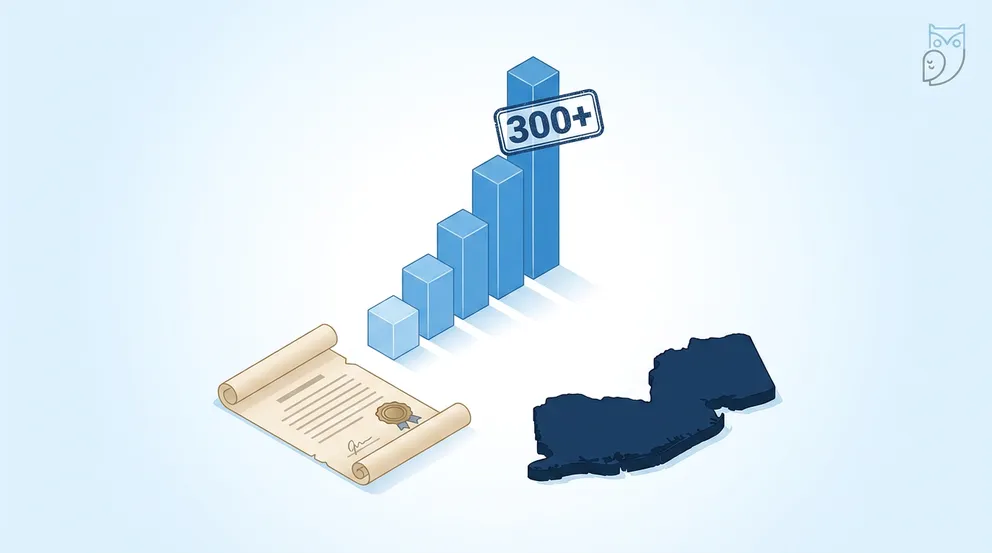
The New Jersey Department of Banking and Insurance has approved more than 300 auto insurance rate increases since 2022, including 69 double-digit hikes as high as 32.5%. Average full-coverage premiums now sit at $3,254 a year, and Insurify projects another 10.46% jump in 2026, the largest expected increase in any state.
New Jersey regulators have approved more than 300 auto insurance rate increases since 2022, with 69 of those topping double digits and one carrier winning a 32.5% hike, according to public records first reported by the New Jersey Monitor on May 26, 2026. The state's uninsured driver rate has climbed from 3% in 2019 to over 14% in 2023 as more residents drop coverage they can no longer afford.
Brian Lipman, who directs the New Jersey Department of Rate Counsel, told the Monitor the trend has accelerated since the pandemic. His office reviews every filing above 7% and recommends what he calls a "policy of gradualism" when DOBI considers steep increases that would push household budgets past the breaking point.
The Scope of the Approved Hikes
Records obtained by the New Jersey Monitor through public records requests show 77 insurers wrote auto policies in the state last year, and most filed for increases every year since 2022. Companies submitted roughly 90 double-digit requests, and DOBI signed off on 69 of them. About 30% of the 300-plus filings since 2022 cleared the 7% threshold that triggers Rate Counsel review.
Harleysville Insurance Company of New Jersey won the largest approved hike on file, a 32.5% increase in 2024 that touched close to 17,000 policyholders. Metromile Insurance Company asked for a 63.1% jump that same year and walked away with a 22.9% approval from regulators. Even when DOBI denied the headline figure, the department still cleared substantial increases for both carriers.
"Since the pandemic we have seen a large uptick in insurance rate filings and that many of those filings are requesting much more significant increases. This is yet another part of a resident's budget that is impacted and has had a negative impact on affordability for New Jersey customers," Brian Lipman, Director of New Jersey Rate Counsel, told the New Jersey Monitor.
DOBI spokeswoman Dawn Thomas pushed back on the rubber-stamp framing. Thomas said the agency blocked nearly $1.2 billion in proposed premium increases since 2023 through its actuarial review process. Michael DeLong, a research and advocacy associate at the Consumer Federation of America, sees it differently.
"Frankly, the New Jersey Department of Banking and Insurance doesn't reject a lot of rate increases, and often gives the insurance companies what they want," DeLong told the Monitor.
How NJ Drivers Compare to the Rest of the Country
The average annual premium for full coverage in New Jersey hit $3,254 as of April 2026, according to Bankrate data cited by the Monitor. That figure runs 21% above the $2,496 national full-coverage average tracked by Insurify for 2026. Idaho drivers pay the least at $1,476 a year, while Louisiana drivers pay the most at $4,135.
If you carry full coverage in the Garden State, you're already spending roughly $271 a month before the next renewal cycle. A 10.46% Insurify-projected 2026 increase would tack on about $340 a year to that bill. The national average premium is set to rise just 0.67% this year, making New Jersey the only state facing a projected double-digit jump for the second year running.
| Year | Total Rate Requests | Approved As Requested | Approved at Lower Rate | Highest Hike Approved |
|---|---|---|---|---|
| 2023 | 85 | 48 | 36 | 20% |
| 2024 | 96 | 57 | 39 | 32.5% |
| 2025 | 75 | 50 | 25 | 30% |
Source: New Jersey Department of Banking and Insurance filings, obtained by the New Jersey Monitor on May 26, 2026. Rate change requests include filings above and below the 7% Rate Counsel review threshold. Most active carriers in NJ filed for increases every year in this window.
Why New Jersey Rates Keep Climbing
Industry insiders and consumer advocates point to overlapping pressures. Used and new vehicle prices surged after 2020, repair costs climbed alongside vehicle complexity, and Trump-era tariffs added fresh pressure on parts pricing through 2025 and into 2026. Crash counts in the state hit 236,601 in 2024, up 9% from 217,778 in 2022, per New Jersey Department of Transportation data.
Legislators passed five laws between 2019 and 2024 that expanded what crash victims can recover in civil court. One measure lets accident victims claim up to $250,000 in uncompensated economic loss beyond what their personal injury protection covers. Christine O'Brien, president of the Insurance Council of New Jersey, told the Monitor those bills "put us on a train heading backwards" after two decades of stable pricing.
Sen. Jon Bramnick (R-Union), a personal injury attorney who sponsored several of those measures, defended them as consumer protection. Bramnick rejected the conflict-of-interest charge, comparing his role to teachers who back education bills and doctors who lobby on medical legislation. He also pressed DOBI to demand tougher justifications from carriers before clearing rate filings.
The 2026 Minimum-Coverage Trigger
Starting January 1, 2026, New Jersey raised the minimum bodily injury liability limits to $35,000 per person and $70,000 per accident, up from the $25,000 and $50,000 floor set in 2023. The property damage minimum holds at $25,000. Uninsured and underinsured motorist coverage tracks those liability limits, so they rose in lockstep.
Drivers who carried the prior minimums now face a forced policy upgrade at their next renewal. Insurify, ROI-NJ, and several New Jersey injury law firms cite the new floor as a primary engine behind the 10.46% 2026 rate spike, especially for low-coverage households who lacked the cushion to absorb the change. The Garden State also sits on the high end of medical and litigation costs, which inflates the actuarial price of every additional $10,000 of liability protection.
State law does not limit how often a carrier can request a rate increase or how large that increase can be. DOBI must review any filing above 7%, which gave Lipman's office a window into roughly 30% of the 300-plus filings since 2022. Filings under 7% can be approved with less scrutiny.
"It's like a game of dominoes. Which is the thing that tips people over? We are seeing across-the-board increases, whether it be insurance, food costs, gasoline, housing, all of it." Maura Collinsgru, Director of Policy and Advocacy, New Jersey Citizen Action
The Uninsured Driver Feedback Loop
The Insurance Research Council pegged New Jersey's uninsured driver rate at over 14% in 2023, more than four times the 3% level recorded in 2019. State law still requires every motorist to carry liability coverage, yet enforcement has not kept pace with the affordability gap. DeLong noted that drivers priced out of policies often face a stark choice between illegal driving and losing access to work or care.
That spike feeds back into pricing. As more uninsured motorists hit the road, claims for uninsured and underinsured coverage rise, which in turn pushes UM and UIM premiums higher for the drivers still buying full policies. Cuqui Rivera, a founder of Latino Action Network, sued DOBI in November 2025 alongside the NAACP's New Jersey chapter over insurer use of credit, marital status, education, and occupation as rating factors that hit lower-income communities hardest.
What You Should Do Now
Pull Your Declarations Page and Renewal Notice
Log into your insurer's portal or call your agent to get your current premium, the date your renewal takes effect, and the percentage change being applied. A jump above 7% means the filing went through Rate Counsel review, and you can request the specific filing rationale.
Get Quotes From at Least Three Carriers
New Jersey hosts 77 active auto carriers, and rate changes vary widely across that pool. Compare quotes that match the new $35,000 / $70,000 / $25,000 minimums, and ask each carrier about telematics discounts, paid-in-full credits, and multi-policy bundling before locking in.
File a Comment With NJ Rate Counsel
The Department of Rate Counsel files written comments on every filing above 7% and welcomes input from affected ratepayers. Send your renewal notice and a brief written complaint to the office at ratecounsel.nj.gov, and copy your state senator if a personal injury attorney sits on the legislative committee handling insurance bills.
Looking Ahead
The Insurance Research Council's 14% uninsured figure covered 2023, and the next update will reflect the period after the 2026 minimum-coverage rise. Watch for new DOBI quarterly filings, the Latino Action Network and NAACP discrimination lawsuit, and any movement on Assembly Bill A1931, which would bar carriers from using credit, marital status, education, and occupation in New Jersey rate calculations. The bill has been introduced five times in the past nine years without passing.
Frequently Asked Questions
Bankrate puts the New Jersey full-coverage average at $3,254 a year as of April 2026, roughly 21% above the national average of $2,496. Insurify projects rates will climb another 10.46% across 2026, pushing the typical monthly premium close to $299 for full coverage.
The largest single approved increase on file is 32.5% for Harleysville Insurance Company of New Jersey in 2024, affecting about 17,000 policyholders. Metromile sought a 63.1% hike that same year and was approved for 22.9%. In total, regulators have cleared 69 double-digit increases since 2022.
Yes, if your prior policy carried only the $25,000 / $50,000 / $25,000 limits in place since 2023. Starting January 1, 2026, New Jersey requires $35,000 per person and $70,000 per accident in bodily injury liability, which forces a coverage upgrade and a corresponding premium rise on the next renewal.
Request the underlying filing rationale from your carrier, get quotes from at least three competing insurers, and file a comment with the New Jersey Department of Rate Counsel. Any filing above 7% must clear Rate Counsel review, and consumer feedback helps the office push DOBI to phase in increases rather than approve them at full size.
The Insurance Research Council recorded a jump from 3% in 2019 to over 14% in 2023, which advocates link directly to the affordability squeeze. As average annual premiums crossed $3,000, lower-income drivers began dropping coverage even though state law still requires it. Higher uninsured rates then push UM and UIM premiums higher for everyone who keeps a policy.
- New Jersey Monitor - NJ car insurance rates soar, driving some to dump coverage (May 26, 2026)
- News From The States - NJ car insurance rates soar (syndicated)
- NJ Department of Banking and Insurance - Bulletin 25-06 on 2026 minimum liability limits
- Bankrate - Average Cost of Car Insurance in New Jersey for 2026
- Insurify - 2026 Car Insurance Affordability Report
- ROI-NJ - New Jersey drivers socked by insurance rate hikes in 2026
- Insurance Information Institute - Uninsured Motorist Statistics
- NJ Department of Transportation - Crash Summary Reports