
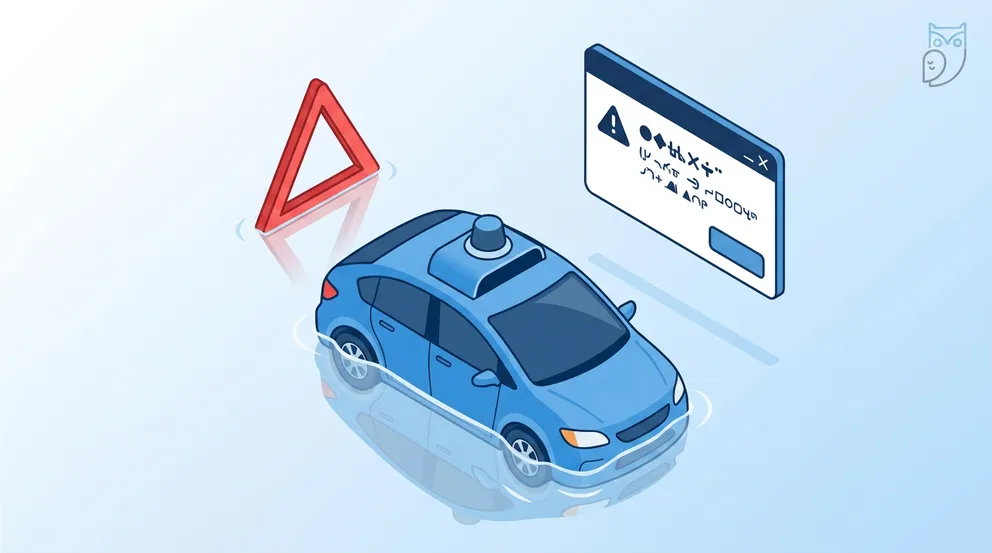
Waymo is recalling 3,791 robotaxis after a software defect let the self-driving vehicles slow but not stop when entering flooded roads at higher speeds. The voluntary NHTSA filing on May 12, 2026 follows an April 20 incident in San Antonio where an unoccupied Waymo was swept into Salado Creek. Drivers sharing roads with Waymos in Phoenix, Austin, Los Angeles, San Francisco, Atlanta, and Miami should verify their UM/UIM coverage now.
Waymo filed a voluntary recall with the National Highway Traffic Safety Administration on May 12, 2026, pulling 3,791 robotaxis off the unrestricted operating list after a software defect let the self-driving vehicles enter flooded roads at higher speeds without stopping. The recall, posted as NHTSA filing 26E026, covers Waymo's fifth- and sixth-generation automated driving systems across every commercial market the Alphabet-owned company operates, including Phoenix, San Francisco, Los Angeles, Austin, Atlanta, and Miami.
For drivers sharing roads with Waymos in those six cities, the recall raises an immediate insurance question: who pays if a robotaxi software defect contributes to a crash with your private vehicle? Waymo carries a $5 million commercial liability policy that is always active while the vehicle operates, per California Public Utilities Commission rules, but disputed claims involving autonomous vehicles can take 9 to 18 months to resolve.
- 3,791 robotaxis recalled by Waymo, covering fifth- and sixth-generation automated driving systems
- NHTSA letter filed May 12, 2026; permanent software fix still in development
- April 20 San Antonio incident triggered the recall after an unoccupied robotaxi was swept into Salado Creek
- California requires $5 million commercial liability coverage on every Waymo trip
- San Antonio service remains suspended; 11 other markets continue with interim weather restrictions
The April 20 San Antonio Incident
The recall traces to one event in central Texas. An unoccupied Waymo robotaxi entered a flooded section of road with a 40-mph speed limit on April 20, 2026, then was swept into Salado Creek before any rescue could intervene, according to the NHTSA letter. The federal regulator confirmed the vehicle detected what it called untraversable flood water but proceeded at reduced speed rather than stopping.
Waymo suspended San Antonio operations the same day and pushed an interim over-the-air update across the fleet. That OTA update added weather-related operating restrictions and refreshed the company's onboard vehicle maps. NHTSA documents still list the permanent software fix as in development.
"Entering an untraversable flooded roadway can result in loss of vehicle control," the NHTSA recall report states, citing the regulator's standard risk language for vehicle defects.
Waymo confirmed the scope of the problem in a written statement provided to multiple outlets, framing it as a higher-speed road issue rather than a general weather failure.
"We have identified an area of improvement regarding untraversable flooded lanes specific to higher-speed roadways, and have made the decision to file a voluntary software recall with NHTSA related to this scenario," a Waymo spokesperson said.
What This Means for Your Auto Insurance
If a Waymo strikes your private vehicle, the company's commercial auto policy is the first source of recovery. The California Public Utilities Commission requires Waymo to carry $5 million in commercial liability coverage on every autonomous rideshare trip, well above the state's 15/30/5 personal liability minimums. Arizona, Texas, Georgia, and Florida rely on operator-maintained insurance combined with state product liability law to apportion fault when a software defect contributes to a crash.
Recovery isn't automatic. Plaintiff attorneys handling Waymo crash cases tell consumers to expect 9 to 18 months on disputed claims because investigators have to pull sensor logs, software version histories, and the OTA update timeline before assigning liability. That investigative lag matters most when medical bills and lost wages stack up before the dispute resolves.
For drivers in Phoenix, Los Angeles, San Francisco, Austin, Atlanta, and Miami, the practical step is to call your insurance agent today and verify your uninsured motorist (UM) and underinsured motorist (UIM) limits. UM/UIM coverage bridges the gap when a commercial autonomous vehicle insurer delays payment or disputes liability. Florida drivers also have personal injury protection (PIP) that applies first under the state's no-fault rules, regardless of who caused the crash.
If you are a passenger inside a Waymo when a crash occurs, the company's $5 million commercial liability policy covers your injuries automatically. The recall does not change that coverage. The recall affects how vehicles behave in flooded conditions, not the insurance protection extended to riders.
State-by-State AV Insurance Frameworks
| City / State | Waymo Service Status | Notable State Rule |
|---|---|---|
| Phoenix, AZ | Active commercial | Arizona Executive Order 2015-09; no state-issued AV permit required |
| San Francisco, CA | Active commercial | CPUC requires $5M commercial liability per vehicle |
| Los Angeles, CA | Active commercial | Same CPUC $5M rule plus AB-1772 transparency reporting |
| Austin, TX | Active commercial | Texas SB-2205 (2017); operator commercial policy is primary |
| Atlanta, GA | Limited access rides | Georgia HB-472 permits deployment; commercial coverage required |
| Miami, FL | Active commercial | Florida no-fault PIP framework stacks under Waymo's commercial policy |
| San Antonio, TX | Suspended after April 20 incident | Same Texas SB-2205 framework as Austin |
Source: California Public Utilities Commission rule for autonomous rideshare insurance, Arizona Department of Transportation autonomous vehicle program, Texas Department of Motor Vehicles SB-2205, Georgia Department of Public Safety AV deployment guidance. Coverage minimums reflect operator-maintained commercial policies and do not replace personal auto insurance held by other drivers.
A Pattern of Recalls, Not a One-Off
The May 2026 filing marks Waymo's sixth software recall since the company began commercial operations. NHTSA records show three recalls in 2024: a February filing after two Phoenix robotaxis hit the same towed vehicle, a June filing covering low-speed collisions with telephone poles, and a separate parking-related fix. In May 2025, the company recalled 1,200 robotaxis for low-speed collisions with parking gates and chains. A December 2025 recall addressed how robotaxis behaved around school buses in Austin. Tesla's competing Cybercab and Robotaxi program has faced separate NHTSA scrutiny over the same period.
Waymo also paused San Francisco operations during flash flood warnings on December 25, 2025, drawing criticism when robotaxis stalled during widespread power outages and caused gridlock in several neighborhoods. NHTSA opened a parallel investigation into the December incidents that remains active.
For context, Waymo provides more than 500,000 trips per week across 11 commercial markets, according to the company's May 12 statement. Planned 2026-2027 expansions include Washington D.C., Pittsburgh, Philadelphia, and 18 additional U.S. cities. Every new market multiplies the number of human-driven vehicles sharing roads with autonomous fleets.
"Waymo provides over half a million trips every week in some of the most challenging driving environments across the U.S., and safety is our primary priority," the company said in its May 12, 2026 statement to CNBC.
What You Should Do Now
Verify Your UM/UIM Limits
Call your insurance agent and confirm your uninsured and underinsured motorist limits match your bodily injury liability limits at minimum. Disputed AV claims can take 9 to 18 months to resolve.
Install a Dashcam
Front and rear cameras run roughly $80 to $200. Independent video evidence reduces the time it takes to settle a claim because investigators no longer have to subpoena Waymo's sensor logs to confirm the sequence of events.
Save an AV-Specialist Attorney Contact
Phoenix, Los Angeles, San Francisco, Austin, Atlanta, and Miami each have personal injury firms that handle autonomous vehicle claims. Finding one before you need one cuts response time on a claim by weeks. Our car accident legal advice guide covers when to call an attorney versus when to handle the claim directly.
Check Your Policy for AV Exclusions
Ask your insurer whether your policy contains autonomous-vehicle or commercial-rideshare exclusions. A personal umbrella policy of $1 million or more adds a layer of coverage on top of Waymo's $5 million commercial liability if injuries exceed the operator's policy limit.
Looking Ahead
Waymo has not announced a timeline for the permanent software fix. The interim weather restrictions, map updates, and the San Antonio service pause are the only public-facing changes as of mid-May 2026. CNBC reporting indicates Waymo is readying operations to resume public rides in San Antonio, but no firm restart date has been confirmed.
NHTSA leadership under the Trump administration has signaled tougher autonomous vehicle oversight, making this the first major recall under the new regulatory framework. Two follow-up developments will shape the consumer impact: Waymo's final remedy filing with NHTSA, and any new commercial auto rate filings from state Departments of Insurance in Arizona, California, and Texas covering autonomous fleet operators. For the bigger picture on how AV deployments are reshaping personal coverage, see our analysis of whether self-driving cars will eliminate the need for auto insurance.
Frequently Asked Questions
Waymo's $5 million commercial liability policy is the primary source of recovery for a third-party crash. If the company's insurer disputes liability or delays payment, your UM/UIM coverage steps in to pay your medical bills and lost wages until the dispute resolves through arbitration or litigation. Disputed AV claims typically take 9 to 18 months to settle.
Not directly. The recall affects Waymo's commercial auto policy and its product liability exposure, not personal auto lines. Watch for state Department of Insurance rate filings in Arizona, California, and Texas covering commercial AV operators, which could indirectly affect ridesharing endorsements added to personal policies in those states.
No active steps are required. Waymo's $5 million commercial liability coverage applies to passengers automatically and covers injuries regardless of fault. The interim software update is being pushed over-the-air to all 3,791 affected vehicles.
Yes and no. The interim over-the-air update is already deployed with tighter weather restrictions and updated vehicle maps. Waymo continues serving Phoenix, San Francisco, Los Angeles, Austin, Atlanta, and Miami. San Antonio service remains suspended pending the permanent software fix.
All 11 commercial markets received the software update. The most visible service area changes are in San Antonio (suspended), San Francisco (added weather restrictions), and parts of Austin where flood-prone roads now sit inside expanded restricted zones.
- NHTSA Recall Letter RCAK-26E026-9973 - Waymo Voluntary Software Recall
- CNBC - Waymo recalls 3,800 robotaxis after glitch allowed some vehicles to drive into standing water
- TechCrunch - Waymo issues recall to deal with a flooding problem
- The Hill - Waymo recalls thousands of robotaxis over potential loss of vehicle control
- Houston Public Media - Waymo recalls almost 3,800 robotaxis after flooding incident in San Antonio
- Insurance Journal - Waymo Recalls Robotaxis After Vehicle Drove on a Flooded Road
- California Public Utilities Commission $5 Million Autonomous Rideshare Insurance Rule (analysis)